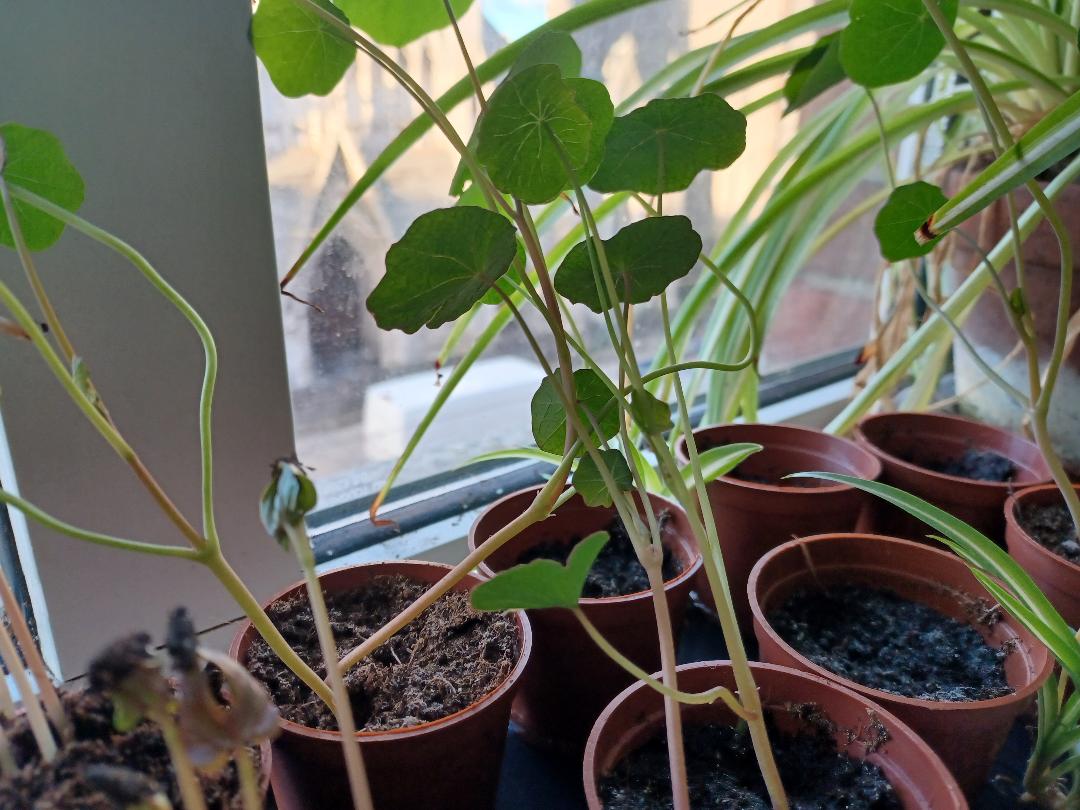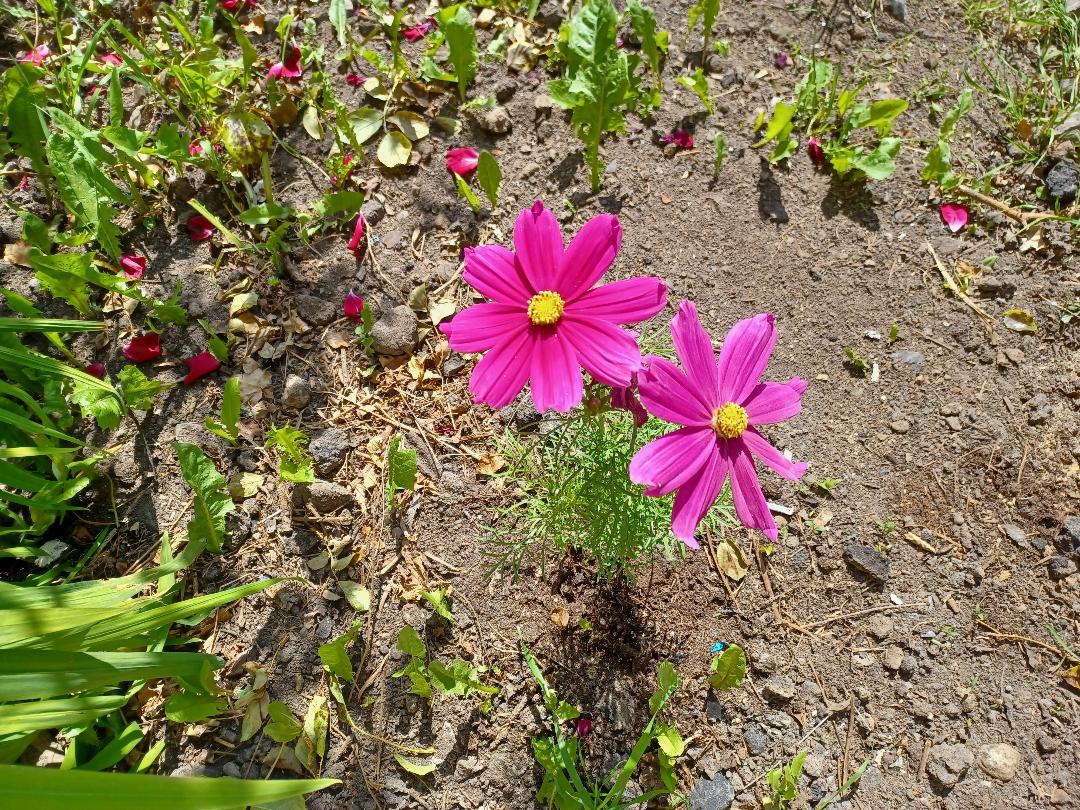
Everything is so green now, and new life is everywhere.
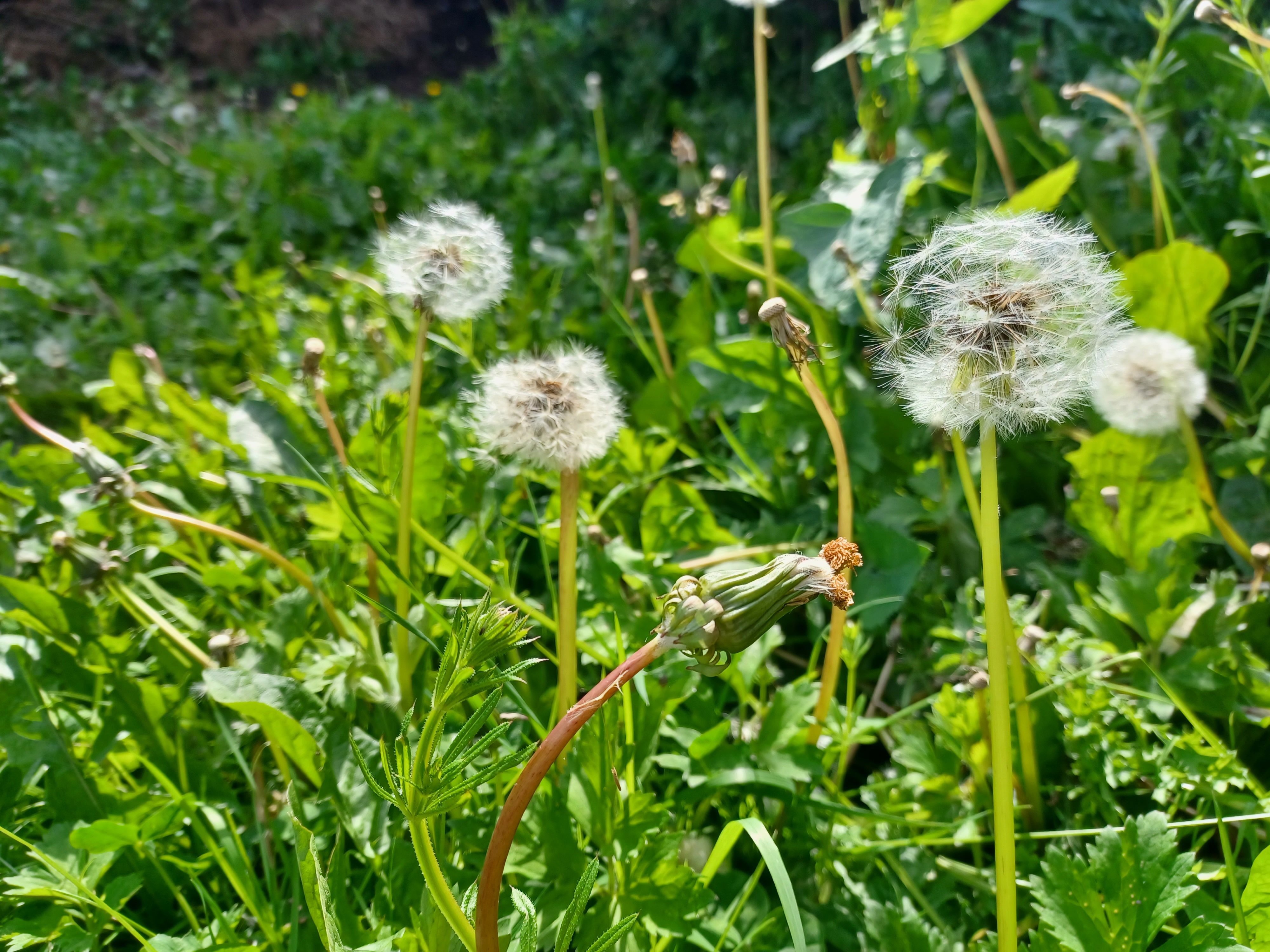
The dandelions have turned to seed, and it’s time again for the buttercups and daisies. The trees are displaying their newest green leaves, and some mornings the mist is intoxicating.
Long summer nights lean out, which bring some melancholy, but to many enthusiasms and excitement and joy; it just depends.
Remember in the nursery when we played, “how green you are?” and we sang loudly or quietly to help find the treasure. Softly when far away, and loud when close. We couldn’t smell spring then, because we were too young, and sometimes we couldn’t hear it either.
Remember another May in Mongolia when the snow melted, and everyone learned to walk on solid ground again. Small pop-up cafes sold beer that you could drink from the bottle while sitting on plastic chairs, listening to American songs on the radio. Harold said, “this is just like Ibiza” and we all laughed hard. Eating shislek and talking about Kazikstan.
I might have told you that before.
I told you about a fox, that time.
This time the fox is at the bottom of the garden, and she has four cubs. I’ve seen them in the early morning, once by accident and later by design. They hide beneath the hedges and come out to play when she’s out hunting for food. I smile when I see them, when the earth seems at its finest.
Earlier in the week, there was rain.
The water dripped off the hedges and quenched the thirst of the slugs, snails, and worms at the “all you can” eat buffet.
In my universe, this subjective, unique space and time is the tranquil peace and the air. In another place, bigger and smaller than now, there’s an ocean where the salt water heals and there, there is quiet.
My enjoyment and trust in the day begins, middles, and ends with one grateful thought, that I am happy to be here. Let me heal, says the May flower and the May fly, let me do my work. The May-Mess all around us, the wild purple flowers that entice all the bees. This short-lived festival of luminescence, this special time of song birds.
New Year’s Eve is putting on lipstick and applying nail varnish to all of the fingernails: the short ones, the long ones, the scary ones, and the ones that look like they’ve been nibbled down too much.
Sometimes New Year’s Eve arrives like a gentle, kitten who wants to hide in the corner, mewing quietly. At other times, New Year’s Eve arrives with the chaotic energy of Laura Palmer, who wants to do shots with you in the kitchen and tell you all her stories. You’re hesitant, and you say, “I’m not sure Laura Palmer. I just wanted a quiet night in, watching old movies”. But Laura doesn’t listen.
Laura doesn’t hear you.
I’m not going to wish you a happy new year.
How can I?
The year is too long and opaque to know, for sure, if it will bring us any type of happiness. The best I can hope for, is that you have a happy New Year’s Day, and then another happy day, after that. I hope that when shitty, inexplicable horror comes to your door, that you will have the wherewithall not to let it stay too long.
I hope you will learn and grow from the bad things that will happen.
In 2022, I made a list of 50 fine things to do and think about, during my 50th year.
The things that worked very well all had a teacher, guide or mentor to help me, such as, my writing and meditation courses. The things that had a sense of community worked well too, such as swimming with friends and getting involved in Ebbw Vale Institute. The running went well because, this in turn, helps me to eat well, sleep well, and stay hydrated.
I liked learning more about the phases of the moon.
The things that didn’t work well were the Spanish classes with DuoLingo, the sit ups alone in my living room, and the #2minutestreetcleans, when Diane stopped helping me.
My main criticism of the whole experiment was the list in general.
50 things were too many. Far and way too many.
Also, turning our lives into checklists of efficient productivity, which demand external validation, is probably not the most helpful way to live. It removes the magic, mystery and miracles of this incredible experience, and summarising “life” with outcome success stories, makes me want to vomit.
Really, it does.
This is a fine way to approach our jobs and our tax returns, but not life in general. Life is too precious.
I forgot the basic advice from Marcus Aurelius, who says, “concentrate every minute, on doing what’s in front of you with precise and genuine seriousness, tenderly, willingly, with justice” instead of worrying about the future. Working my way through a 50-piece checklist, was at times, another thing to worry about. Better, that I had prioritised four or five things. Or not worried about anything at all.
The Tibetans have advice about worrying. They say that if the problem has a solution, then there’s no point in worrying. And if the problem doesn’t have a solution, then worrying is not going to solve it.
I should have listened to the advice of Tom Robbins, who tells us to never hesitate to trade our cow, for a handful of magic beans.
He also says,
“I want to travel on a train that smells like snowflakes. I want to sip in cafes that smell like comets. Under the pressure of my step, I want the streets to emit the precise odour of a diamond necklace. I want the newspapers I read to smell like the violins left in pawnshops by weeping hobos on Christmas Eve. I want to carry luggage that reeks of neurons in Einstein’s brain. I want a city’s gases to smell like golden belly hairs of the gods. And when I gaze at a televised picture of the moon, I want to detect, from a distance of 239, 000 miles, the aroma of fresh mozzarella”.
2023 has no such list: I simply wish that you and I have a good day, and then perhaps another one after that. I will try and savour the good bits and learn and grow from the hard parts. I will try to be kinder, listen better, and be more patient. I till try and catch the magic, miracles, and mysteries of this awesome life, and give time to the raindrops and the frost.
“If something was worth writing down, it was worth writing down in full. And she had a horror of lists–grocery lists, Christmas card lists, and most grisly of all, to-do lists. Lists, like appointment books, were nails driven into the future. She knew this was an odd objection to be raised by a person whose daily life was utterly predictable, who never threw caution, or anything else, to the winds, who never packed light, because she never packed at all. Still, the future was a sleeping monster, not to be poked.” ― Jincy Willett, The Writing Class
“Sometimes the most important things don’t fit on lists.” ― Andrew David MacDonald, When We Were Vikings
#50finethings was born into January darkness out of fear of a 50th birthday. It started as a list of things to do but became an abstract inventory for people who don’t like to follow structure and rules. It could have been an evolving distraction, but in the end, it might just be an outline of some things that happened.
If January is a harsh, annoying alarm clock at 6.30am, then October is a 9.00pm film, with the dinner dishes tidied away, and the reading lamps turned on. Autumn is the most middle class of all the seasons, with its insistence on cosy, warm jumpers, and frolics in the orchards. Autumn demands waterproof boots.
At 50 we have the confidence to be modest, and we accept that so much of this life is a mystery. We have moved away from the cockiness of the 20s, the horrific mistakes of the 30s, and the constant backtracking and reversing of the 40s. Instead, we are faced with some quiet waters of the 50s, where silent waves stir. 50 is a harvest, a latter midway point, a resting place where we can gather our berries and nuts, and hold them safe for wintertime.
We can do just one thing at a time.
Would we prefer to scroll, or watch the rainwater trickle down the window? Would we hear bad news, or listen carefully to the rhythm of the thunder? Do we complain about our city, or try and make it better? Can we remove the cause of suffering, or the symptoms of pain?
Many of us have plenty and many have nothing at all.
At 50, we know what we think about poverty; if we want to eradicate poverty, we will need to take away capitalism, and if we want to evolve and find honest fulfilment, we probably need to do both. We know now, what we think about everything, and we know what we need to do. At 50, we can also change our minds.
With autumn comes the harvest, and for some of us, grief.
We learn our subjects at school and read what pleases and interests us, yet it’s shocking how little we know about grief. Why not learn about, and be prepared for grief? Better then, to take grief by the hand, and welcome it onto our path then to run away from it. Be good at grief: not mawkish or sentimental, dismissive, or ignorant, but learn wisdom from it, grow compassion, find grace.
Even ordinary, uncomplicated grief can be a friend. A harsh friend who can teach about kindness and love. If #50finethings was a distraction from grief, then it brings us back to the start now.
Here we are at the 11th new moon of this year. We wade from the Harvest Moon into the Mourning Moon, while the final two moons await in the wings.
This new moon, this other new beginning.
This new start is the beginning of ahimsa.
Ahimsa is the ancient practice of non-violence, non-injury and non-harm to self, others, and all sentient beings, in thoughts, words, and actions.
Now that’s some list!
This list transcends #50finethings and is unending and spiralling, and could take a lifetime to get the hang of. Imagine, having only non-harmful thoughts about ourselves, all the other people we know *and* all sentient beings! No harsh thoughts or words or deeds about ANYTHING or ANYONE in this whole world, and beyond.
Even for an hour.
This life is a privilege. To wake and watch the beautiful miracle, a simple mystery, a spectacular essence of life; this life, this time, this now. We are gentle paper boats, floating down the canal and we are precious, and alive, and we matter.
The finest things in life are the people we love and the time we spend with them. We know that, we knew that, we must remember that. A love for this horrific, absurd, charming life with its poverty, and its grief, and its miracles.
Photo with kind permission of the official twitter account for Brú na Bóinne, Newgrange and Knowth
#50finethings: 41 – 45
“I declare after all there is no enjoyment like reading! How much sooner one tires of anything than of a book! — When I have a house of my own, I shall be miserable if I have not an excellent library.” ― Jane Austen, Pride and Prejudice
“Isn’t it odd how much fatter a book gets when you’ve read it several times?” Mo had said…”As if something were left between the pages every time you read it. Feelings, thoughts, sounds, smells…and then, when you look at the book again many years later, you find yourself there, too, a slightly younger self, slightly different, as if the book had preserved you like a pressed flower…both strange and familiar.” ― Cornelia Funke, Inkspell
There’s a short video that goes viral, sometimes, of a bird helping a hedgehog to cross a busy road. The bird seems to be nudging and pushing the hedgehog to the safer side of the street, out of the way of the fast and heavy cars. One of the drivers stops, to film the helpful kindness of the bird, and decides to share this on a social media platform. It’s there we remark that the bird is not trying to help the hedgehog cross the road at all.
The bird is trying to eat him.
It’s unclear if the bird thinks the hedgehog’s spikes are worms, or if he’s trying to devour the entire creature, but what we do know is that the hedgehog is in danger. The hedgehog can do very little. Its best hope is that a vehicle travelling in the other direction, will mow down the bird, shockingly and violently.
Seemingly we are on the side of the hedgehog, and not the bird.
If January is the month of lists and lies, then September must be the month of sign-ups. New courses, crisp uniforms, and goals for the academic year, as we cross our fingers and hope that this is the semester that we fulfil our true potential, and apply ourselves properly. We pack our leather satchels full of hope and excitement, and yet we also feel that we are out of our own league. It’s like going to Anne’s Bakery on Moore Street, and ordering an egg white omelette, on rye bread, with a hazelnut coffee, made with almond milk; it’s the wrong order, in the wrong place and we should simply go somewhere else.
September should instead be a time of slowing down. We ought to bring out those winter blankets and become autumn book worms. We should simply read articles about awe, and those moons around Saturn, for no other reason than the equinox. We should harvest our nuts and berries in preparation for the colder months, and we should bid farewell to the summer.
We need to read to escape more news of Billionaires who buy rockets to fly near to space, and who buy luxury bunkers to hide in when the next pandemic, war, drought, or flood comes. The Billionaires fill those underground safety nests with bowling allies, swimming pools and cinemas and we can only ask, what films will they watch after the apocalypse?
Don’t cry for the Billionaires when they die.
Or cry but know that for the Billionaires, we are just hedgehogs, or maybe worms.
If the Billionaires cared for us, they would sell just one of their paintings, to help cure malaria. They would sell one of their super yachts, and put an end to homelessness. They could sell one of their private jets, so that the air we breathe is clearer; or perhaps they could stop buying rockets.
The Billionaires don’t worry about worms.
Perhaps they should.
It’s we the worms who keep the eco-system going and without us, the soil would rot and fail. Sometimes we’re enormous, at other times microscopic, our strength is in our numbers, and how unseen we seem.
We are Darwin’s “ploughs,” who lived when dinosaurs ruled. We’re adaptable little invertebrates, and we glisten in the sun.
We have one good ticket for this ride, and there seems to be a strict no-refund policy. Fair, unkind, good, or bad, we must play the hand we’re dealt, as there’s simply no other choice. Be kind, generous, laugh, and leave it better than how we found it. Not exactly a meaning of life, but a list of fine things we could do.
Happy new harvest moon, little worm, and a happy, gentle equinox.
Practicing an art, no matter how well or badly, is a way to make your soul grow, for heaven’s sake. Sing in the shower. Dance to the radio. Tell stories. Write a poem to a friend, even a lousy poem. Do it as well as you possibly can. You will get an enormous reward. You will have created something.” ― Kurt Vonnegut, A Man Without a Country
“your art is not about how many people like your work your art is about if your heart likes your work if your soul likes your work it’s about how honest you are with yourself and you must never trade honesty for relatability”
Visitors to Dublin storm through the narrow streets, searching for An Experience.
Sometimes the visitors walk four or five abreast, as if they’re in a row, in a marching band, on St Patrick’s Day. They do not rest until they have captured the perfect, unique, picture, for their followers. They race towards the galleries and museums, and when they’re safely inside, they consume art.
Dublin is littered with art: graffiti, buskers, the clouds, and the sounds of the streets. The city sings, shouts, swears, and gasps for breath as it tries to adapt to the changes. Go to an art gallery, then, and ask yourself, “does this art move me, is it memorable, is it honest?” Listen to the Key Waste rubbish truck, and LUAS bells from the street, as you do.
A photograph of a street scene can be artistic, but how can you photograph homelessness and hunger in a city that sells the craic agus ceol? There’s nothing as artistic as the food queues outside the GPO every night, or watching a kid eat their dinner on the pavement. Can you video a street dispute, and film the passion of the anger involved?
Art is a beautiful blue sky sitting on a horizon, or it is human shit at the bus stop, with some stiff, rotting tissue beside it. Art is love, and jealousy, and integrating death into every smoothie. Art is watching a young child look terrified.
Observe art, enjoy art, and make art.
Or don’t.
But if you do make art, make it about why the rich never feel shame about their wealth, and make art about grief, and our own insignificance.
Dublin has poets and prose authors, memoir, and postcard writers, and those who send letters to the Irish Times about the high cost of the TV licence. Dublin has people who publish on social media, and those who invent catchy hashtags.
Dublin has open air opera and drama at the market stalls. Art should be free, and all artists paid. Capitalism should be sent to the farm in the countryside, with the ageing donkeys, the cat, and that puppy who died. This earth of ours, has an underlying condition, and capitalism isn’t going to help it feel better.
Art is the wind.
Art is the horror, boredom, and pleasures of our lives. We’re here and we love, and we’re part of it.
Art fights for and against all sides on all wars. Artists are heroes, villains and indifferent. Art is a seven worded text, to tell you someone is dead. Art is salt water on your face, at sunrise.
It’s the night before Christmas: a foghorn that scares you; a whisper; a leaf drop; a home.
36: go to a FREE art gallery in Dublin.
37: better still, paint something. I did, I loved it.
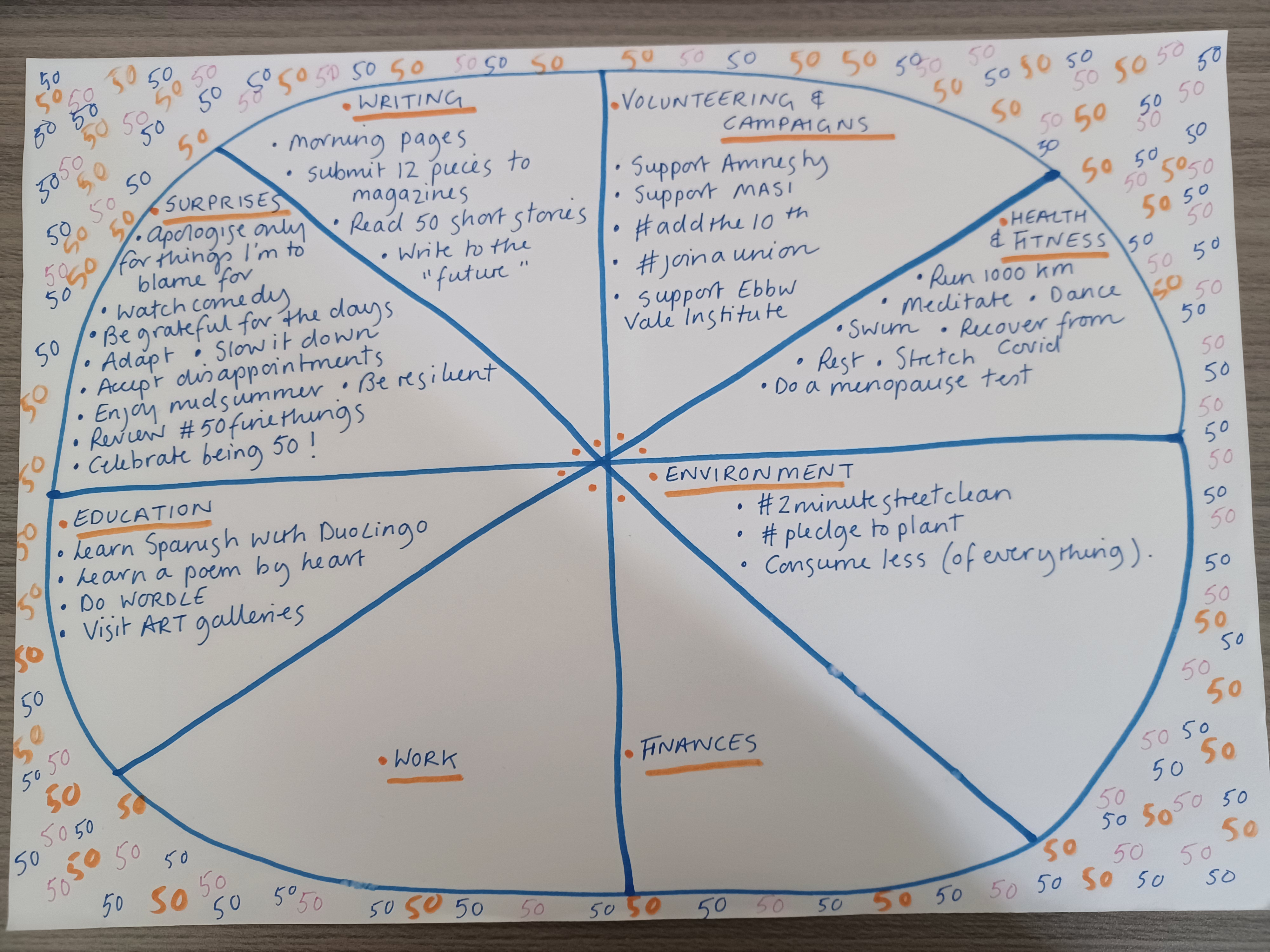
Figure 1. Homemade pie chart of #50finethings to date (new moon, July 2022).
“The life unexamined is not worth living”.
Socrates
“Cherish the thought Of always having you, here by my side (oh baby I) Cherish the joy You keep bringing it, into my life (I’m always singing it) Cherish your strength You got the power, to make me feel good (and baby I) Perish the thought Of ever leaving, I never would”.
Madonna
I went home to Ebbw Vale in June.
As usual, I travelled by ferry and train. This time my plans for a relaxing journey, where I could catch up on my correspondence like a lady from the 1800s, was ruined by the train strikes in Wales.
The strikes were a huge inconvenience to me, the way the removal of essential services often is. If I stopped doing my job, it might take a few months before anyone noticed. You notice the absence of railway workers immediately.
Remember the first year of the pandemic?
Remember when we clapped for the health workers, the teachers, the supermarket staff, and those working in transport? We wrote messages to these key workers, and front-line staff on windows, and on our social media channels, and we said things like, “we will never forget”.
Turns out those messages were metaphorical bouquets, as governments didn’t want to pay these key workers at all.
It was good to see the rail workers bite back.
I’ve been a member of the Irish union, SIPTU, for years. I joined for my own protection, and I stayed for the protection of others. I support unions, because I like bank holidays, holiday pay, sick pay, and maternity pay, and I also like working in safe and healthy environments. I wish the rail workers all the best with their industrial action, and I hope they get the pay and the safe working conditions they are asking for.
While in Wales, I spent time with family and friends, and I attended a terribly sad funeral.
I went for walks, and went swimming and enjoyed coffees, gossip, and chats. I also popped into Ebbw Vale Institute for a visit and to see all their new activities and programmes. They have a Bee Hotel, a Repair Café, art therapy classes, yoga, and a professional sound studio.
Ebbw Vale Institute was founded in 1849, by Thomas Brown, who was the manager of Ebbw Vale iron works at the time, and the building was completed in 1853. To put that into context, this was just six years after the Coal Mines Regulation Act of 1843, which made it illegal for women, and children under the age of ten, to work underground in Britain. Children over the age of ten, of course, still went down the pits and spent their lives there, but at least this put protection into legislation. Ebbw Vale Institute provided educational supports.
The owners of the industries in Wales justified sending children, as young as five, down pits for twelve hours a day, because they said that without this cheap labour, they would not be able to make a profit. Critics of the Coal Mines Regulation Act of 1843, said that not sending children to work in darkness all day, would be a terrible blow for the industries.
When I was a little girl, my mother used to take me to the Institute for art classes and coffee mornings. We didn’t call them that in the 1970s. We just said we were, “going up the ‘stute for an hour,” and the result was the same. I remember the smell of the paint from those classes, and the sound of the echoes from the hallway, like it happened late yesterday afternoon.
I grieve for my mother so differently in Wales.
The grief I live with in Dublin is quiet, well mannered, and tame. While the grief I walk with in Wales is loud, erratic, uncaring and wild. In Ebbw Vale, I can feel my mother all over the house. I see her in her siblings’ faces, and I watch her mannerisms in her nephews and nieces.
Welsh grief can be harsher, but it can also be kind.
Sometimes in Wales, I feel the tip of grief touch me with brilliant and overwhelmingly love. There’s no loss or sadness, but simply, pure love. Sometimes it comes from finding a pair of her old glasses unexpectedly in a drawer, or noticing a robin sitting on the recycling bin. It can come through the ways the net curtains move, or from an old keyring hanging on a hook.
Sometimes, it’s in the water.
It makes sense to me to support Ebbw Vale Institute and go back to Ebbw Vale for their official opening in the first week of August. It’s more practical than crying, easier than yearning, more helpful than hiraeth, and more refreshing than melancholy.
It’s a living headstone, and I think mam would be pleased.
At home too, I reviewed these #50finethings.
I discovered that the areas of “Work” and “Finance” are not the key priorities in my life. (Please see figure 1. from the home-made pie chart above, for evidence). In fact, I’m not very interested in them at all.
Jobs come and go.
I’m very happy to have a job that I find interesting and I’m happy I didn’t go down the mines as a child. One day, however, my job will be an app or won’t exist, and I’m fine with that. I don’t mind. Work and money aren’t real, and while I must exist alongside them, I don’t exist for them.
After Wales, I went to Menorca with some old friends to belatedly celebrate our 50th birthdays. Sian didn’t celebrate hers, because she’s so much younger than the rest of us, but we, the Vintage 1972 women, celebrated well.
We celebrated being 50 and the women who gave us birth. We celebrated our lives and our ever-going friendships with one another. We laughed so much we nearly puked, and we swam, ate, told stories, and enjoyed sunsets. These friends are indeed some 50 fine things, and I love them more each year.
It’s a good thing to know what is true for yourself.
Finally at fifty, I realise that I’m most at ease when I’m honest. When my thoughts and actions are in harmony, and nothing I do needs defending or explaining.
I’m at my most comfortable when I enjoy the days, cherish the loves in my life, and laugh frequently. I’m best when my day aligns with my values, and when I check those values frequently, in case they run amok.
My intrinsic motivation then, seems to be more around laughter and good tapas, than money and work, and this makes me happy. If nothing else, 50finethings is teaching me about myself, and this moon’s reveal was a smashing one.
Only the shops that play music, but that’s where sometimes I dance.
Not just a foot tapping type of dancing, but a shoulder swivelling, pelvis hip swinging, finger clicking form of dancing, and it’s even better when I sing along as I groove down the frozen food section.
I don’t know when the public dancing habit started.
Probably it started when we all still wore masks so that you couldn’t tell who was singing, or who was screaming.
I like to do it.
Sometimes, I catch a glimpse of this 50-year-old woman, swaying to the music and enjoying herself, so I blow her a kiss, and I wish her well.
27 Consume Less
One of the best things for the earth, is to consume less.
It’s a simple objective, which makes all decisions much more straightforward: should I buy X or Y?
Neither.
Just consume less.
Less of everything is better for the earth: less fuel, water, unsustainably grown food, fashion, social media, earbuds, sun cream…just buy less.
“Ah but Ruth, you don’t understand the complexities of my unique situation and the importance of my desires!”
Oh, but I do.
Also, I’m not talking about YOU, I’m talking about ME.
I only have control over my thoughts, words, and actions. I’m going to consume less; you do what you must do. I’m not the boss of you.
Whenever I think about the fact that the human species might be extinct quite soon, I don’t feel anything. Maybe I’m a sociopath, but I can’t generate real feelings for the future people. Of course, I feel sad for the very last homo-sapiens, in the same way I felt sad for the last Neanderthals. But it’s an academic, abstract sensation that I’m not going to make any changes for.
Rather, when I think of my family and friends, who are living now, then I want them to live with clean air and water, decent non-poisoning food, and be safe from fire and flood. I honestly think the best way to start to do that is to try and consume, much, much less of it all.
All of it, less of it, and then less of it again.
28 #addthe10th
I work for Dublin City PPN, which has recently joined a campaign to #addthe10th
The aim of this campaign is to add “socio-economic discrimination” to Irish equality and employment legislation, and I’m very excited to get involved. Presently, there are nine grounds for discrimination under the law, and this campaign hopes to add the 10th.
29 Enjoy midsummer
Planning for a whole year was absurd.
Still, here we are midway through this one, and whether we like it or not, it’s midsummer. Some people find the long days melancholy, and I know a few people who prefer the cosiness of the winter nights.
Not me.
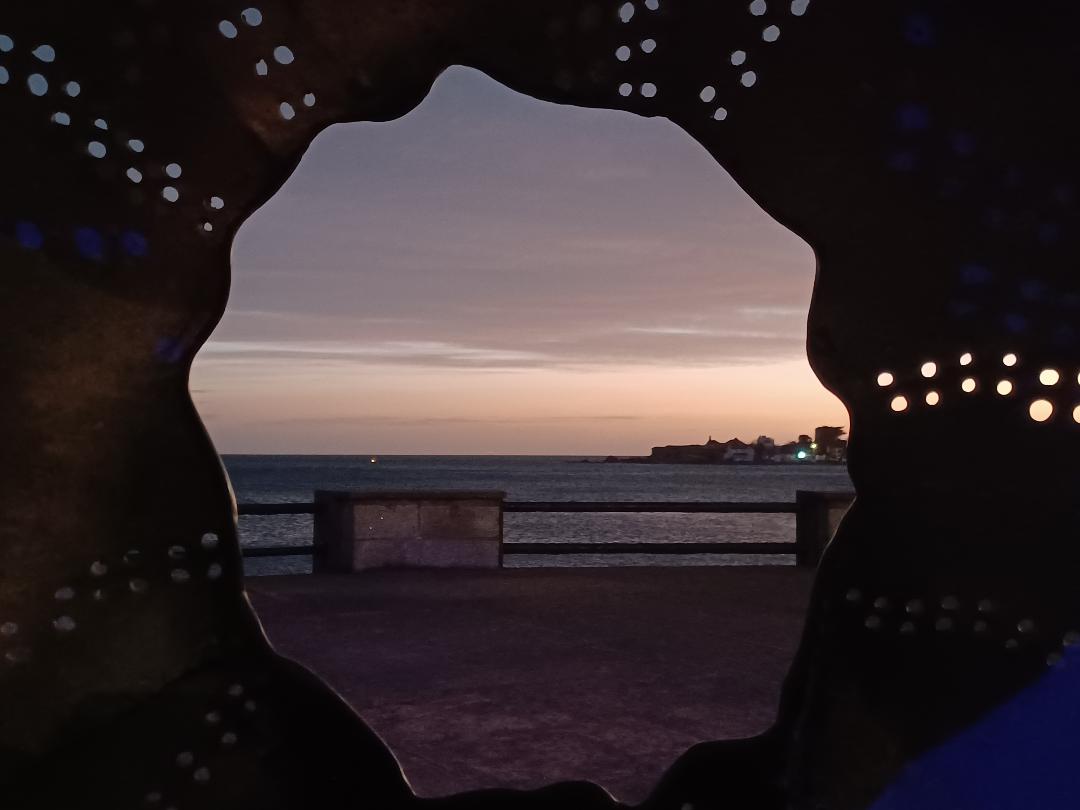
I love the long, bright evenings, and the seemingly never-ending sunset hours. I like the blue light, and the sounds of people doing daytime activities in the evening: running in the park, swimming in the sea, having picnics on wooden benches.
Our ancestors celebrated midsummer, and so should we in ways that suit our days. I like nod to the sun, and thank it quietly, and I wish it well with all its future endeavours.
30 Be Resilient
It’s easy for me to be resilient when I have food, shelter, and employment security, and it’s much easier to go for a swim in the sea, when I don’t have to worry about being evicted, paying bills, or facing unemployment.
Swimming in the sea is not free: I need a swimsuit, money for transport, the ability to swim, and time to go. It’s easy for me to maintain resilience because I have the tools, at my disposal, to do so.
Many years ago, I was on a training course in Athens, with my colleague and friend, Áine Lynch. We were doing a workshop on resilience and the trainer asked us to define the word. I said that I thought resilience was the “ability to deal with shocks,” and I waited for the trainer to tell me how magnificent I was.
Áine nodded, the other participants agreed, and the trainer asked me to explain a little more.
I said that resilience was being able to deal with unexpected shocks, when they came knocking at your door, and having the agency to adapt, and to be flexible.
Áine nodded but also seemed to be frowning and so I wondered if she had a different definition. Later, I asked her if everything was OK.
Áine had misheard me, and thought my definition of resilience was the ability to deal with sharks! Even though she knew that I didn’t have any qualifications, or experience with marine biology, she thought I was talking about sharks! She thought I was saying that if sharks came knocking at my door, I would be flexible and adaptable! All through the session, she thought I was talking about sharks.
Áine and I laughed so hard and uncontrollably, I thought we were going to be asked to leave the group. We laughed like children, like bold, naughty children, like giddy, silly fools, and it was glorious and sublime. We laughed in a way that you can only do in sacred places, educational spaces, and areas where you must not laugh. We laughed like babies, and we laughed all day.
Happy new moon you.
May you maintain and increase your resilience, this midsummer, so that you can deal with all the sharks, that come your way.
The vaccines, hand washing, distancing and masks protected me until a random encounter with a stranger on a bus, or a DART, or in a small café in Dun Laoghaire produced the opportunity for the virus to traverse from one human being, into me. I had forgotten all about the highly contagious, deadly disease until one sunny Sunday afternoon in May, I tested positive.
Then I went to bed.
112 weeks of waiting to catch it, and waiting for it to catch me, and then quiet.
In bed, I watched my sunflowers grow on the windowsill, and I looked longingly out onto, what now seemed like, never ending light evenings.
“Oh no,” I thought, “I’m missing all the bright summer evenings”.
All I could do was rest, but luckily, we live in an era of 24-hour entertainment.
I watched this year’s live summit attempts on Everest by people like Kami Rita Sherpa and Kenton Cool. I watched very rich people squabble in court. I watched comedies on Netflix, and I sent a million messages on WhatsApp.
For the most part, I watched the dance of the May sunflowers, on the windowsill, and I wished for the disease to go away.
How do we rest our minds?
Even in bed, convalescing, my brain maggots were still active.
My friend Jane, called them “brain maggots” one night over dinner, and I love this description of the thoughts, feelings and emotions that borrow into your brain and cause ill-ease. The brain maggots make trouble, eat away at contentment, and leave a mess behind them.
I used to be great at resting, I was always world class. Now I’m just average at it.
I’m not great at anything.
I’m average at, and not a great success at anything. I don’t have a marvellous career, my hobbies don’t bring fame or fortune, I don’t excel at anything you would find interesting, and I’m not going to be selected for the next Olympics.
Maybe that’s OK.
At 50, it seems that being average or being normal, is where I want to be.
I can’t be bothered to obsess over anything. I long for balance and harmony and something like peace and stillness. It’s easier to enjoy the days when things are just, well, fine.
Not fantastic, or fabulous, but simply, just fine.
I try and remember the story of the Greek Fisherman and the Harvard MBA graduate, and I try and be grateful for all the fine things. I try and remember the priorities when life goes astray, which are friends, family, love, and kindness. Everything else is just window dressing.
Watch water and sunlight grow sunflowers from seed, and watch the dance of the May sunflowers from the bed.
Smell the coffee, listen to the bird song, eat more cake if you want to eat more cake, notice when you feel excited and enthusiastic about something and try and do more of that thing. Laugh at your own absurdity and mortality and enjoy the place you call home. Marvel at the animal world and enjoy sweet photos of kittens.
Rewatch your favourite films and listen to music. Turn off the news after you’ve caught the headlines and try and sleep well every night.
Under glass, the sky is different.
Every breath here is a magical result of all time together, and everything that has ever happened has led to this moment.
The incredible incomprehensible nature of infinite space and time, takes us to this: the dinosaurs couldn’t have imagined it, and the Ancient Greeks couldn’t have contemplated it, and the Indus Valley people couldn’t have thought about it; but here we all are.
In the end, a list is fine as a guideline or a map; but sometimes it’s good to let the sun evaporate it, and it’s just the same with the wind. Being 50 is something extraordinary. Equally, it’s terrifying. The trick or goal, if there is one, is to be grateful for what has passed and excited by the segment yet to come.
The spotlight is on us now, and it’s our turn to dance.
So, dance.
Under this new moon, dance.
Like the new sunflowers in May, just dance.
21 Recover from Covid 22 Rest 23 Appreciate being average 24 Be grateful for the days 25 Slow it down
This beautiful photograph was taken by @lilycogan on Twitter
16. Do a menopause test
I raced into Boots, desperate for help.
I didn’t know if I was in the middle of a panic attack, a high fever, or what some people refer to as “hot flashes;” but I knew that a pharmacist would help.
A young man, with a name tag that said “Barney,” came to the counter to help me.
“Would you like a menopause testing kit?” he asked me, after I explained my symptoms to him.
He didn’t look like his name should be Barney, but that’s what the name tag said, so I had no reason to doubt him.
“I can buy a menopause testing kit?” I asked breathlessly, wiping away the salty sweat away from my lips, forehead, and elbows.
“Yes, I’ll show you”.
Barney took to me to the shelves where the menopause products were, and advised me to buy one for €11.99
“It seems so easy,” I said to Barney, and he nodded at me, sagely.
An hour later at home, I peed on a stick and the results were clear: I was “in the process of the menopause”.
Some doctors and the Internet disagree with the veracity of these tests, but for me and my menopause, I felt a joyful sensation of relief. It made sense of the sweating, the mild headaches, the slight irritability, and the occasional, irrational tears.
The variant of the menopause I have caught has annoying symptoms; but it’s come with something else. I am increasingly able to call out bullshit and I can speak my mind in a new way. Hopefully, I’m not being a dick about it either, but I believe my menopause has come with hidden strengths.
It’s like a super-power.
After 50 years of life on this planet, I feel like my opinions are valid and my experience matters. Like most people, I didn’t celebrate my first or my last period, but I will celebrate and be grateful for the fact, that I am in the process of menopause.
Well done me.
17. Adapt
Isn’t it funny how we cling to non-essential distractions and continuously claim that permanence is possible when we know that everything here is as intangible as a daydream?
Everything moves and alters with alluring speed and rapid force, and our bodies and minds adapt to meet the new features. I was once an unfertilised egg in my mother’s body, and one day I’ll be ash, or nutrients for soil.
Those are some changes, and it’s fine.
Adapt, change, alter, evolve.
Learn, get better, improve, and play the hand that’s dealt.
If it rains, take an umbrella and if it’s hot, put on a sun hat.
18. #pledgetoplant
The Irish Hospice Foundation launched a great campaign last week, called #Pledgetoplant. The idea is that you grow some flowers or plants, and then sell them as a fundraiser for the Hospice later in June. My seeds arrived this morning and I can’t wait to get cracking. I live in a small apartment, with a communal, shaded back yard, but I look forward to my harvest.
19. Write a message to the future people
This year, the Irish census form came with a section called “the time capsule” for people to send messages to the residents of Ireland in a hundred years from now.
I couldn’t think of something to write for the longest time, until it dawned on me that these people would be the grandchildren of some children I know now. Then it felt easy to write to them and send them unconditional messages of love.
I hope that they will enjoy it; the grandchildren of the children I know now.
20. Swim
There’s another new moon tomorrow and we celebrate it with a sea swim!
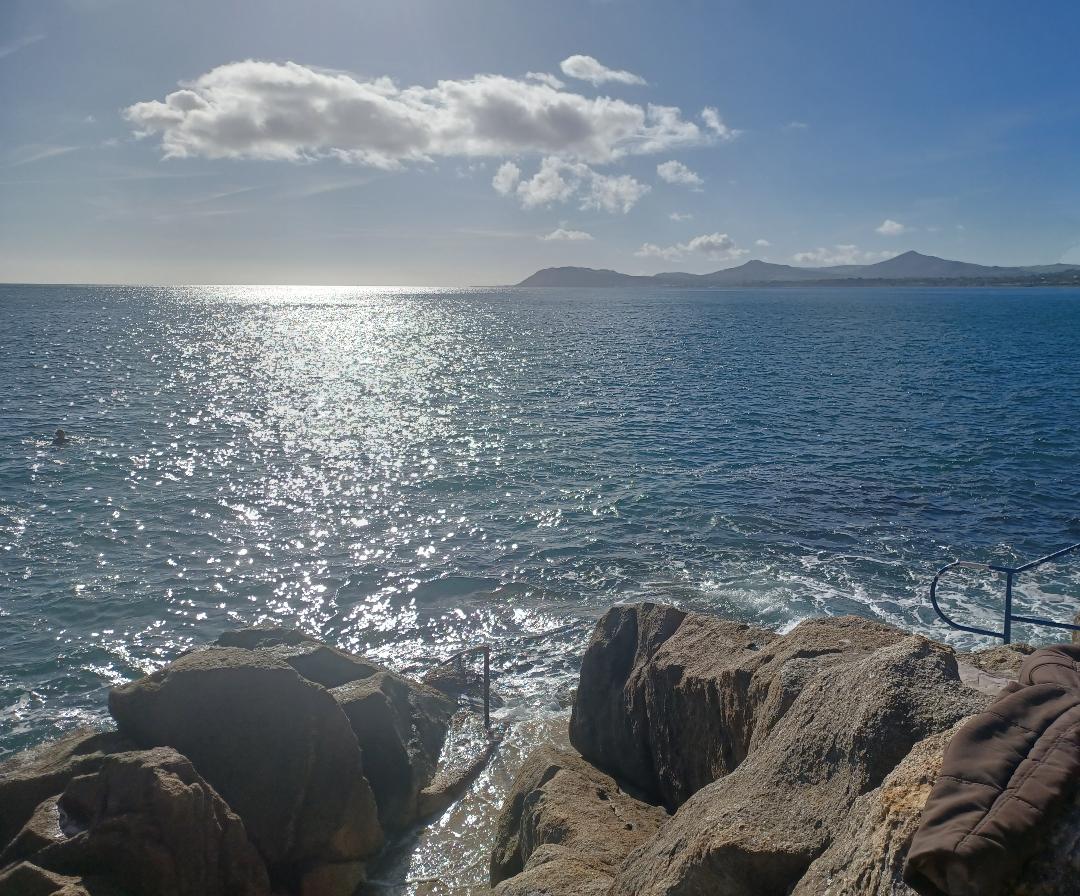
I’ll meet Julia and Teresa for our first dip of the season and I’ve no doubt that the water will be freezing. Our last swim was 18 December, so it’s been a while and I can’t wait to get back in. The benefits of sea-swimming are well documented, but for me the purest moment is when the dread and fear turn into giddiness and joy. Even thinking of the water makes me feel better, I honestly can’t wait for the shock of it.
Therefore, I’ll leave you this month, with a quote from Shantaram about the water.
I wish you a very happy new moon, and I’ll see you again at the next new moon, next month.
Shantaram Gregory David Roberts (p. 374).
“Our life, it probably began inside of the ocean,” Johnny said quietly. “About four thousand million years before now. Probably near hot places, like volcanoes, under the sea”.
I turned to look at him.
“And for almost all of that long time, all the living things were water things, living inside the sea. Then, a few hundred million years ago, maybe a little more – just a little while, really, in the big history of the Earth – the living things began to be living on the land, as well”.
I was frowning and smiling at the same time, surprised and bewildered. I held my breath, afraid that any sounds might interrupt his musings.
“But in a way you can say that after leaving the sea, after all those millions of years of living inside the sea, we took the ocean with us. When a woman makes a baby, she gives it water, inside her body, to grow in. That water inside her body is almost exactly the same as the water of the sea. It is salty, by just the same amount. She makes a little ocean, in her body. And not only this. Our blood and our sweating, they are both salty, almost exactly like the water from the sea is salty. We carry oceans inside of us, in our blood and our sweat. And we are crying the oceans, in our tears”.
“It was one of those March days when the sun shines hot and the wind blows cold: when it is summer in the light, and winter in the shade.”
Charles Dickens, Great Expectations
11. Watch Comedy
March was a month that needed comedy.
March needed stand-up routines and repeats of Schitt’s Creek or VEEP. March needed something to distract us from the end of pandemic restrictions coinciding with the start of a potential thermo-nuclear war with the former Soviet Union.
March needed comic relief.
The absurdity of life has once again provided evidence that if there is a creator, he/she/they are experimental performance artists, with an interest in the macabre.
March needed fun and one hour stand up shows on Netflix with people like Taylor Tomlinson and Whitney Cummings.
If stand-up comedy doesn’t do it for you, might I suggest you watch a documentary about our cosmos. This universe is hysterical. If you don’t believe me then try watching something about Jupiter’s moon, Europa, which has a ten-mile ice shell and an ocean that is leaking out into wider space.
Leaking into wider space! Now that’s hilarious.
12. Stretch
When it comes to yoga, I’m ethically non-monogamous.
I’ve done Iyengar classes with my friend Teresa. I spent a wonderful winter doing Bikram in a hot studio in Dublin, and I’ve flirted with Hatha all over town.
During the second year of the pandemic, I did Adriene’s 30-day online yoga challenge. Then I got stuck on Day 30 and repeated it, day after day, for about nine months.
Every day Adriene would say to me, “well done. You made it. It’s Day 30,” and every day, I nodded back at Adriene and said “Namaste”.
In March, I started stretching.
I lay on the floor and listened to where my body wanted to go and stretched out my back, arms, or legs. Sometimes, I just dangled my feet high above in the air, and when I was finished, I stopped.
13. support MASI
The Movement for Asylum Seekers in Ireland (MASI) was set up to advocate for the end of Direct Provision, which sadly still exists and is abhorrent. I support MASI, as an ally, by sharing their information online, attending events, and wearing my “End Direct Provision” T-shirt when I run in Phoenix Park.
People often wave, stick up their thumbs, smile or beep their horns when I’m wearing my “End Direct Provision” T-shirt. For the longest time, I thought they were just being encouraging of my running. Now I accept that they too support the campaign.
You can’t be in favour of Direct Provision, so it’s a very easy campaign to get behind, and judging the reaction in the park, most people are against it.
14. Play Wordle
When I guess the wordle in five or six guesses, I call it a game of chance.
When I guess the wordle in two or three guesses, I claim it’s due to strategy, concentration and a high level of emotional intelligence.
There’s no reason why it should be such a glorious game to play, or why sharing results with my friend Helen, every day, makes me laugh and snort.
It’s the silliest and most ridiculous activity ever invented, and I want to play it forever.
15. Accept Disappointments
Recently, I experienced a Great Disappointment when I didn’t get something that I wanted.
At first, I stamped my foot, and pouted and scowled at the sky, but within a couple of days my brain convinced me that I didn’t want it anyway.
Had the original desire been a mirage?
Or was the new feeling a form of resilience to help me accept the disappointment?
Either way, it made me realise that desires are very fickle creatures and not engaging with them too seriously, is possibly one of the keys to happiness.
Also, complaining about anything this March is absurd. It’s like attending A&E with a stubbed toe when the patient in front of you doesn’t have a head.
“Ouch, my toe is hurting,” you cry to the nurse.
But the nurse hardly hears you because the nurse is too busy with the patient in front of you, who doesn’t have a head!
What’s it all for?
What’s any of this for if not to try and improve and get better and be kind?
I hope I’ll always be disappointed and shocked when things go wrong. It means that even at 50 I have great expectations of how life should be. I hope I’ll always be surprised when people tell lies or demonstrate selfish greed.
I want to replace the insatiable consumer child inside of me, with a wiser woman who wants to live, improve, and get better.
Maybe this whole thing is a silly April Fool’s joke that got out of hand.
Maybe that’s simply all there is to it.
Or maybe, some trillions of light years ago, when our own sun hatched, there was an expectation that things here could be fine.
Happy April Fool’s Day, and a happy new moon, and I’ll see you here for fine things next time.