Author: Ruth Powell

  • Eleni

    Eleni photo

    One evening one summer I found myself teaching English to a teenage commercial sex worker in a brothel in northern Ethiopia in return for free beers and cigarettes.  Her name was Eleni and she was sixteen and the first thing she said to me was “I don’t want to talk about AIDS, you Europeans always want to talk about AIDS, but to me it is not so important”.  So we didn’t discuss it.  Not at all.

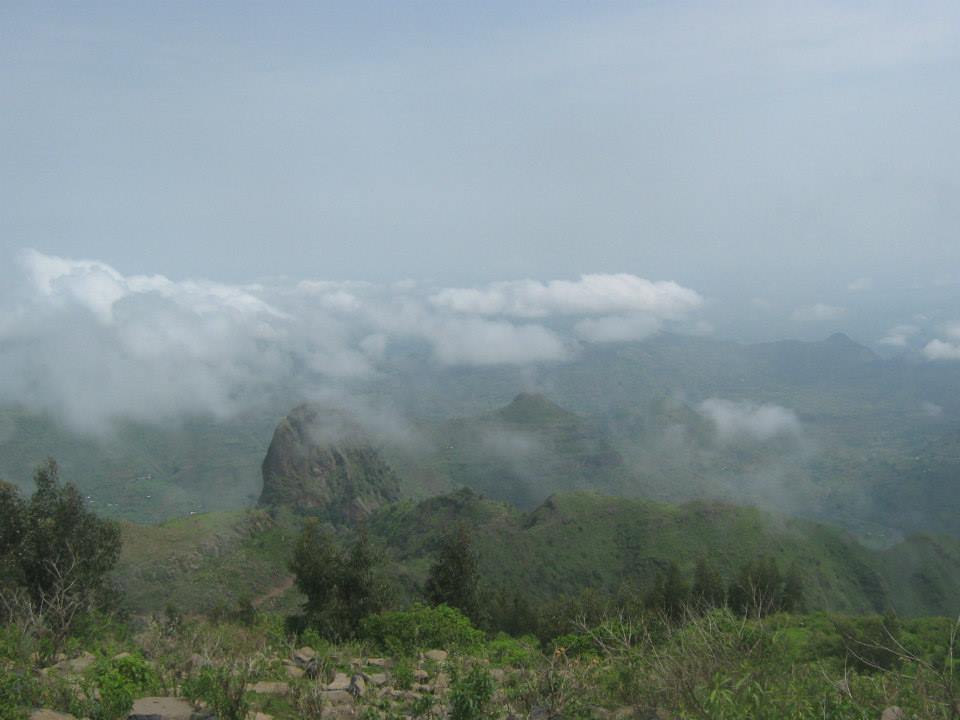
    I had descended into Addis Ababa early one morning a couple of weeks earlier while the cool dew clouds were still settled on the mountains surrounding the city they call New Flower.  During my first few weeks I engaged in appropriate tourist activities such as museum visits and waterfall sightseeing excursions, but when I got to Debark in northern Ethiopia I was tired.  Tired of taking photos, tired of traveling alone, tired of checking the time for the next bus ride and so I welcomed the chaos the electrical storm brought.  It caused a landslide which made the road impassable and it also broke the computer in the bank which made accessing cash impossible, so I was stuck in this chilly little town with just 4 dollars and no ways of leaving.  Then I met Eleni.

    “If you teach me English, I will pay for your beers” she offered as she sidled up to the bar next to me “I know the owner of this house so your room will be free and you can stay until the road is fixed” so I made myself more comfortable and agreed to her deal.  There was a single silver pink clip in her curly brown hair which matched the same pink of her lipstick and chipped nail polish.  The youth of her skin matched the short leather jacket she was wearing, but not the high-legged boots with the broken heels, or the way she exhaled my cigarettes.  Yet, despite her bored expression she seemed to enjoy talking.

    She told me about her short sixteen years of life.  The eldest of five children she had moved from her village when her father died to support the family, and at first, she cleaned rooms in the hotel and ran errands for the owner.  Then some man said she was beautiful while another one offered her money for sex and it started like that.  One man turned into another and this was now life.  It wasn’t the worst of lives but she hoped for better…

    “And it’s better with the foreigners because they pay in dollars and this is why I have to learn more English” she said to me.  So we began our classes.

    I met her at the bar before or after her sex with the clients and she would practise her English.  At first she just looked around the room vacantly, but when she was sure there were no customers present she would write down her new words in her tatty little notebook; her verbs and her tenses, her adjectives and nouns.  She would repeat new vocabulary carefully with the precision of a poet until she was sure she had them memorised in her heart.  For three nights we did this and I grew to be fond of her.

    But then one morning, without much warning, the road was fixed and the bank was working so I was able to buy my onward bus ticket and leave Debark.  I looked for her all morning, so that I could say goodbye and give other words of such insignificance.  But I couldn’t find her on the main street, in the bars, down near the river or in the Church.  So I got onto the bus, headed west and  never saw her again.
  • Things that mattered


    We finished class at 10.00pm so Egiimaa and I would walk home together.  She was so delighted on the first day of term that we both lived so close to the wrestling palace that she said to me“teacher  Ruth, we will walk home together now and talk about our days”.  So she linked arms with me and we wandered like penguins through the snow covered un-lit streets of Ulaanbaatar.  Talking about our favourite students, our days, our lives.

    Egiimaa told me about her days when she was a child.  She told me that she thought the films were far more beautiful when she was a girl when they didn’t show sex or horror but just love and dancing.  She told me that she missed the films where characters burst into song and the extras joined in with the dance steps.  She missed the ballet too.  The Soviets had such nice ballet, she told me.  One night after class she said “teacher Ruth, the University director would like you to teach the American Literature course”.  Intrigued I asked her “what part of it” and she laughed as she replied “well all of it.  Our students need all of it ”.

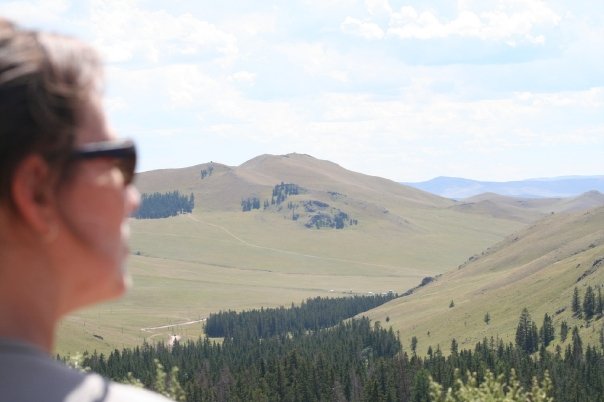
    So the next day I went to the university library to find American Literature.  The library was in the basement of the building with steep stone steps and the smell of yesterday.  The librarian put both hands to her mouth to physically prevent herself from laughing when she saw me and then she handed me a three-page form to complete before I would be allowed entrance.  Later I would discover that her name was Altanod which means Golden Star and even later still I would go horse-back riding with her and drink fermented mare’s milk with her grand-father as the sun set on the Gobi.  I would also go to the funeral of her brother who died of TB, but on this day Altanod let me wander through the aisles and let me touch the book jackets as you might the glass over precious museum pieces.  Book after book on the former glory of the former Soviet occupier slept on the shelves.  Biographies of Stalin and Lenin, 5 year plans, agricultural farming techniques, Soviet collective systems and a whole aisle devoted to the space race.  But no American Literature.  As with so many days in Mongolia, time took on another meaning for me there and perhaps an hour or perhaps three went by as I looked at these books from the past.  Eventually, Altanod brought me back to the present as she gestured I should follow her into the shadows of the back office of the library.  I followed her obediently as she pulled down an un-opened box from the top cupboard with a USAID label on the outside.  We un-packed the box like children  and found inside 50 copies of Death of a Salesman  and an annual report from USAID.  Delighted I thanked Altanod and helped her number the books and place them on aisle 14.  We set them up in their new homes in between Rasputin’s discovery of self and Stalin’s concept of totalitarism and we were delighted with our days work.

    When Altanod asked me what Death of a Salesman was all about I tried to explain that it was a critique of capitalism with a notion that even the struggles of small people mattered.  People who others might describe as a dime a dozen were important and had voices and had stories to tell and that our collective power would always be much stronger than our individual goals or the charms of consumerism.   I thought she would be interested but her response to me was “is sounds very sad.  I don’t like sad stories” and she never read a word of it.

    That night was particularly cold.  It was minus 42 and even Egiimaa was walking home quickly.  She kept her questions very brief that night as her mouth was covered by the camel wool scarf I’d bought her for New Year.    

    All she asked was “how was your day teacher Ruth” and all I could say was “it mattered”.

  • Disturb Her

    There’s a cloud over Lake Tana that reminds me of summer and a day in a boat when Amara took me looking for hippos.  The rains had been ferocious the night before but this morning the lake was calm while flamingoes helped the fishermen in their red papyrus boats look for the freshest fish of the day.

    “Don’t move at all or the ripples will disturb her” Amara said when he saw the female hippo bathing with her two young calves.  I didn’t move an eyelash and could barely breathe.  She spotted us from a distance and wriggled her ears, came closer to her young and then all three gracefully turned under the water like Disney ballet dancers accidentally marooned in 21st century reality.  Amara waited a while before putting the engine back on, in case the mammals were under the boat but we started to move north soon and I watched as the birds followed us.  Bright yellow, green, purple and pink birds that I had never seen before and didn’t know the names of and still don’t.  Later we stopped again, this time for our picnic of mangos, bread and fried chicken and we spent the entire day with just one sentence between us “don’t move at all or the ripples will disturb her”.

    By sunset the lake had changed and Amara was concerned that we should stop and rest before it got too dark.  The equatorial sunset reflected on the water and the source of the Blue Nile was stiller than it had been all day.  As we came closer to the shore I could see some women collecting water from the lake in their bright orange plastic containers while some children bathed and swam and laughed.  The children waved at me and called out “hello foreigner” and I waved and shouted back at them “hello Ethiopians”.

    Amara smiled at this interaction and asked me again “why don’t you have any children?”  I shrugged and tried to explain again that I neither knew why or how I didn’t have any children, that it had never been a conscious choice at any time and that now it was too late as I was too old.  I wasn’t sad about it as I didn’t usually think about it much and normally people in Europe didn’t question me.  Only in Ethiopia was it a topic to raise such interest.  He frowned and replied “everyone should have children” as if this were an absolute and well documented truth of life.

    We tied the boat ropes to a lime tree and walked the short way back to his home.  Outside his house we sat and drank some beers and honey wine and smoked cigarettes and ate injeera with lamb.  We talked about his work and his life and his son who lived with relatives in a nearby town because his wife had died and Amara couldn’t take care of him alone.  But it wasn’t long before we came back to his fascination with my life without children.

    “Why don’t you take my son back to Europe with you, give him an education, let him live with you.  This would be very good for him.  And also very good for you” Amara suggested with a casualness usually reserved for asking someone the time or what their favourite colour is.

    “You serious?”

    “Sure, why not?”

    I couldn’t think of a reply so I finished my beer and went inside his house and crawled under the mosquito net we’d bought the day before at the cattle market.  The rains began again and splashed down onto the corrugated iron rooftop with surprisingly subtle synchronicity and eventually I fell asleep to those sounds while he stayed outside finishing the honey wine and the last of the cigarettes.  He was watching the lake and watching the bright night lightening storm and might even have been watching as a female hippopotamus took care of her young and wriggled her ears.

    Don’t move at all or the ripples will disturb her.

  • Yak Cabaret


    Image

    Yak Cabaret

    In this one you are sitting in a ger with your new herders’ boots on, showing Batmunk a map of Monoglia from the Lonely Planet.  “It’s very beautiful” he tells you, but his smile implies a lack of belief.  In this one you are tired after your day with the horses, the milk mutton soup and the sunset.  Batmunk has been practising his English with you for an hour and you are pleased with his improvements.  He wants to see other photos from the guide book too and on page 91 he thinks he sees one of his cousins from Kazakstan.  He marvels at the photos of the people in the city eating pizza, talking on cell phones and going to discos and he tells you that next year he’ll go to the city to buy Calvin Klein underwear and a new pair of jeans.

    Even at sleep time his fascination with dogs continues “do you really keep dogs in the house in your country, and you bath them, and you buy them different flavoured tinned food, and they have appointments at the vet?”  He doesn’t love his dog.  His dog works and has a job to do.  How can you love a dog?  He starts to laugh again remembering your earlier linguistic mistake when you tried to ask him to “hold the dog” but told him to “hold the husband” instead.  He’s laughing uncontrollably now as he repeats the mistake “hold the husband”, “hold the husband”.

    “You come from a strange, mysterious and exotic country” he says to you.

    You are from the ghosts of Treharris and the uncle who died.  He is from a circle home made of felt and camels with two backs.  You are from the steel and the mines and the park bench overlooking the stream.  He is from a statue of Ghengis Khan and mare’s milk.  You are from a woman with red-lipstick waiting for the bus to Blackpool.  He is from the delights of delusion and days of delays.  You are a herder’s daughter, he is your own memory and trapped like a marmot.

    The outside darkness encourages Batmunk’s silence so it is you who starts the new questions.  “What do you want to do after you finish school?” you ask the question dreaded by children everywhere but he doesn’t seem to mind.  “I’m going to have over one hundred horses” he says “and then I’ll buy a motorbike.  After that I will marry a beautiful girl who can sing.  She will have two children, the boy will help me with the herd and the girl will finish school and become a doctor, or a teacher like you.  I want her to be a teacher like you”.

    The only sound you can hear now is the dog barking itself to sleep, the sound of Batmunk sleeping and the fire crackling at the end of another day.  In this one, you are aware of the moment and the outside of the frame, the gaze beyond the photographer’s eye-line.  In this one, for once, your own perception of reality matches the second of the snap and click.  You remember the feeling of those new boots, the smell of the fire and the milk in your belly.   You can see Batmunk clearly sleeping in the tiny bed with you with no one around for a hundred miles and you can hear his breath.  You can hear the groans of the yaks on the mountains getting quieter as the night sky takes control of the steppe and you remember the mystery of not being lonely.  The sound of a yak cabaret under the azure night and a moment of a picture you’ll never have again.