Lough Ree is in the middle of Ireland, an easy ten-minute taxi drive from Athlone train station, and it’s on Lough Ree that fifty-two islands sit. One for every week of the year. The water rises during the wintertime, and it drops during the summer months and that is the way it has always been.
Tourists flock to the edge of the water and they learn about Queen Maeve of Connaught who lived and bathed off Inis Cloitherann. She was a brave and ambitious warrior queen, and stole Ulster’s prize bull, the Donn Cualing after a long conversation, with her then husband, about who owned the most impressive cattle collection.
She had many lovers, and several husbands and was said to be beautiful, charming and fun. She had seven sons, who were all called Maine, and two daughters, and it was said that she had a great sense of humour and was wise.
This was a queen, when queens were queens. She was not the queen of Instagram.
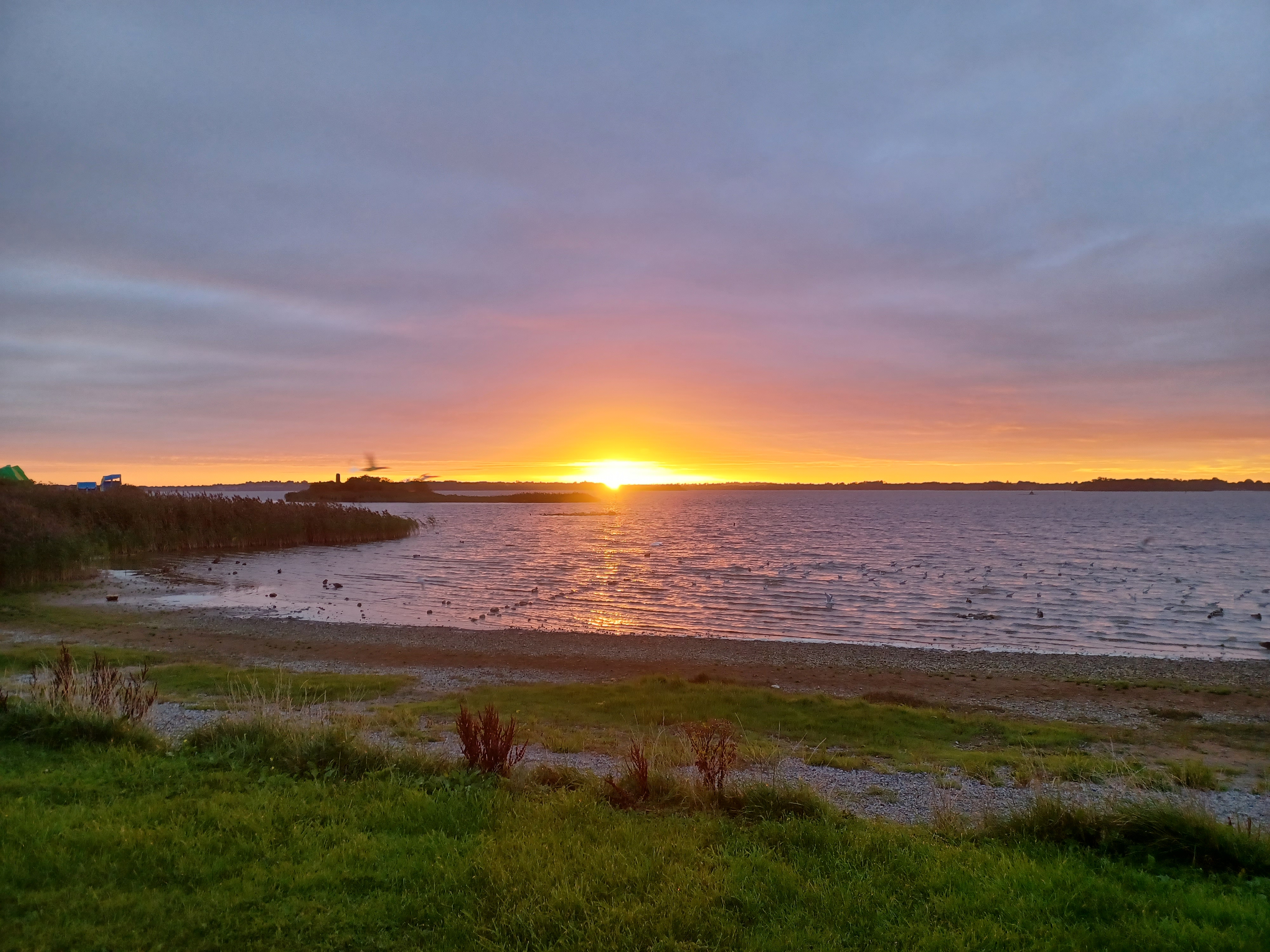
When the sun rises over Lough Ree, you can’t help but feel connected to it all.
The tourists sit on benches or on blankets on the ground, and everyone feels peaceful there.
It can be hazy, misty, orangey and sinewy.
It reminds you that life is temporary and today wasn’t guaranteed. No matter what, we may as well be grateful for the sunrise over Lough Ree. Not because of oneness, or wellness or fruitfulness or soulness or anything else you can buy and sell, but because it would be rude not to.
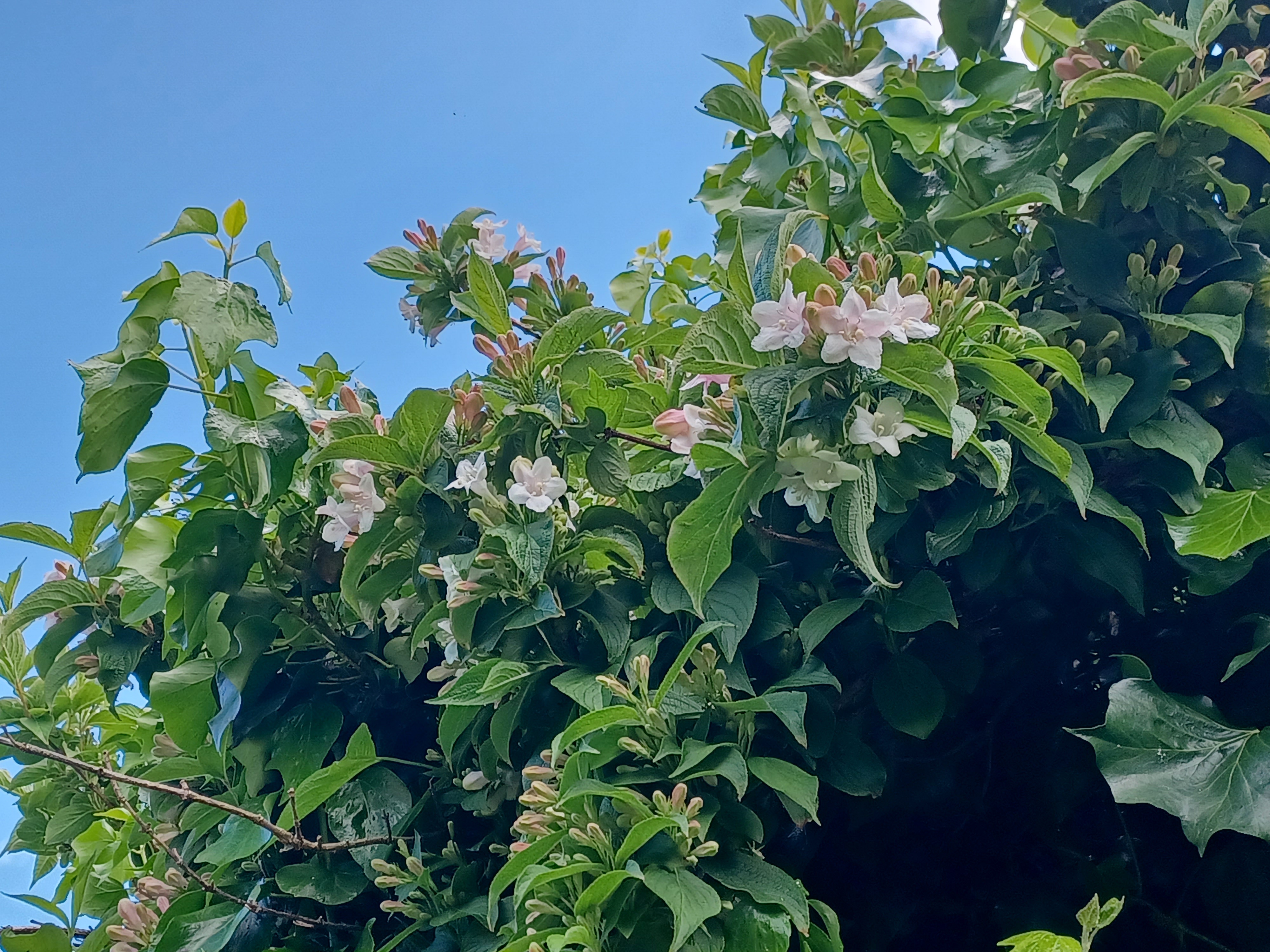
The tourists notice that roses are still blooming, in the gardens near Lough Ree.
Their delicate petals on show for such a short time. All year through they survive drought, heavy wind, rain and all the frost. For this surprisingly short chapter of bloom.
That’s what it’s for.
Strangest of all are the memories.
Time hops back and forward near Lough Ree. Now, and later and before, are all in the same colander, mixing around gently. One piece simply doesn’t work alone, and everything is clear and extraordinary.
Queen Maeve would want us to bathe in the waters and laugh with friends, and feast after successful cattle run, before someone tries to take our queendom away.
Autumn approaches, the nights draw in, and a coolness comes in the air.
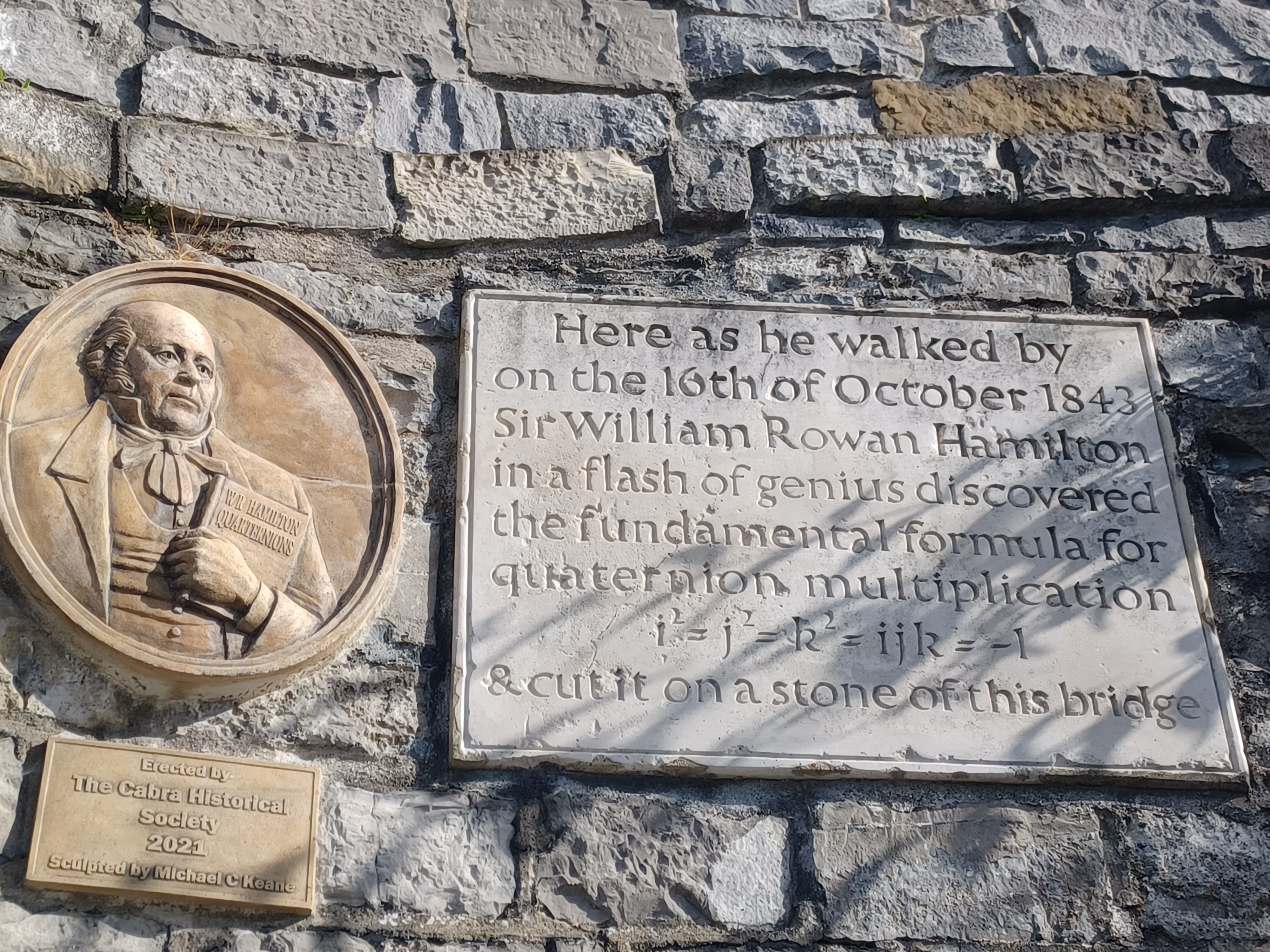
On the 16th October 1843, Sir William Rowan Hamilton was walking on the Royal Canal, with his wife, Helen Bayly, when, in a flash of genius, he discovered the fundamental formula for quaternion multiplication.
The formula was of course;
i2 = j2 = k2 = ijk = −1
In case he forgot it, he cut it into stone under the bridge, and later wrote to a friend,
“And here there dawned on me the notion that we must admit, in some sense, a fourth dimension of space for the purpose of calculating with triples … An electric circuit seemed to close, and a spark flashed forth”.
That’s when brains were brains.
When people would trip over formula while out walking along the canal and when people paid interest to the wanderings of the mind.
Hamilton had been living at Dunsink Observatory, with his four sisters, Grace, Eliza, Sara and Archianna, before he married Helen and was interested in algebra, classical mechanics and optics.
He also dabbled in poetry.
The Dunsink Observatory, built in 1785, sits on a hill between Finglas and Blanchardstown, and still houses wonderful books, photographs, paintings and astronomical instruments. There is a striking image of the earth, to scale, desperately close to the sun, which is spewing out gas. The earth, of course, looks insignificantly tiny, next to the ferocious sun that could accidentally dribble, and immolate us all instantly.
Dunsink time was different to Greenwich and Galway for most of the 1800s, only synching up at 3.00am on 01 October 1916, both during and outside of daylight-saving time. But that’s just legal time. According to the stars and the sun and the moon, Dunsink is, and will always be, twenty-five minutes and twenty-one seconds behind Greenwich mean time.
The main telescope is kept in a dome in the garden at Dunsink, and people still come to see it. It’s where they gaze at the stars and observe the moon, where they learn about the movements of the night, and admire constellations.
Glorious stars at nighttime.
Quaternions are a language to describe three-dimensional experiences.
A dancer will move, a sculptor shapes, a poet will express themselves and all this happens in space and time, and a quaternion is a way of describing these things to non-sentient beings, such as computers.
It’s a way of writing it all down, explaining it all, and keeping accounts.
Our turning earth is so strangely vulnerable as it oscillates through space and time. Its elegance and mysterious scariness changes as it drifts.
Further down the canal, in October 1843, the Hamiltons would have seen such beauties as grey herons and otters. Perhaps they waved at people on the canal boats or stopped to gossip to friends or neighbours. There would have been bees and honey, although it was too late for spotting dragon and damselflies.
They might have seen kingfishers; they might have smiled at the moon.
It is said that it is harder for a rich, young man to enter the kingdom of heaven than it is for a camel to go through the eye of a needle. Thankfully, I’m not rich, young or male, so this is one problem I don’t have to give my attention to.
Nevertheless, back in chapel, in south Wales in the 1970s and 80s I learned about the parable of the rich, young man and I imagined the camel squeezing itself, headfirst, through the tiniest of needles, that my mother kept in a pin cushion, in her corner of the room. There were treasures in that corner, alongside her glasses, left-handed scissors that no one was allowed to use, chocolates, cigarettes, and tin boxes that housed other surprises such as cut-out articles from the newspapers and postcards from France. There were new envelopes in that corner, waiting to be used, but rarely a camel.
In Mongolia, they play camel polo on the main square with the two humped Bactrian camels, but not during mating times when the males can be violent and bite and spit and sit on other male camels. Those camels too, were unlikely to fit through the eye of a needle.
No one ever asked the camel if it wanted to complete the ridiculous and absurd task?
No one ever told it, what it would win, if it completed the task?
The camel might respond, “no thank you. Honestly, I’m grand as I am”. Or it might speak Mongolian or Welsh. It’s hard to know, for sure, where the camel’s back story begins or ends, and in any case how it says it doesn’t want to do something, is less interesting than the sentiment, to begin with.
Do camels like the autumn?
They might enjoy a change in air temperature, and the fading light, or perhaps it might make them melancholy. Perhaps they welcome the start of the darker nights, as it gives them a chance to catch up with correspondence.
All silliness aside: some teachers said that the “Eye of the Needle” was slang for a tiny gate in the wall of the city, where traders would enter and exit before going back to the desert. The camel driver, now must try time and time again to manoeuvrer the hissing, spitting frustrated camel into a smaller space.
Gone was the freedom of the sandy dunes and mirages.
Replaced instead with a settlement of noisy people, pushing and moving and trading and being annoying. Of course, the camel preferred the outside space with the wide-open expanse of sky, sand and nothing to set the time by. No shadow, shade, remorse or regret, no horizon, or river or mountain.
Gentle camels of the steppe, let us be.
Watching my mother knit, crochet and sew is a wonderful memory that I can re-watch any time. She could talk, drink coffee, watch TV and even nod off for a nap while knitting baby clothes and blankets, jumpers and doll’s clothes. There was a rhythm to her quiet hobby, and it was all for her. Someone ended up with the finished product, and then she started a new one, all over again. It wasn’t for content or the spotlight; it was simply a hobby that she had.
Now we can’t sneeze without recording it and blasting it out to the stratosphere to wait for validation and admiration. On occasion, someone doesn’t like our sneeze or thinks our sneeze is offensive, or out of lane. Then we curl up like a hedgehog and wait for the threatening enemy to move away and find something else to worry about.
Camels don’t know that hedgehogs exist, and hedgehogs can’t even dream of camels.
It turns out that ancient Greek scholars dispel the idea that the “Eye of a Needle” was slang for a tiny gate, after all. And so, we return to the fact that it was a metaphor all along.
The summer went by so quickly, and now the first days of September have presented themselves, in grey, damp scarves that threat of dark evenings. The garden birds, unused to falling water, are learning how to ride the wind. They realise that they no longer need to clean their feathers in the dry soil anymore. Their bird shaped dents in the dust, are fading.
Is there anything as nostalgic as September breezes?
Especially after a summer of funerals, fires, urban tragedies and loss. Summer is meant to be filled with ice cream and long evenings at the beach, with the setting sun as the clock. There are not supposed to be tears in August.
This life is short.
It makes no sense to hoard all our pebbles to ourselves, be mean spirited or unkind. If there is an afterlife, we need to be accountable for our days here. If there is no afterlife then it’s even more important to tend well, while we breathe.
The young birds in the garden are learning about rain, after the drought, while we shake our heads and try to make sense of it all.
This August in Ireland another car filled with teenage boys died sudden, violent deaths, after slamming into another car of people going to the airport for their holidays. The boys drove the wrong way on purpose, so it was a type of suicide, encouraged by having nothing much to lose.
All the adults stand by and say, “this sorrow I blame on social media” because they can’t blame rock’n roll music and video nasties, anymore. Some adults observe the heavier breadcrumbs, as these boys (now dead) are forever hated.
Loss feels wrong in summer.
It feels wrong to sit outside a funeral and notice the smells of cut-crass, suncream and a distant barbeque. The blue skies over the mourners, dressed in black.
And fires too: set off by other boys, with no one to guide them. The villagers blame the parents and the fact that young men will always be wild. Can we bear to lift the mirror up to selves?
How did we not mind them better? Keep them more carefully, teach them wisdom, and how to keep well? It is us who left the matches out, left the vehicle unattended, built enormous chasms that cannot easily be marched over.
If not us, then who?
It begins with the sentence, “we could have done better”.
So this September breezes come, and they will go too. Its distance travelled can be light. The tomatoes ripen, the birds re-visit, the sky changes shape. We are here now, we live, we breathe and we are extraordinary.
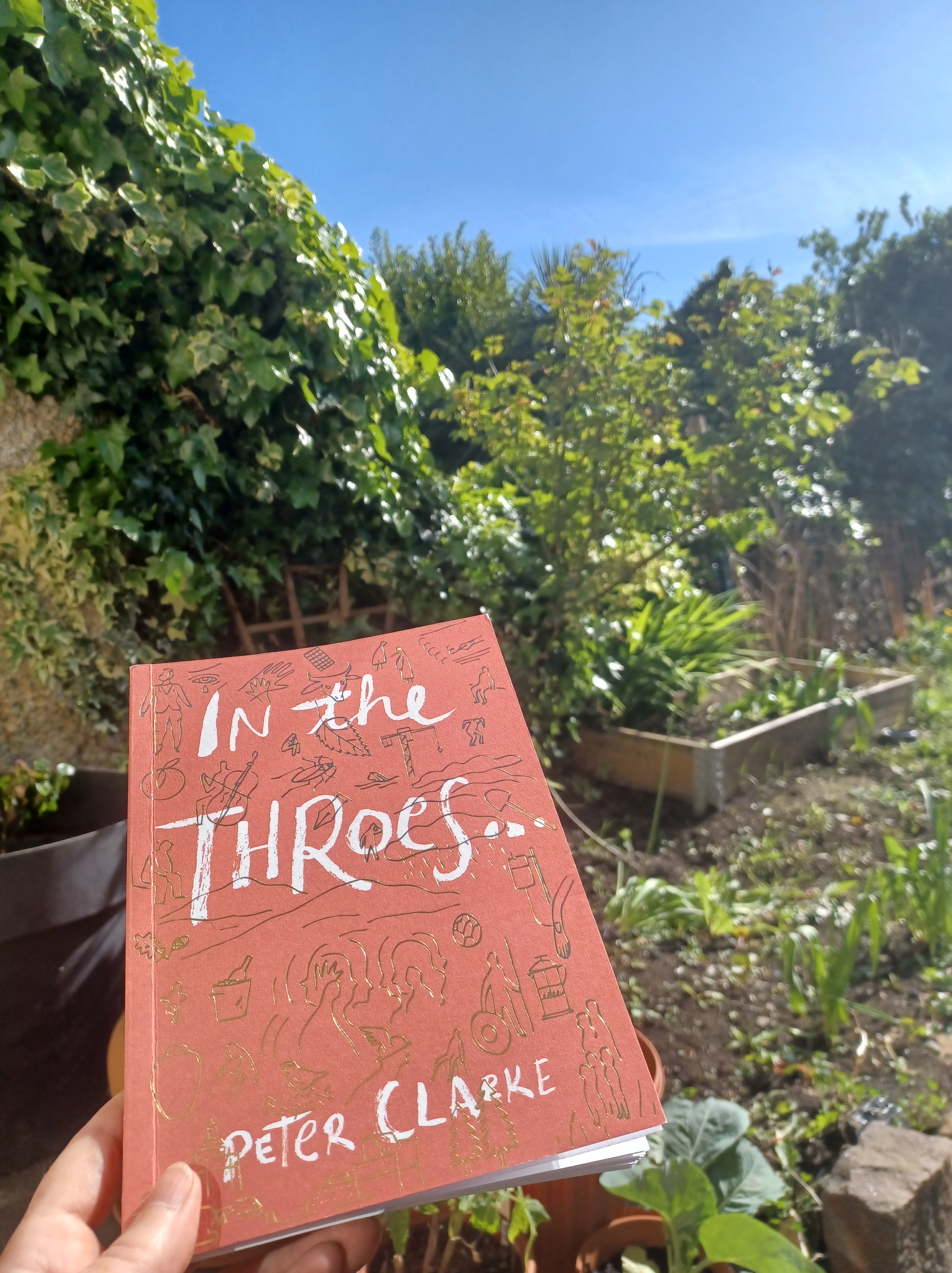
“In the throes”, by Peter Clarke, is a collection of poems about grief, loss, sadness and the human resilience to survive it all. His poems stretch over a lifetime of memories on the paradoxical nature of joy nearing pain.
All of the poems are exquisite.
I’ve known Peter Clarke for a while.
We’ve met at the Sunflower Sessions at the Lord Edward, and through my work with the Dublin City Public Participation Network. We bump into one another at literary events and volunteering and community events equally. I’m never truly sure if I know Peter from work, or if he’s a friend, who comes to my work things.
In any case, he’s a lovely poet.
His poems can refer to Greek myths and Dublin legends with steady ease. He allows us behind the veil of his most intimate losses, and it doesn’t feel uncomfortable there. He can be light and humorous and playful, and his poems can be angry and frustrated by injustice, unfairness and unkindness.
The poems are reflective but never self-indulgent. They offer no quick cures, or self-help ways out, but they are not hopeless. In many ways, the more intense the pain, the more delicate the golden thread of wisdom.
“In the throes” is a grown up collection of poems, about the challenge of being fully present in a messy, complicated and challenging world. And I’m so very proud of my friend, Peter Clarke, the poet.
Watching the vertical tango of the mayfly, a 300-million-year-old dance, which is too long to comprehend, so we use the word “eternal” instead.
Everything is OK then, when the males look for mates in this convergence of swarm. The smaller concerns are extinguished and fall dead to the ground.
Dead like dodos, and all the other extinct ones, ones that you don’t even know the names of.
But somehow, this tiny mayfly, this nearly invisible presence continues. Only visible when you look for it.
The small birds will eat them; the humans will brush them away.
The kindness, love and transitions are what we notice from the eternal migrations at sunset. Give attention to the ever-changing shapes of shadows. Remember that cloud shadow on the mountain, and what it meant to you?
You know the ending before you take the first step, and it’s more than a promise, a smile and a reminder.
Will the new year come with love and warmth and joy? Will the bells sound of pleasure? Will it bring with it, good cheer and peacefulness? Maybe it’s too soon to tell.
Better to try for attention and brighter mornings. Tether the distraction to the wall. Sing more, learn the jitterbug, walk slower through the day. Purposely slow it down.
Honestly, though, it’s just too soon to tell.
The secret hush of the eve falls. And like Janus, we see both years for the shortest of times. While noting the past and the future we, ofcourse, miss right now.
What did we learn? What did we find out more about? How were we kinder and more loving? What did we give our attention to, and what filled us with excitement and delight?
Maybe just do more of that?
When there’s a fork in the road, and we have to choose which path to take, how do we discern better? Should we take the easy road, with the daisies and the smiling cow? Or should we, instead, choose the harsher way, where the dragons spill out loss, sorrow and evil from their noses, and rancid pain from inside of their mouths? There’s a better story in the poorer choice, and a stronger lesson to be learned.
What to do if this year, is surprisingly sadder even than last year? Yes, pain. They said, “pain, my dear is a part of it” and it seems to be quite central. I’m afraid.
So it comes: another year of life. Of this mystery and magic and gravity. All that we are, were and will be, sits for a moment in quiet stillness. Mistakes and sins, accolades and prideful times, sleep and starlight.
Back straight, eyes forward. Attention. Love and kindness.
Once a year, the Sun God demands a sacrifice, on the morning of the winter solstice, of three young maidens. They are to wade into the cold water, and give of themselves freely, so that the rains can be secured for next spring.
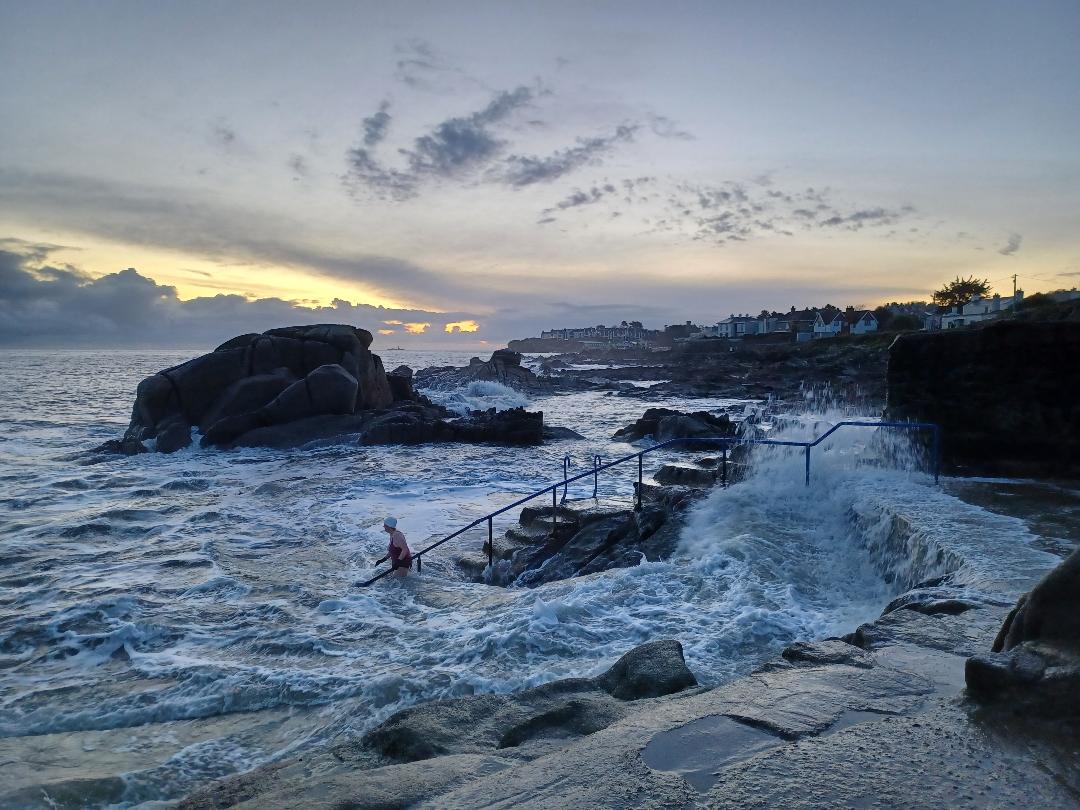
There were no fine, young maidens around yesterday morning, so Julia, Teresa and I threw ourselves into the Irish sea at 8.28am, in time for sunrise. The Irish Sea quickly spat us back out again, as the sacrifice was unwanted.
The three of us have been sea-swimming every weekend, from April until the shortest day, for five seasons and we have a very strong safety record. Many a time we’ve abandoned a swim at the 40 Foot if it’s too wild, and we only ever swim at Vico on the calmest of days. We only swim when there are others in the sea, and when our capabilities match the conditions. We swim when it feels right.
Yesterday, it didn’t feel right.
The wind and tide were low, but there was a very strong swell, which made it challenging to walk down the stone steps, into the sea. More importantly, while there were lots of spectators, sitting on the rocks to enjoy the sunrise, there was only one other swimmer in the water.
A random stranger took charge of us and began to give instructions. We should go in via the side steps, we should time our entry and exit well, we should be careful and watch the high waves. All of this was interesting and potentially helpful information, had we paid any head to him.
Instead, what followed was a spectacular 90 seconds of seriously unhinged chaos.
Julia was the first one to get battered into the railings, but undeterred she did a 360 turn around, caught her breath, and dived headfirst into the oncoming high waves. Teresa followed steadily, with a magnificent belly flop into the cold water. I didn’t even get off the steps before a wave took me under, and for a while I was neither on the steps, nor off the steps, but simply under the water circling around within the swirl. Eventually, my hand found the railing, and I popped back up again, and waved at our Stranger-Instructor to tell him everything was OK. Teresa and Julia stayed afloat for a minute, before climbing up the ladder, back to dry land.
The sunrise spectators were watching, in horror from the rocks, as we dived, jumped and fell into the water. They looked like a Greek chorus who could be singing, “why did you go into the water, on such a choppy day? Why, why, why why?”
And why did we?
I blame the Internet Machine.
The Internet Machine has made babies of us all.
It makes me impatient, desperate for attention, unwise and envious. There was a part of me yesterday, that wanted to go into the water for the photo I would be able to share on my social media. My desire for the solstice swim, pictures and all, was stronger than the inner voice telling me to go around to Sandy Cove for a calmer swim. No one would have minded if I hadn’t swum. Yet, this is the life we live.
We spend more time online than offline and even our offline lives are fodder for our content. We over-share, post for likes, offer up our secrets and private moments in exchange for attention, and we make poor decisions.
If I have one resolution this year, it is to leave my mobile phone at home more often. I plan to treat it like a land-line, and leave it tethered to a wall, in the corner of the living room. I will go outside without it, like I always did, and check it for important messages a few times a day.
This is a funny old time of year, with the darkest of days and the longest of nights, designed for sitting around a fire, listening to stories. Yet, the busyness of Christmas is marketed for relentless commercialism, high energy social interactions and envy. Instead of giving and receiving blessings, we can feel fatigued, bluesy and alone.
Some people are having fun.
And some of them are stuck in traffic behind Chris de Burgh, waiting at airports, getting stressed by family, hungover, resentful and sad. Some people are having a happy, joyful and hilarious time and some people are doing both things. The Internet Machine seems to think we must be blissed out all the time, if we are to be happy when the fully rounded human being can feel happy and sad, excited and low, jealous and kind, all at the same time.
That’s our primate condition.
Yesterday morning in the sea, I was scared at the hairy bits and exhilarated by the beauty. I was happy the situation didn’t escalate, and I wouldn’t have missed it for the world. I won’t make that mistake again, but I completely understand the pull. I am grateful I have such wonderful friends in my life, who I can count on to laugh with, at all the times.
This Christmas, I wish you wisdom.
I wish that you may discern between which political arguments you will pursue with your family this season, and which ones you will let lie at the door.
I wish that you buy yourself one nice gift, to unwrap on Christmas morning.
I wish that you notice how lucky you are, to be here at this festive time.
I wish that you enjoy the tinsel and decoration and note that they are temporary.
I wish that you are blessed by your elders, or your Sun God, or your Santa, and that they thank you for all you did for others throughout the year: that you loved, comforted and supported the people in your lives, and that they did it back to you.
I wander among them, the fiddlers and the fishermen, the goddesses and the followers of the moon. The poets and the selkies.
They opened the door, and I walked in.
They promised me honey and pomegranate and we feasted and we danced. After morning tea, the older women gave me gloves and taught me how to tend the land. In another chance meeting, they showed me how to clean an ancient well. Sometimes I smile before I rest.
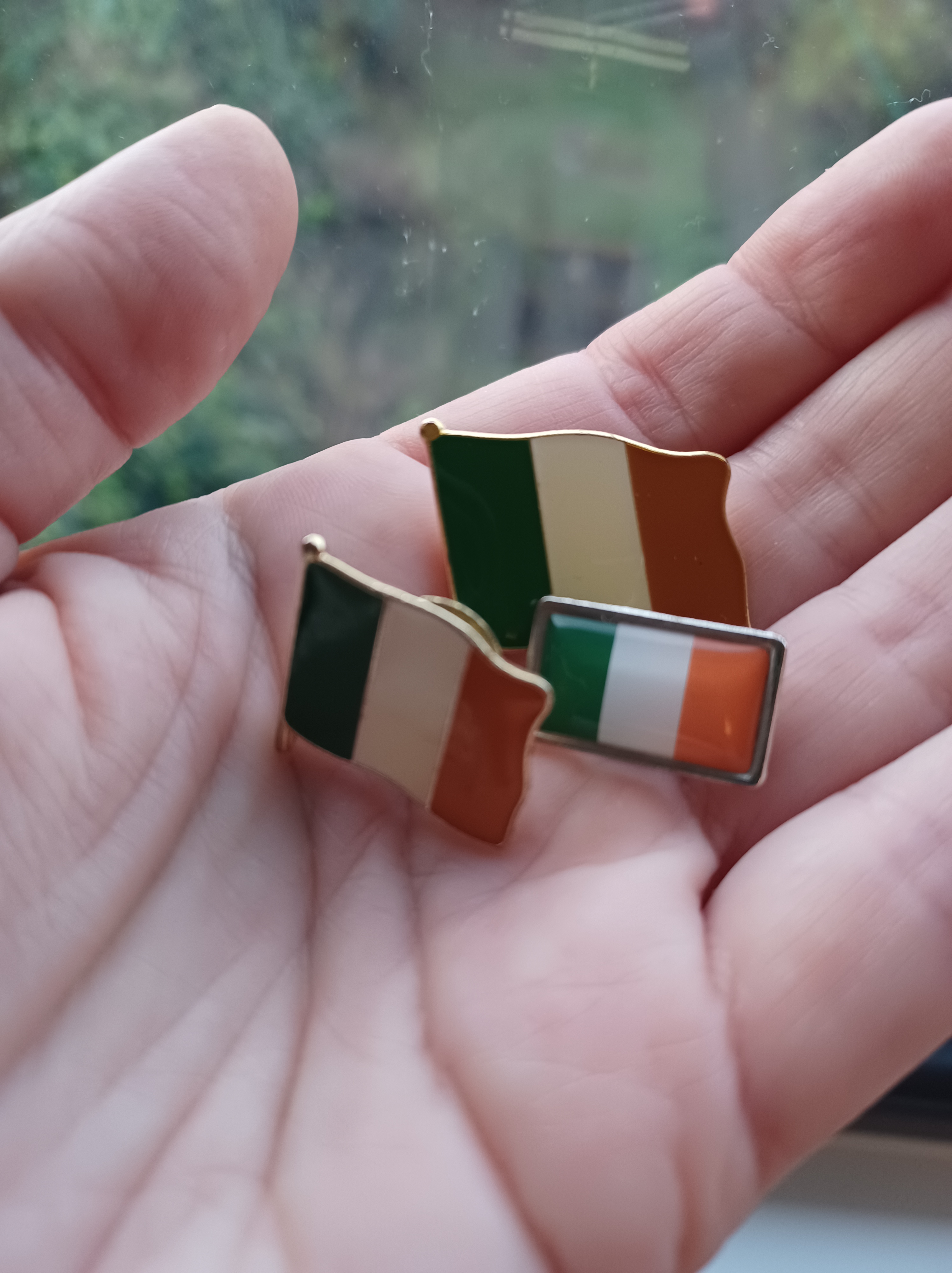
I curl under our flag, and it warms me.
It settles me when my mind wants to chase after the wind, and the rain, and the cattle, straight over the cliff’s edge and fall over into where the ships wreck on rocks underneath. Something whispers, “only follow the star that knows the way”.
Then it admits change, “No. Better still. Only follow the star that isn’t sure which way to go yet”.
Our flag feels like that childhood blanket, with a satin edge. Velvet from a curtain that kept the draft from the hallway. Warm silk, from imagined ball gowns, in children’s books.
I first met Monica Corish in the old Irish Aid Centre at the top of O’Connell Street, Dublin, back in the summer of 2012. She was facilitating a creative writing workshop for returned volunteer development workers, and I loved the Amherst teaching method she used, and the lovely tone and style she applied to it. I left the workshop thinking, “that went very well”, and we started it then.
I attended many of her workshops after that. I went to more sessions at the Irish Aid Centre, then at the Comhlámh offices on Parliament Street and later again, online. I met her creative partner and partner in life, the writer, Tom Sigafoos and I enjoyed learning from her.
I always loved her poetry.
Her beautiful, “Slow Mysteries”, (2012, Doghouse), is a sublime collection of poems about Monica’s home, “and where are you from, and who are your people?” and Monica’s travels, both in and outside of Ireland.
In, “And yes, the waves were sparkling”, she takes us to Donegal Bay where the sea was “the happiest bluest turquoise/ I had ever seen” to Ntarama, Rwanda to witness “our own unbearable grief/ for the loss of unbearable joy”.
It’s testament to her skill as a writer, and creative coach that she can lead the reader safely through difficult terrain. And it’s those guide-like ways that have come into their own in her debut novel, “Leaflight Moon” (2025, Púca Books).
“Leaflight Moon” is a story of Sligo, Ireland in 4000 BC, when our ancient hunter gather-ancestors, met the first farmers, who cut down trees and kept their animals in cages. It’s an extraordinary tale and it’s a wonderful story.
At first, this period of time, might be disorientation for readers without knowledge of prehistoric landscape. But what Monica does, and where some of her magic lies, is she treats her characters from six thousand years ago, with the same respect and dignity as she might new friends from the coffee shop, from across the street. She assumes they have desires and fears, and she gives them voice, through her poetic prose.
Monica describes the landscape of the time beautifully.
“The waning-crescent Moon moved slowly through a cloudless sky. The sea was perfectly calm, the horizon straight as a reed. They paddled past mountains – WolfHowl – Eyrie – Blade – Boar – all leafing green and speckled white with sloe thorn”.
Monica’s characters, who change names as they grow and learn more about the land, and their place in it, are fully capable of making mistakes, doing terrible things and learning from their tragic errors. Monica takes the reader by the hand and whispers, “I know this is a bit unusual, but I am a storyteller and a poet, and you can trust me. If you stay with me, I’ll show you a story as ancient as the moon”.
Some of her characters have issues with the newcomers, and their modern ways of doing things. Some of her characters fall in love, and experience pain, grief, sorrow and loss.
One of the interesting aspects of the pages, is how characters can sound so reflectively modern, without us suspending our disbelief. The assumption that they couldn’t possibly be as thoughtful as we are now, is removed, as it is their relationship with the land, the seasons, the animals and of course the moon, which leaves us lacking.
Whoever, “us” is.
Change is inevitable in this book and the desire for our species to adapt is essential if they, and we, are to survive.
“Leaflight Moon” needs concentration, in a world where our concentration is sold to the highest bidder. The reader has to orientate themselves in an unfamiliar setting and Monica is there to help us. Characters change names just as we are getting to know them, and we need to adapt if we are to keep up. Why shouldn’t our ancient ancestors get the attention they deserve as we sit around our virtual fires and listen to the stories under night fall?
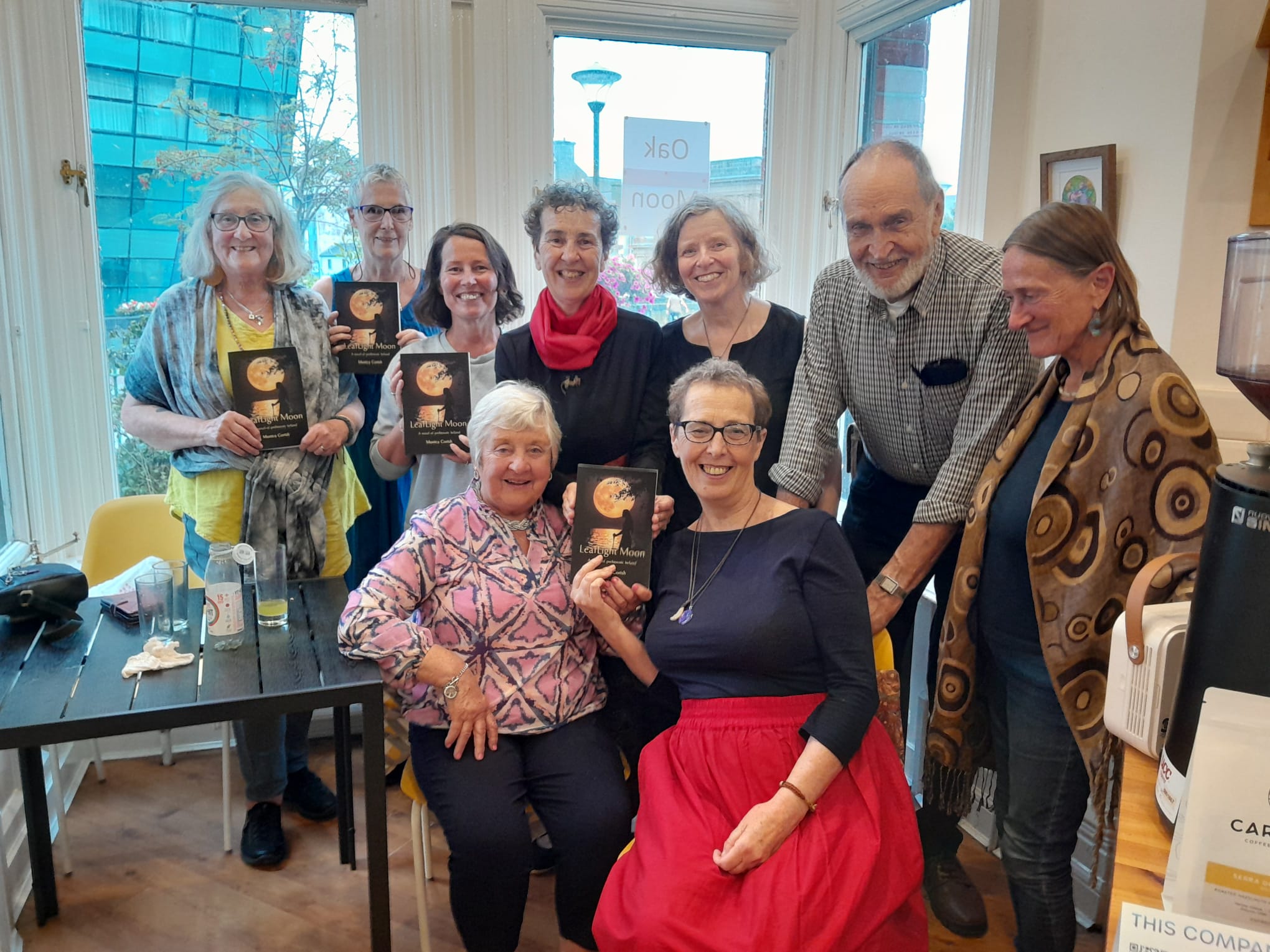
I was lucky enough to go to the Sligo launch of “Leaflight Moon” and was delighted to meet so many alumni from Kimmage Development Studies Centre, where so many volunteer development workers studied either before, during or after their overseas work. And of course, the Yeats Centre, where the book was launched, was full of Monica’s supporters, friends, family and other story tellers.
I was then later delighted to hear that “Leaflight Moon” won, the Carousel Aware Prize (CAP), award for fiction and the Golden CAP for best independently published books, at the award ceremony in Chapters Bookstore, on 10 October, 2025.
Monica is a poet, creative coach, teacher and friend and now she is a successful novelist. She has done so much, over the years, to support other writers through her writing circles, workshops and mentoring. Her warmth and wisdom deserve the success she is having with this book, and I hope she is enjoying every moment.
Much love Monica,
From Ruth, Dublin.
You can buy copies of Leaflight Moon in Chapters Bookstore, and Books Upstairs (Dublin).