Recently, a stranger started to speak to Grace in the arrival’s hall of terminal two, in Dublin airport. She was waiting for a cousin to arrive in from Edinburgh, and a man began a conversation about time.
How funny it was, he said, that when people are waiting for a plane to land, time slowed into infinity. Yet, no doubt the time spent with the people on the plane, would speed up exponentially. The man cited an article he’d read lately, about how it was possible to control the perception of time. All you had to do, he claimed, to slow down the perception of time, was to find something novel and fulfilling in each and every day.
“Like this conversation?” asked Grace, and the man laughed loudly and said, “yes, exactly so”.
They talked about technology and how detailed the airport information was compared with years earlier. Nowadays, the large overhead boards told those waiting when the plane was approaching the airport, the moment of landing, when it was taxing to the gate, and when exactly the passengers had officially landed. The man and Grace didn’t know, however, what to do with this extra information, or the moments of time gained.
Were they to split the second?
Grace was meeting a cousin she hadn’t seen since childhood and was both excited and nervous about the weekend. When she was a child, Grace spent time visiting her cousins on a farm near Ross-on-Wye. Her three older cousins seemed to Grace to have an idyllic existence with their dogs, chickens, sheep, and ponies. The cousins always smelled of earth and came in enormous, warm, cosy clothes that were so well lived in. Grace was meeting the eldest of the three sisters, at the airport.
One time they all went to Tintern Abbey to see the ruins and they took a picnic, a flask of hot tea and a blanket to sit on. The cousins, used to wide open spaces and running, grew tired and restless and started a game of hide and seek.
Grace ran as fast as she could and hid between the gravestones, far away from everyone. She huddled down beside the grave of a man who had died in 1732.
He died when he was 34 and was missed by a loving wife and eight children. Grace wondered if this man liked music if he played the piano or sang? This fellow, this dead fellow, did he play hide and seek with the children, or was he too serious for games?
Did he laugh and look at rainbows with such awe it made it want to cry? Did he dance every chance he got and marvel at the extraordinary brightness of colour? Did he lose sleep with worry about his eight children, his wife, the harvest, and the rain? And did he, at times, realise fully that the best way through his short life, was to be a peaceful warrior; to defend himself fully, while not ever causing harm to any other creatures? Did he wonder about the particles of atoms into the otherness of eternity.
Did his children make him laugh; and did he ever save some time?
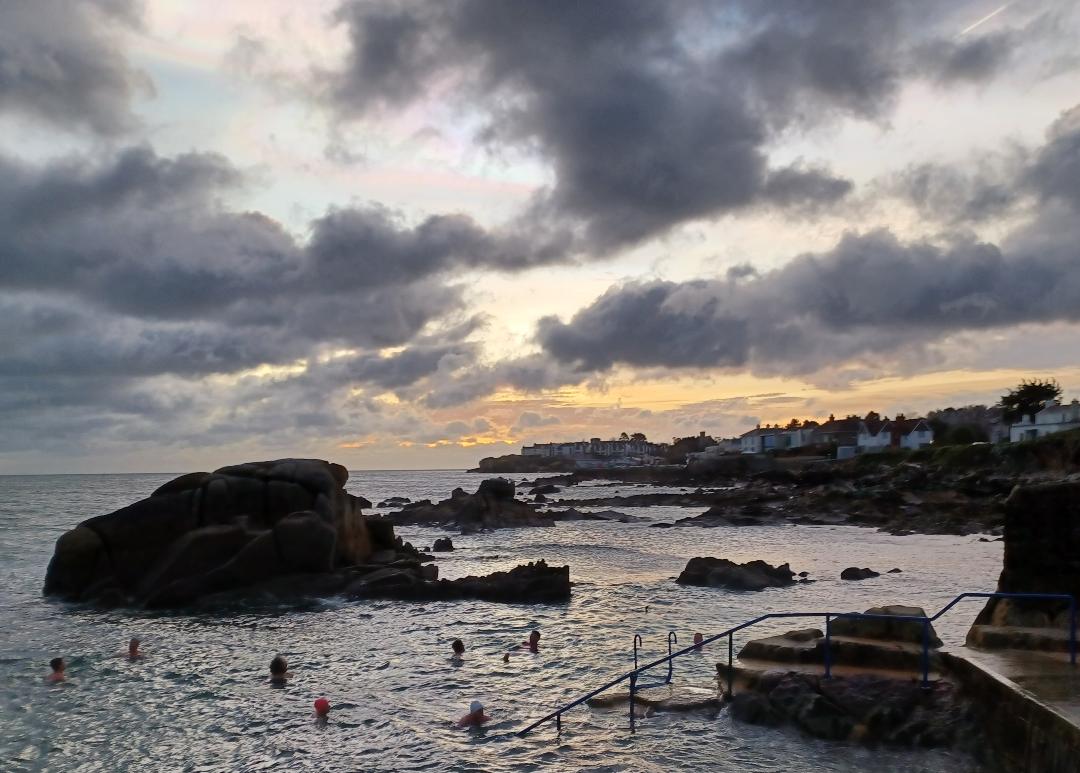
On the day before the shortest day of the year. When we went sea swimming at sunrise. We went into the darkest and deepest part of the water, that was so cold we couldn’t even feel how cold it was, for the first few moments.
That was the day after we saw Robert de Niro in the doorway of Boots. We laughed about it after dinner, and we pretended to be serious people.
Later, when we saw the nacreous clouds, we didn’t realise that we were looking straight at tiny ice particles of reflected light, high above in the stratosphere. We just called them rainbow clouds and we enjoyed them from the sea.
Of course, it wasn’t really Robert de Niro standing in the doorway of Boots. Just someone who looked like him on one of those grey cloud days, that make you sigh. When the streetlights need to stay on all the time, and 2 o’clock feels like 9.
What time is it now, you wonder?
The day clock on the windowsill tells you it’s Tuesday.
He was wearing a long cloak, like a cape.
Earlier that day, before seeing the nacreous clouds, with their iridescent scattered reflections, I spent time with an angry woman. The type of woman who keeps her snakes of contradictions and unkind prejudices in a basket that she carries under her arm. The everlasting greyness was making her angrier, more frightening because it was real.
Hey Bob, I wanted to say, nonchalantly. Are you here researching a role? But now Eurythmics is playing, and the unmistakable voice of Annie Lennox disturbs your thoughts, so you don’t ask Bob anything at all.
Sometimes at this time of year, Dublin looks like steam is coming out of it.
The early mist evaporates back into clouds and the sky is enchanting. The bus into town drives past Glasnevin cemetery, where it’s hard not to think of the dead, as more than a million of them, are buried there.
I don’t mind getting messages, signs, and musings from them.
Let your prejudices lie back in the field, don’t hold them close.
What if you’re wrong, have you thought about that?
Don’t spend too much time talking to me, enjoy the rainbow clouds.
But before Robert de Niro, and the boat ride home, and watching the ballet, and that everlasting tango between the sun and the moon, some gentle hours passed. Not even nacreous clouds can change that.
All the people were laughing so much, so much that we felt like we were waking up from a nap all the time. Now the scene changes and we’re moving up the mountain so slowly and using all our might. We’re walking against the wind, and except now it’s the stairs, not a hill. Why are we carrying a torch inside?
Did we forget the light?
No, says the nice girl who comes to visit sometimes. We saw the rainbow clouds and they are so beautiful and serene.
She says, the rainbow clouds will guide us, through time and days in this room; through it all.
Particularly those who tell me to just “download the app” to do the most basic of tasks. I used to be able to manage my life, but now I have trouble ordering tickets, buying food, and opening doors at the bank.
“Push here when the green light is flashing,” the instructions on the door at the bank explain to me.
I push where I’m told, when I’m told, but someone gets stuck in the chamber in between the inside and outside, and the security guard gets cross, and all hell breaks loose.
I was just trying to open the door.
Who made it so hard?
Anyone responsible for designing a two-step verification method on software, is also a fecking eejit.
“You told me to download the app, and now it transpires that I must download another app to keep the first app secure? Will there be a third app needed?”
We can send live photographs from Mars, but we are unable to keep apps safe.
Everything is becoming harder to use! Booking tickets, buying food, getting in and out of doors. Everything and the place is overrun with fecking eejits.
Download the app.
Update to the newest version.
Insert the code we just sent you by text.
Use the QR CODE.
Fecking eejits, the lot of them.
Bring back the fax machine or better still, let us return to keeping up with correspondence with letters. Bring back hearing less about what everyone thinks about everything, and let’s all spend more time in silence.
Going to the cinema with a friend used to be one phone call ahead of the trip to agree a time, date and place, a week or so before hand. Now this same appointment can require a hundred or so mico-communications and a heavenly sky full of emojis.
Do you want to get a bite before-hand?
Great.
OK.
Let’s meet at 6
Can’t – got basket weaving until 6.10pm
OK
So how about 6.30pm
Cool
Endless.
And once you get to the film, it doesn’t end there.
You can’t simply relax and enjoy the cinematic experience. No. You must tell all the people that you don’t know on social media, what you think about the film. You are not required by the terms and conditions of the ticket to do this, nor do you have qualifications or work experience in this area, but that doesn’t stop you.
“I saw, “Towels in my Bathroom.” ” You write quickly as you leave the cinema. “…and I just wondered if the leitmotif worked as a post-post-modern denouement or if it felt too reductive?”
Send thought NOW, CLICK SEND.
Your response to the film must be original, tongue in cheek while being acutely aware of any challenging issues.
Then, instead of enjoying the apres-film chat and gossip with a friend you haven’t seen for a while, you spend the entire time checking your phone for replies to your comment about the film you just saw.
Did people like my comment, am I approved, am I the winner?
Congratulations!
You are the winner of the internet. Your response to “Towels in my Bathroom” was the best one. We have the director of the film here, to award you with the prize.
“I was so moved by your comment about my film” says the director in a live interview from their ski lodge in Switzerland. “I spent 3 years on this project, but your sentence simply changed my life. I was so overwhelmed by the sentence, in fact, that I decided to give you a boat. It’s a large boat, so I hope you can manage to keep it somewhere. Perhaps you live near a harbour?”
Suddenly there’s silence and the director of “Towels in my Bathroom” looks embarrassed.
“Ah…change of plans I’m afraid. We’re going to give the boat to someone else. There’s another person now, in Seville, who made a better comment than you so we’re going to give the boat to them. I do hope you understand. The runner up prize is a donkey”.
Then you have a donkey to take care of.
You have no donkey caring skills.
You don’t have the time to look after a donkey.
But perhaps the donkey comes to live in your garden and it’s not so bad after all.
Perhaps the donkey’s gentle ways make you smile, and you find that you enjoy feeding him and keeping him well. You enjoy stroking him in the mornings, and making sure he has enough to eat and drink. Perhaps for a moment you smile.
A real smile.
A smile from your heart because you feel like joy is inside you. This pleasant feeling is like happiness and contentment and peace. You don’t chase it all away but simply notice it there, and you welcome it in.
“Oh hello happiness, how are things?”
Happiness waves back to you, because it’s what happiness likes to do.
The traditional holiday of Thanksgiving Day, most connected with north America, is not officially celebrated in the Republic of Ireland, but as many Irish people have family and friends living in the states, the day is marked and noted on the island of Ireland. This year, Thanksgiving Day fell on Thursday 24 November, but it will not be remembered as a day of thanks and gratefulness.
Shortly after 1.30pm, on Thursday 24 November, a man in his 50s attacked several people and children, outside Gaelscoil Coláiste Mhuire, which is a city centre primary school. A five-year-old girl, and the member of staff caring for her, are in a serious condition in hospital, and no doubt this school will never quite be the same.
Later that day, at around 6.00pm, a group of 50 or so anti-immigrant protesters broke through the barriers of the crime scene, which sparked off several hours of unrest, where vehicles were set alight, shops were looted, and Garda were attacked. The men and boys claimed to be protesting because they heard the knifeman was a foreigner.
I was at the opera.
I had spent the day at a conference in Dublin Castle. I had dinner with a friend, and then I enjoyed the performance of Puccini’s La bohème, at the Bord Gáis Energy Theatre.
I lived on Dominick Street, in the north inner city of Dublin, for over 11 years. 9 of those years were wonderful and I found the area to be a vibrant, dynamic part of the urban capital filled with beautiful, strong people.
But in 2021, I felt a change.
My street felt more erratic to me, and I felt less safe.
I complained about the scrambler bikes, because of the dangerous driving which scared me when I was going to the supermarket. I complained about the children selling drugs; not from a moral point of view, but because this attracted very ill, and desperate addicts to the street at all times of the day and night. I complained about the rising level of aggression from the gang of young men, who grew in numbers and confidence. And I complained because I knew that if Dominick Street had been in D4 instead of D1, something would have been done about it.
Yesterday, I went to an event called, “A Thriving Ireland” where Leo Varadkar celebrated the social and economic gains Ireland has made since 1973, and in comparison, to many of its European counterparts.
Not everyone is thriving.
Those who don’t have money for housing, education, and healthcare because these areas have been wildly commodified in the past 50 years, cannot participate in society in the same way as others. Single mums, people with care responsibilities and people working on zero-hour contracts, are not thriving economically. Young people omitted from society, are not thriving socially. Young men with nothing to lose, get involved in gangs, and an underworld and all the while, the rest of the city looks away.
As a migrant, I fear the rise of the far right in Ireland as much as I fear the decrease in economic and social security for sections of our population. As a working-class woman, I fear the rise of classism and hatred of inner-city depravation as much as I worry about how many of these young men are now headed to overcrowded prisons, where they can improve their craft and knowledge. As a Dubliner, and proud Irish person, I’m so sad that the north inner city, which is filled with spectacular life, charm, and humour, is neglected, and mistreated so violently.
I feel sadness for the violence that took place outside the primary school.
I feel sadness for the violence that took place, last night.
I feel sadness for the violence against this part of the city.
Thanksgiving Day 2023 will be remembered for violence, hatred, crime and the viciousness of inequality, trauma, and heartbreak, and I feel a little lost just thinking about it.
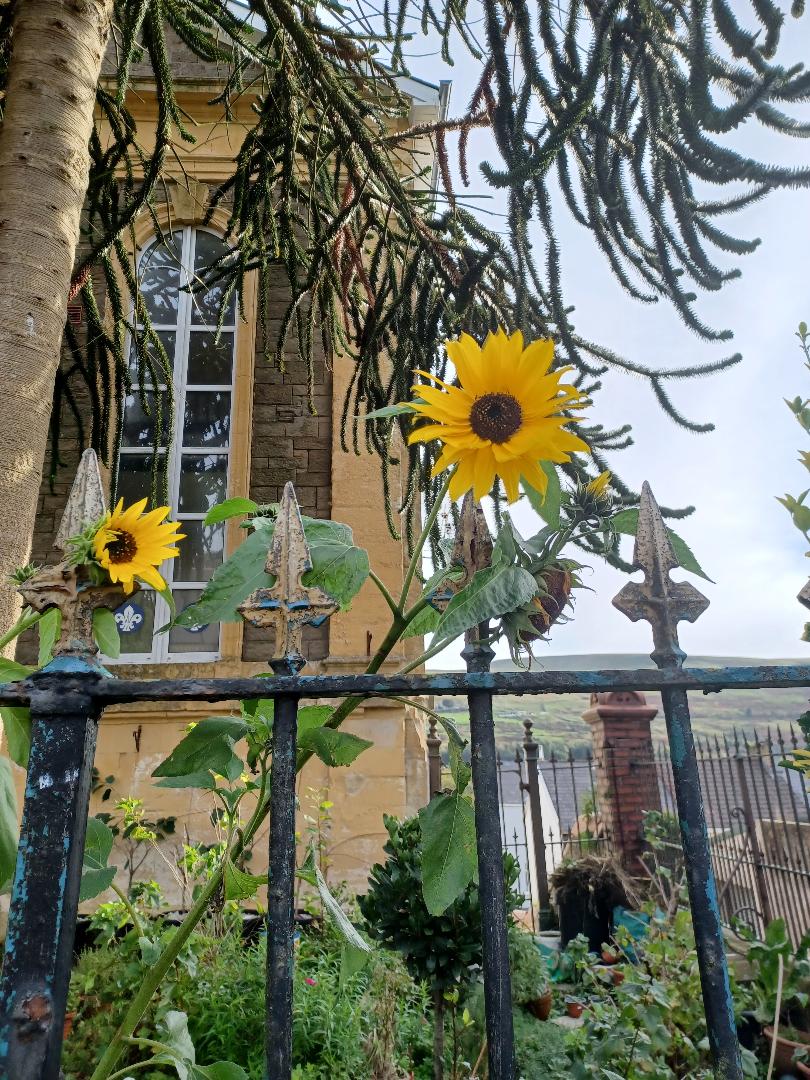
Tell me a story, of October sunflowers, dangling in the wind.
Talk to me of the sunsetting, and the pink skies you saw.
Or tell me a tale of the first time you tasted mango juice.
You thought you had found paradise. A street seller handed you a plastic cup of juice, and you expected it to be orange. But as the mango juice slowly brushed your cheek, your salivary glands secreted extra wet fluids. Your mouth almost ached from it. Your taste buds exploded.
Later, the others would warn you from buying food and drink from the street, but nothing ever tasted like this again. This was your new base line, and a new shared memory of home.
Or tell me again about that time your cousin drove you 1000 km and you stopped to look at the fields of watermelon. Your cousin was tired, so he slept in the car, and you wandered amongst the fruit as the sun went down. Never had you heard fruit sigh before, but just this time you felt it. The soil was full for the melons to thrive, and you could smell them in the wind.
Did you enjoy watching the melons grow, your cousin asked, as he re-started the car.
Or write to me quietly, from a land far away, where life (does) exist. And ask me to explain the words to a small group of women in the Katmandu Kitchen, on a rainy night in Dublin.
“Although I don’t know you, and we might not meet. But I love you and I pray for you. Because it’s humanity that brings us closer together”.
At the Katmandu Kitchen, on a damp night this autumn.
The transition between summer and autumn is the most beautiful one.
We see the sky, feel the air shift, notice the sounds.
We recognise it, yet it changes every year, as every atom of us responds to it differently.
“Hello autumn, I’ve seen you before, perhaps you have something new to teach me”.
As always, the last days of summer are the most exquisite, poignant, and sacred.
Every afternoon of sunshine in September is treated so much more carefully than those we saw in May. Every hour of evening light now, is respected so much more than the same hours in June.
The season changes bring up memories, and for many, memories of home.
Like so many other dutiful daughters, I live in a different country to the one where I was born, and while I try and balance my daily life, with my visits, “back home”, I never seem to get it right.
Guilt and Shame come to visit, uninvited. They settle in, unwelcomed. They stay around, unwanted.
Like so many other dutiful daughters, who are migrants and merchants, I live and work in one place, and go back home, for short periods. So many of us do this.
This is the way it is.
And I wonder, but not for the first time, if I made the right choice, by moving away.
Then I remake the choice every morning, and hope it works out OK. I ask the angels who walk amongst us, to help me out with the harder bits, and I take a deep breath, and repeat.
Little Summer
The funny thing was, the weather
was brilliant. Fluffy clouds hung
from
a perfect blue sky, from childhood.
Let there be a little summer left,
I prayed, and wished, and hoped, and said.
One more knickerbockerglory with a long
handled spoon.
Sandy covered toes, laughter in a beer garden,
a night or two in a caravan
near the sea.
One more afternoon, when I won’t squint from the sunlight
Suzanne bought me a beautiful silver ring for my 50th birthday from a handcrafted jewellery company called The Roots of Ireland. They claim there’s a connection between “their unique jewellery and the magic and mystery of Ireland’s rich heritage”. The Roots of Ireland make a donation to the Irish Native Woodland Trust, to preserve and restore Ireland’s woodlands, every time they make a sale. And on top of it being sustainable, I really liked the ring.
Imagine my horror and disbelief, then, when I lost the ring.
One minute it was on my finger, the next minute it vanished.
Gone!
I spent ages looking for it all over the garden, and I even emptied out the black, brown, and green bins to see if it had slipped inside one of them.
Eventually, I accepted my loss, and I got in touch with The Roots of Ireland, to buy a replacement ring, so that the next time I saw Suzanne, she wouldn’t view me as a careless friend, who didn’t take care of gifts. The new ring arrived, I popped it onto my finger, and I continued with my life.
Some people think that making donations to places such as the Irish Native Woodland Trust or to other groups, that try to slow down the climate crisis, as a waste of time. The Deniers and the Doomers are in unison, in their agreement to do nothing. They watch the burning, flooding, thawing, and steps towards extinction, and they shrug and say, “what can you do?”
I see it all, and I think, “I’ll do what I can,” which might not be much, but it’s something.
One small thing I do is to “sail and rail” from Dublin to Wales and I love to count the flights that I haven’t taken. Another small thing is to try and use eco-friendly methods in my garden, which means no chemicals, pesticides, digging or overly interrupting what nature wants to do first. I’ve much to learn, but the garden is teeming with bees, butterflies, birds, slugs, and snails, which must suggest it’s a little biodiverse.
The animals are incredible.
For a long time, I was accidentally murdering many snails every time I put foot in the garden. I would hear the violent squelching of the snail shell underneath my wellies, and I would feel sick from the senseless death.
“Why, God, why?” I would yell out to the sky, but God didn’t hear me.
So, I constructed a small Zen Pathway from the backdoor to the fence at the bottom of the garden, where I could walk confidently, without being involved in killing small creatures. It seems to be working as there’s nothing of interest on the Zen Pathway, for the snails to eat or do, so they keep away from it, and hang out instead near the organic composter.
I love the baby snails, with their tiny shells, most of all; they’re adorable!
They have funny little heads on them, and they have no sense of direction at all. I like to think that they are safer now, away from the mid-garden traffic.
Snails don’t have to mate to reproduce, as they have both sets of genitalia, but they do it anyway, because they like to. Meanwhile, I sit in the yard and watch the mayhem; and it’s absolutely non-stop!
It’s so beautiful and perfect, and I’d really hate for it all to end. So, I sail and rail, and use sustainable methods on my land, reduce my consumption, sign petitions, go on protests, and join campaigns.
I want to keep it nice.
Keep it beautiful and kind.
I want others to enjoy it too.
One evening last week, I was trying to straighten out some wildflowers after all the rain and wind, and there, at the bottom of the stem of some Ragwort, was the silver ring Suzanne bought for me.
The ring looked like someone had placed it down carefully.
The only possible explanation for this, was that the Fairies put it there, under the light of the last super moon. There’s simply no other way to explain it. Fairies or butterflies, or dancing summer roses found it, and placed it gently there.
Delighted, I took the new-old ring inside, and put it in its Roots of Ireland box, and I’ll keep it there safely.
I would really like it, if we could all collectively agree, to stop using “out of office” messages.
I understand and accept that “you” will reply to my message when you have the time, the information I’m looking for, or the inclination. You do not need to send me a message, to tell me that you will respond to my message, in another message, in the future.
I would also really like it, if we could all collectively agree, to stop inventing new ways to send these messages.
There’s enough.
There are more than enough ways for me to apologise for not responding to your message, with my message, earlier. I was probably apologising to another person, at the time, which is why I couldn’t get back to you.
Stop sending all the messages!
And also, when did “checking my emails” become an activity? Emails are the how we work, not the work itself, and they are nothing more than a tool. They are not sentient beings. Stop giving them immortal powers.
I’m so tired of all the different messages in all the different places. It’s taking my energy away from me, and time away from worrying and overthinking other issues, instead.
Like, what is this blog for?
I used to share stories on here, until I began trying to get them published in magazines and Ezines. This takes up a lot of time, and so what can I share here? Do I simply write, “Great news! My story, Pointless, was published in Alien Buddha Press this week! Thanks Red for including me!” It seems a little redundant as I’ve already shared this on Facebook and Twitter, so what can I say here?
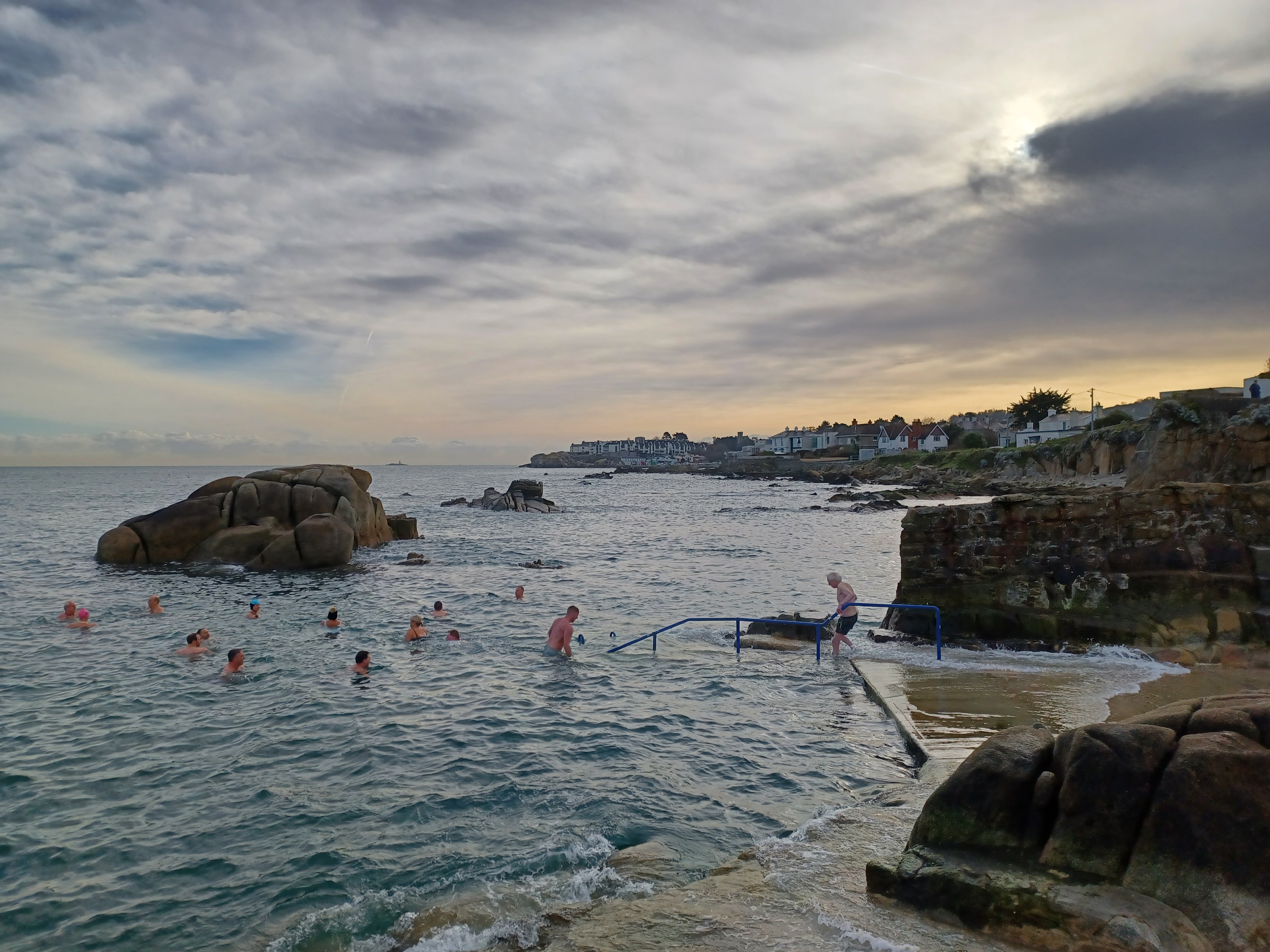
Can I tell you about the books I’ve read lately, like “Elsewhere” by Yan Ge, or “192 Batu Road” by Viji Krishnamoorthy? Or do I tell you about weekend sea-swimming at the 40 Foot, or how much litter I’ve picked up from the ground?
Or can I show you some writing, in progress?
A piece of flash-fiction, that I read aloud at an open mic event recently, with Anne Tannam and Fiona Bolger? You might find it interesting, and it’s called Schuman Resonance, and it starts like this…
Never trust a prose writer with an attic conversion, directions to a destination, or a seven-digit code. But ask them instead, to describe cerulean, the taste of obsidian, or to talk about sunshine.
Never trust a prose writer, to compose minutes from a meeting, to send a WhatsApp message or to answer a phone. But ask them instead to explain why summer breezes, how to live with grief, and when to dance.
Tea-dances in the vestry of the chapel, were fine things.
This was when girls still wore long dresses to parties.
Some of the older women, who are all wearing hats, are serving small dishes of jelly and ice-cream to the children, and tea and sandwiches to the grown-ups. The best chapel chinar has been brought out, and unwrapped from old newspaper for the party, and everyone is happy.
Some of the older women, are talking in the kitchen. They are worried that Collins, the mare, got out of the field again.
I knew this would happen, says the woman with the snarling mouth.
Last week, Collins broke the narrow wooden gate, coming back into the farm, and if someone had been standing the way, Lord knows what could have happened. The problem, is of course, as I’ve said many times, that those two boys don’t know how to control her.
Oh, they know how to manage her, says the woman with the walking cane. They like to wind her up and excite her energy. It’s just a game to them, but one day, you mark my words, that mare will break through the field, and hurt Lord knows who.
Collins is a gentle old mare.
She has a quiet nature, which is good for pulling the milk cart. She plods along and is patient enough to wait for the milk to be delivered. All the neighbours say that the fresh, creamy milk is delicious, and they stroke her while she stands outside their houses.
Yet sometimes, and sometimes again, she likes to run.
She can feel her heartbeat alter with the rhythm and tempo. When she flies through the field, she thinks, how wonderful this is, let me run instead.
The two boys are enjoying the ice-cream and jelly in the vestry of the chapel and have stuffed their pockets with cakes and cream buns. They don’t care about what the old women are saying in the kitchen, they only care about the sweets and the treats.
Their hands are always a little bit dirty from the farm, even when they go to tea-dances, and especially underneath their nails. Their mother tries desperately to clean them, every Sunday night. They sit in the tin bath near the fire, and she scrubs them as much as she can without hurting them. After that, they sit with their mother and listen to the radio, and she allows herself to love them entirely.
It’s then, when their hair is still damp, and they smell of soap and happiness, that their mother hugs them close. They pretend they’re too big for this nonsense and they squirm, and they frown, but secretly they enjoy it.
Tonight, after the tea dance and the party, the boys will go home with their loot and share it with their mother, who couldn’t come to the party on account of her nerves. They will watch her carefully eat the fairy cakes, and they will promise her tomorrow, that she will run again.



 Shorter than me