Author: Ruth Powell

  • Think Global, Act Local – Vote to Repeal the Eighth Amendment – by Janet Horner

    When we cast our vote on May 25th to repeal or retain the eighth amendment we will send out a powerful signal to the world that will impact on women, families, communities and movements far beyond Ireland.

    In spite of the strong progress that has been made in the advancement of women’s rights in the past decades, there are some very troubling counter-vailing trends across Europe, the US and many developing countries – with women’s reproductive rights and access to abortion as particularly fraught flashpoint for this.

    In some developing countries, we have seen the tragic and horrific consequences of harshly imposed restrictions on abortion access. In Paraguay in March of this year, a fourteen-year-old girl who was the victim of rape tragically died during childbirth; her body too young to safely carry out a pregnancy[1]. In 2015, an eleven-year-old child was forced to carry a pregnancy to term in spite of the enormous risks posed to her health as a result[2]. In El Salvador, women have been imprisoned for more than 10-years for miscarrying – under suspicion that they may have acted deliberately to induce miscarriage or stillbirth[3].

    Even within this context, the eighth amendment to the Irish constitution is a harsh and inflexible measure. In Ireland, procuring an abortion, regardless of age, circumstance or associated danger (short of an immediate threat to one’s life), potentially carries a fourteen-year prison sentence. The stories of the inevitably tragic consequence of this are many; for example, in March this year it was reported that an Irish 12 year old was given an abortion in England which she would have been forced her to carry to term under Irish law despite the dangers posed for someone so young or else faced a criminal penalty[4]. It should be a sobering realisation to all of us in Ireland that our eighth amendment lends credibility and legitimacy to the implementation of similar horrendous laws and their tragic consequences around the world.

    The imposition of Trump’s “Global Gag Order” last year further jeopardised the health of women in developing countries. The global gag order withholds funding from any non-U.S. organisation that offers abortion services, information or referrals. As a result, millions of marginalised women cannot access contraception, family-planning information, abortion where required or full healthcare throughout pregnancy[5].

    In our neighbouring European countries, the anti-abortion lobby is growing in strength and boldness. Rather than focusing on the issues that have been demonstrated to reduce abortion rates – access to free contraception, informed medical-led family planning, sex education, the lobby is focusing on shutting down women’s access to care. In Italy, doctors face huge pressure and intimidation to join the register of “conscientious objectors” to abortion, leaving women in many regions of Italy forced to travel long distances[6]. Protesters are gathering outside abortion clinics in the UK to intimidate women as they go in[1]. In Poland, legislation has been proposed to impose further restrictions on access to abortion – and has been met with strong resistance[2].

    Whether in Ireland, or Europe or developing countries, it is the vulnerable and the marginalised who are consistently most penalised by the controls placed on their bodies and their choices. It is the girls and women who can’t afford contraception, who are victims of abuse, who are in controlling and abusive relationships, who suffer health difficulties and disabilities, who do not have the means to travel. These girls and women deserve better than coercion, criminalised and for society to turn a blind eye to them. They deserve support, understanding and the best possible healthcare.

    In Ireland, we have seen the strength of a grassroots movement grounded in compassion for women in crisis and commitment to the advancement of human rights and equality. In so many countries, communities and households around the world, women are fighting a similar battle. We can stand with them and support them. In the year of the centenary of women’s suffrage, it seems apt to quote the suffragette Millicent Fawcett, “Courage calls to courage everywhere”. The courage of so many Irish women and girls to tell their story and the courage of us in Irish society to fight for them can send out a powerful signal to women and girls around the world fighting for justice and rights.

    Repeal the Eighth Amendment for women and girls everywhere.

    Vote Yes.

    By Janet Horner.

    [1] https://www.independent.co.uk/news/uk/home-news/ealing-council-abortion-clinic-ban-protests-marie-stopes-london-labour-party-a8298621.html

    [2] https://www.irishtimes.com/news/world/europe/nationwide-protests-in-poland-against-move-to-restrict-abortion-1.3438363

    [1] https://www.theguardian.com/global-development/2018/mar/22/paraguayan-rape-victim-14-dies-giving-birth

    [2] https://www.theguardian.com/world/2015/aug/13/paraguay-11-year-old-gives-birth-abortion

    [3] https://www.aljazeera.com/news/2017/12/el-salvador-upholds-30-year-sentence-stillbirth-case-171215104626774.html

    [4] https://www.irishtimes.com/news/crime-and-law/garda%C3%AD-investigate-12-year-old-s-abortion-in-britain-1.3431941

    [5] https://www.hrw.org/news/2018/02/14/trumps-mexico-city-policy-or-global-gag-rule

    [6] https://www.opendemocracy.net/5050/claudia-torrisi/abortion-italy-conscientious-objection

  • I met an old friend this bank holiday weekend…

    phoenix park

    I met an old friend this bank holiday weekend…

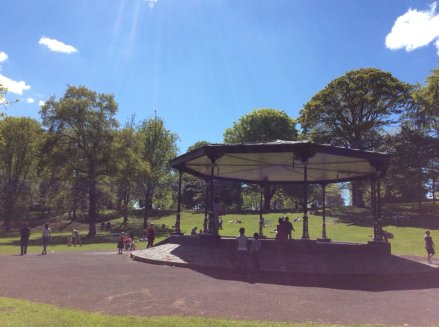
    We hadn’t seen one another in many years, so I was happy to sit with her for an hour in Phoenix Park; it was a sunny day in Dublin and we chatted for a while.

    I asked her how she was holding up during the debates around the referendum, as I knew she terminated a pregnancy some time ago, and I just hoped that the news and the posters weren’t too upsetting for her.  She told me no, that this wasn’t the case at all.  Rather, she said she was going through a period of profound healing and growth.

    Six years ago, my friend decided to terminate her pregnancy for a labyrinth of complicated and personal reasons.  At that time, she had asylum seeker status, so she was unlikely to get entry clearance for the UK, where she could have legally terminated her pregnancy.  So she decided to buy the unregulated, illegal, unsupervised abortion pill online instead.

    She started to experience severe pains very quickly so wondered if she had read the instructions carefully enough.  English is not her first language so she wasn’t sure if she had done what she was supposed to do.  She also wondered if she was experiencing “abnormal” or “normal” pain as she had nothing to compare it to, and found it hard to contextualise.  At one point she thought she might go to the nearest accident and emergency department, because she was starting to feel faint and she started to panic that everything was going terribly wrong.  But she had heard that this illegal pill carried with it a 14 year prison sentence, and so postponed presenting to the A&E department for as long as possible.  When her brother found her unconscious on the bathroom floor, he very wisely called the ambulance, and possibly saved her life by doing so.

    The excellent health workers cared for her for four days and then discharged her and she went home.  No one arrested her, but she lived with the fear that someone might, at some time, come knocking on her door, arrest her and send her back to her own country. She said she had lived with this fear for six years.

    She told me, while we were sitting in the park on a sunny day in Dublin, that every time she sees someone wearing a badge with YES on it, or a t.shirt with the word REPEAL on it, she wants to kiss them gently on the cheek and say thank you.  She told me that for the first time in six years, she hasn’t felt like a criminal, but feels supported and cared for instead.  She told me that she believes the people of Ireland will vote with their hearts this time, and that one day, hopefully very soon, people in her position will be able to access safe, regulated and compassionate health care in Ireland.

    This referendum is not about abortion, it’s about legislation that is hypocritical to its core, completely unfit for purpose and impossible to uphold.

    Please vote YES on 25 May 2018.


  • To repeal or to retain

    I would have voted YES.

    My application for Irish citizenship will not be processed by the time of the referendum, so I will be unable to vote.  I should have applied for citizenship much earlier and I’m sorry I can’t vote.

    I would have voted YES.

    I would have voted YES to repeal the 8th amendment, because I don’t believe that a woman should have to travel overseas to terminate a pregnancy or take an illegal, unregulated abortion pill without medical supervision at home, and risk 14 years in prison for doing so.

    I would have voted YES because this current legislation is hypocritical in the most extraordinary of ways; and it makes everyone in this society complicit with this hypocrisy.  We all know women who have travelled, and we all know women who have bought the pills online.  Even if those women haven’t shared their stories directly with us, we know them.  Can we ignore them for much longer?

    I would have voted YES, not because I “agree” with abortion or think that abortion is “good”, but because life can be strange and complicated and terrifying and odd.  Because it’s not about me, and what I believe or where my opinion is.  It’s about all the women in our society.  All of the women in our society.

    I would have voted YES, because of the health care advice from the World Health Organisation, because the Migrants’ Rights Groups in Dublin are supporting it, because many doctors and lawyers are supporting it.

    I would have voted YES, because the current legislation doesn’t prevent terminations of pregnancies.  The current legislation is unfit for purpose and doesn’t serve the society I live in.  The current legislation needs to be changed.

    If the 8th amendment is repealed I would welcome more education about sexuality in schools, with more access to contraception, including the morning after pill.  I would welcome a mature discussion about how to provide the best services and care to the many different types of women who have to face the most difficult decision a person will ever have to make.  But let’s repeal it first.  Then we can look at long-term health advice, counselling and interventions afterwards.

    I would have voted YES.

  • Mainly on my mind

    I have given up fiction for the new year, and so far so good.

    Every verb I have used has been factual and based on evidence, while I’ve hardly used any adverbs at all.  I’ve made this sacrifice so that I can concentrate all my creative efforts on editing my blog “Shorter than me” into some sort of bite sized manuscript, so that I can self-publish by Easter.  However, I am finding editing to be a task that I am neither good at, nor interested in so perhaps my initial hopes for an Easter book launch, may be more poignant than that last speech in Bladerunner.

    You know the one, the one all about all the tears in the rain.

    A book in my hand is worth more than virtual pages on a WordPress blog, and I desire the hard version of “Shorter than me” for a number of reasons.  Firstly to secure my own immortality, secondly to appease my monstrously vain and enormous ego, and finally so that my parents can read the stories, as they do not frequent the world wide web.  Mam and Dad have no social media presence, so I would like them to have their own copies.

    So what I am doing now, is not writing.

    This is ranting, this is shouting, this is trying to give my monkey brain monologue an outlet and a voice, this is just saying what is mainly on my mind.

    Today, what is mainly on my mind is my need to become an Irish citizen as soon as possible.  I need to be Irish so that I am protected from the unknown fall-out of Brexit, and so that I can vote in the next referendum.  I need to be Irish because I’ve lived here for so long now, that it’s almost rude not to apply.

    In case you’re interested, the next referendum to be held in Ireland will ask its citizens (and not just its residents, hence my need to convert) if they wish to repeal or not repeal the 8th amendment to the Irish constitution.  My understanding on this very complex of matters is that the 8th amendment essentially prevents a woman from having a pregnancy terminated in the State, however, she may travel to the UK or to other countries if she wishes to do so.

    So here’s my problem.

    I don’t think this referendum is actually about abortion.

    It’s not about a person’s ethical, moral, religious, academic or hypothetical opinion about abortion.  It’s strictly about equality.  I’ll try to explain my point of view (because that’s all it is, after all, it’s just my point of view).

    Let’s take two women who live in Ireland, one is called A and one is called B.

    Both women have chosen not to continue with their pregnancies, but A can travel to the UK to have the procedure, while B cannot. B cannot travel because of a number of diverse reasons.  Perhaps she is financially unable to travel or perhaps she has refugee or asylum seeker status, which would make it impossible for her to get a visa to enter the UK.  Perhaps she is in an abusive relationship and is unable to leave her other children unattended, or perhaps she is the victim or rape or incest and does not have the agency to be able to organise the travel, on top of all the other trauma.  Perhaps for a hundred other reasons, not even mentioned here, she cannot travel.

    So woman A has the procedure in the UK, comes back to Ireland and continues with her life.

    Woman B, however, now has to buy some medication from the internet, or perhaps from a friend of a friend.  She now has to take this pill without any medical advice or supervision, support or counselling.  Woman A and Woman B have two completely different sets of reproductive choices, based on their place in society, and typically, it’s the most vulnerable women in our society who are unable to travel.

    But both women will still terminate their pregnancies.

    Changing the law in Ireland will simply give all women equal rights to choose, how they end their pregnancy, not if they end it.  Changing the law will not prevent one abortion, nor will it encourage another.  Changing the law will just give all women, equal rights and access to safe and medically supervised treatment.

    Current figures suggest that 11 women a day travel abroad for the procedure, but there is no reliable data on how many abortion pills are bought online or on the informal market (IFPA).  We can assume, therefore, that everyone in Ireland knows more than one woman who has either travelled abroad for an abortion, or else bought the abortion pill online, and taken it here at home.

    Surely, this can’t continue?

    Please contact me, if you think this situation should continue, as I would love to hear from you.  I’m not really interested in discussing our personal opinions about abortion, as I don’t think the referendum is about that.  I honestly believe it’s about equality for all the women who live in Ireland.  I take my application for Irish citizenship seriously, and I also take my ability and freedom to be able to vote in a referendum sincerely, so I want to think about my choice carefully.

    Please contact me then, if you have a different point of view, based on the logic I have mentioned.  So that’s what is mainly on my mind today, so just for today, I will leave it there.

    Reference for the statistics:

    In 2016, 3,265 women and girls gave Irish addresses at UK abortion services. This number is an underestimation, as not all women will provide their Irish addresses at UK abortion clinics. Some women also travel to other countries, such as the Netherlands.

    https://www.ifpa.ie/Hot-Topics/Abortion/Statistics

  • Deserting Nan

    My grandmother loved to bake apple pies, which she would serve hot with a scoop of vanilla ice-cream, or cold with some extra-thick double cream.  She gave the children adult sized portions, with a wink, which suggested that the secret was safe.  “Eat the sugary delights and enjoy them” the wink seemed to say, so we did.

    She simply didn’t give a shit.

    In the summer we ate fresh strawberries with ice-cream with chocolate flakes crumbled over them.  We sucked homemade, icy, orange lollipops in the garden and she made us coke-floats and banana milkshakes on demand.  In the winter she let us toast bread on the open fire, and then we smothered it with rivers of butter.  Different flavoured jams could be poured on top, and if you wanted, you could lick the jam straight from the spoon, right out of the pot.

    That was all OK in nan’s house.

    You could have hot chocolate for breakfast, why not?  Home-made rice puddings with all the sugar from south America dumped inside.  Raspberry flavoured sponge cakes, Christmas fruit cakes, oceans of luscious custard over hot rhubarb tarts.  Delicious bubbles of delight, heaven in china bowls, our happiness in the puddings.

    I can’t remember the treats from autumn or spring, but somewhere beneath the syrup and the sugar highs, we all found contentment.  I can see two or three of the cousins sitting next to nan, watching her shows on TV, but we were so stuffed from the produce that we were barely able to laugh at the funny scenes.

    My grandmother didn’t seem to notice or care for the irony of an overweight woman with a sweet tooth.  She simply ate what she wanted and when.  There was no fixed dessert time at her house either, children too could eat what they wanted and when.  By the time my grandmother had grandchildren roaming through her home, she had lost so much.  She’d lost her parents and siblings, her independence and her ambitions, her first born and her worries.  She had a calmness about her concerns by that time.

    One summer I bought her a giant Toblerone back from my school trip to France.  She graciously shared it with me, but already I was growing out of sweet things and growing out of treats.  It wouldn’t be too long before I would be joining in with the adults in our condemnation of my nan’s diet and lifestyle.  I would soon commit the ultimate betrayal of growing up, developing a liking for savory snacks and encouraging her to eat sensibly.

    I became “concerned” and “worried” about my grandmother’s diet and health, and instead of licking ice-cream from a giant spoon directly from the tub from the chest freezer, I abandoned her instead, to drab low sugar yoghurts and insipid fruit bars.

    I really wish I hadn’t.

  • Giving thanks at the National Botanic Gardens, in Glasnevin, in Dublin. In January.

    botanics

    Thank you for my life.  I said to the South American cacti in the glasshouse in Glasnevin.  I know it’s not mine to own, it’s just on loan, and I’m fine with that.

    Thank you for my life.  I said to the graceful orchid and the resplendent snowdrop.

    To the magnificent hibiscus, I said thank you most of all.  I especially adore the sound of your name.  It gives me such pleasure to say it.

    Hibiscus.

    Hibiscus.

    Hibiscus.

    Gentle mysteries of the soil and air, thank you.

  • Fishes of gold

    fishes of gold

    Mathew Barry Jenkins was a mischief-maker and a chatterbox, and everyone loved him because of it.  He could be found hiding under tables, or falling out of trees with an unthinkable amount of mud and grass all over himself.  He had trouble written all over his forehead, with a capital “T” but his contagious laugh and infectious giggle allowed him away with oodles of crimes.  No matter what the misdemeanor, he always came out smiling.

    Donna Jenkins was his first cousin, with only three weeks between their birthdays, but even though they were in the very same nursery school class together, they did not know that they were related.  This was due to the fact that their mothers didn’t speak anymore, not after the incident at the beach.  The children didn’t like the same activities in the nursery school, Donna liked colouring and solving puzzles, the singing corner and collecting leaves.  While Matthew Barry Jenkins liked the blue slide, and kite-flying and practising his star jumps, so their paths never crossed; and they didn’t even realise that they shared the same grandmother.

    It was easy, for others to see the family resemblance.  Both children shared the same dark and deeply set eyes, and both could scowl sincerely.  They shared the same mannerism of taking a short step backwards, if they felt concerned or unhappy, or even if they felt they weren’t going to enjoy the outcome of a decision.  They didn’t know that their mothers, who were sisters, performed this ritual.

    They sometimes wore the same clothes to nursery, not grasping that the same grandmother had gifted them brown corduroy dungarees, imitation velvet jackets with tiny hoods, and socks with cartoon characters on them.

    Meticulous arrangements for pick-up time were observed by all the staff, with Donna’s collection taking place exactly 15 minutes before Matthew Barry Jenkins was taken home.  Everyone was complicit, but especially Miss Price, who took Donna outside to wait.  It never occurred to Donna to ask why this was happening, and the plan appeared to be fool-proof.

    One autumn day in 1976, Donna wanted to play with the knitted teddy bear, which was kept in the wooden cupboard, with the fish tank on top.  None of the other toys suited her needs, and she wanted the teddy that was soft and comforting.  The only problem was that the cupboard was locked, and while she asked other children to help her, no one seemed interested.  She had seen Miss Price open the doors many times, and there seemed to be a simple knack.  You kicked the right hand side door gently, at the same time that you pulled on both of the door handles.  Simple.  One, two, three – you push and pull together.

    So while she canvassed other children, to come over and to help, only Matthew Barry Jenkins could be persuaded to get involved.  He was filthy from being in the leaves all afternoon, even his lips and the lobes of his ears were sprinkled with dirt, and he smelled like outside.

    “I’ll help you get inside the cupboard” he offered.

    “Thank you” said Donna, and she took a step backwards.

    He began gently, with a number of different angles, but the lack of success was tiring.

    “You’ll need to kick the door” advised Donna quietly, “it’s easy.  One, two, three – you push and pull together”.

    So Matthew Barry Jenkins kicked and pulled, and found an angle which unleashed the lock, but the pressure was too much, and the cupboard began to wobble.  It balanced itself momentarily, but not before losing control of the tank on top.  And the fish began to fall.

    Down fell the water and down fell the fish.

    And the gravel from the tank and all the intricate fish decorations slowly filtered to the ground.  Water was dripping, and flooding all over Donna and the carpet beneath her, all over the nursery school floor.

    Miss Price was furious, and shouted at Donna “what have you done, you naughty little girl, you killed them all”.  She bent down and tried to pick-up all the flopping fish. All Donna could do was stand in the damp, wet carpet, watching them all die.  At the very same time, Matthew Barry Jenkins, dry as a bone, slipped away quietly from the scene of the crime.

    Later, after Donna was changed into dry clothes and allowed to sit on the big leather chair, she thought she saw Matthew Barry Jenkins peeping through the door to the main room, and he looked so sad.  Donna scowled at him, and stroked the knitted teddy bear, and just waited for her mother to come.


  • Other Swimmers

    water

    I like to go swimming from time-to-time, and my nearest pool and leisure centre is in the heart of the city.  I’ve never been a member, I don’t have that level of optimism, I pay as I go and sometimes, I go before work. Every time I do it though, I wonder if my main motivation might be so that I can tell friends and colleagues about it afterwards.

    “Wow, I went for a swim this morning, I feel incredibly alive and alert.  It really sets you up for the day!  Just going to eat my vegan-friendly-flapjack, now, with my fresh kale and orange juice.  Hashtag blessed”.

    There is a self-selection lane system in our pool and you can choose between the fast, medium or casual lanes.  I always go in the casual lane because I like its name and the idea that there’s no real commitment.  Any minute, I might join the Pilates Class over in the studio, or even take-up Tai Chi.  A lot of people drastically over or under estimate their ability and efficiency in the water, and that’s when the lifeguards have to step-in.  I notice that it’s always the men swimmers who need to be demoted slightly and the women promoted up a lane or two.  I don’t know what that says about our society, but it says something.

    It surely says something.

    There’s a woman in our pool who wears a Wonder Woman swimming costume, complete with matching silver swim hat.  She’s definitely in her 40s, and sometimes I want to speak to her and ask her a load of questions, such as, what she thinks of the new Wonder Woman film and if she believes it’s a successful re-working of the feminist hero myth or not.  But it’s hard to do that when you’re doing laps.

    There’s a man in our pool who doesn’t swim at all.  He just walks out as far as he can, until the water is up to his chin, and then he turns around and walks back again. He repeats this many times, but that’s not even the unusual bit.  The whole time he’s walking through the water, he’s talking.  Talking aloud!  Seemingly to himself, because no one is listening.  When a new swimmer comes into the pool area, this guy welcomes them, as if they’ve just arrived into a Hollywood 80’s pool party.

    “Hi there Harvey, haven’t seen you in decades, come on in, the water’s fine”.

    Harvey, or whatever his name actually is in reality, typically hurries into his chosen lane and starts swimming quickly, without making eye contact.  Swimmers are shy sometimes, I notice that.

    There’s another one I watch and am intrigued by. He’s the one I call “Glasses Man” because he wears his eye-glasses in the water.  I could understand that, if you were taking it easy and doing a bit of breast stroke over in the casual lane, but this one always goes into the fast lane, and puts his head right under the water.

    There’s this Brazilian couple who like to walk around the edge of the pool, kissing and canoodling, hand-in-hand.  It’s like they think they’re on vacation at the Copacabana and I half expect them to wave at me.  There’s a woman in a white and blue daisy swimming hat, who swims on her back, and sometimes hums along to the songs in her head.  She splashes and flaps around like how I imagine Zelda Fiztgerald might have swum.  In the sea, in the south of France.

    There are people who use swimming aids, and they are fascinating to me.  Now I fully comprehend the need for floats and adult arm-bands, especially over in the casual lane.  We can all swim over there of course, in the sense that technically we don’t drown, but none of us are likely to be Olympic medal winners in the next little while.  But some people bring flippers, I mean really.  Flippers are part of diving gear and they have no place in the swimming pool!  There’s this one guy in our pool, who flies up and down the fast lane, and I feel like saying to him,

    “Hey flipper fella, you’re cheating no one but yourself, how about taking those flippers off and seeing your real life speed instead?”

    But I never do.  Like I said, it’s hard to speak when you’re swimming.

    Some people do a complicated stretching routine before-hand, and bring litres of juices and coconut water to re-hydrate between laps.  While at the end of the spectrum there are those who do so little, you wonder why they just didn’t go to the coffee shop instead and have a giant cream bun and a hot chocolate.

    The last time I went to our pool, “Glasses Man” was evicted after causing a pile-up in the fast lane.  He started shouting “you can’t make me, you can’t make me leave the pool!” and everyone was staring at him.  All of a sudden Walking Swimmer joined in, and started yelling from the other side of the pool to the lifeguard, “that’s right Paul, or Tony, you can’t make him move, this is his pool as much as anyone’s!”   And for a moment it seemed like Wonder Woman was going to say a few words too, but in fairness she was in the middle of a tricky set of Butterfly, so couldn’t really get involved.  In the end, Daisy Hat Woman started singing the French National Anthem, and I don’t know why, but that seemed to calm things down.

    Glasses Man left the poolside and we all went back to our breathing and our own technique.  We listened to the silent emptiness of underwater swimming strokes, and we finished our laps.  We concentrated just on the rhythm of the pool water, and the unique sounds of all the other swimmers.


  • Curator of Lives

    On the day before I flew to Togo, I saw two Franciscan monks sunbathing.

    They were sitting on white plastic chairs, and the heavy white cotton of their habits collided with the soil.  Like fish who can’t see the water around them, the monks didn’t notice me watching.

    I think I might have heard the monks chanting “Praise be you, my lord, through sister moon.  And the stars, in heaven you formed them.  Clear and precious and beautiful”.

    The day after I flew to Togo, two football teams stopped their game, to allow our mini-van to drive over their red-earthed pitch.  The dust and the heat and mosquitoes didn’t take a short pause though, on that day in Lome, in the spring.  It was the day that Judith took me to get my new visa.  When we crossed the road, she casually linked arms to guide me through the traffic and I admired the simplicity of her kindness.  I needed a new passport sized photograph, and she wiped the sweat away from my forehead, with some tissue from her bag before the picture was taken.    An uncomplicated decency, a fluent courtesy.

    And like fish who can’t see the water around them, she didn’t notice me see her.

    On another day, we went to Agbodrafo, or the “House of the Slaves” and the curator of the museum walked us around.  Thousands of men, women and children were stored there before being shipped-off across the Atlantic for a lifetime of slavery.  The curator showed us the room where the people were bought and sold, and the cellar where they tried to sleep.  To distract me, I thought about the orange tree in the garden, and how sweet the scent was.  I wondered if the people had breathed that same flavour in?  If their last memory of home was of an orange tree?

    And like fish who can’t see the water that surrounds them, the curator didn’t notice my grief.

    Later that evening over dinner I asked Judith more about Agbodrafo, but she was busy greeting the guests, and overseeing the platters of fish.  Even though it was her birthday, her main ambition and desire was to secure everyone else’s comfort first.  And she had no interest in discussing orange trees.

    The evening I flew home from Togo, I noticed the moon.

    It was a midnight flight back to Paris and the moon was a beautiful, white, full-one, which shone and showed us the way home.   It guided us away from Judith and Agbodrafo, and from those boys still playing football.

    All the way back to the place where the Franciscan monks might still have been singing:  “Praise be you, my lord, through sister moon.  And the stars, in heaven you formed them.  Clear and precious and beautiful”.

    agbodrafo2


  • No Reading in the Library

    water

    It all started when the Head Librarian put a notice on the wall, which said “No Loitering in the Library” and we all thought it was a good thing.  Jenny-Ann, Stewart, Em Em and I had noticed that the wrong type of person seemed to be hanging around our library.  That type that will just sit around on the big oak table, reading the magazines, checking the free internet.  That type that might not even know the difference between a metaphor or a simile, the type that can give a small well-run-community library a bad name.

    Jenny-Ann, Stewart, Em Em and I are the working committee for the Contemporary American Literature Book Club that meets every Tuesday lunch time.  In order to organise the book club, the committee has to also meet every Wednesday and second Friday too, because as you can imagine, there’s a lot to do.

    So when we first saw the “No Loitering in the Library” sign, I said to Jenny-Ann “well I for one welcome that sign” and she said “it didn’t come a moment too soon”.

    Our committee has been through a lot of changes of late, no one could deny that.  Ever since Jenny-Ann and Stewart got divorced, and Em Em put on all that weight again, things have been strained.  I’ve been trying to guide our ship through quite some choppy water, I can tell you.  And I don’t always feel fully supported in my role as Acting Chairperson either.  Em Em is so depressed right now, and Stewart is a shadow of his former self.

    And then they put up another sign.

    The second sign told library users that CCTV was now in operation, and again our first reaction was that this was a good thing.  In fact, it brought us all a little comic relief after all of the tension, because Stewart made a joke about the CCTV.  He said “imagine if they filmed someone stealing a book from the Old Norse Section.  And then imagine that the police caught the thief by tricking him into confession, by asking him a question in modern day Danish!”

    Em Em and I laughed at that idea for ages.  We always found Stewart very witty.

    But then Jenny-Ann said that Stewart had always had racist undertones when it came to the Scandinavians, and that his insinuation that the thief had to identify as male was sexist.  And then Stewart said that Jenny-Ann had always been a manipulative, judgemental cunt and he wished he’d never met her!

    Well things just went from bad to worse then.

    Em Em got so upset, she left without even proof-reading her review on the latest Franzen novel.  And I resigned from my role as Acting Chair.  The group disbanded and then one Tuesday I came into the library to see a sign that said “No Reading the Library” and so I handed in my library card, and I left for good.

    I go swimming on Tuesdays now, and I don’t miss that place at all.