Author: Ruth Powell

  • Essential Samhain

    I spent the morning in Mexico.

    I drifted into Mérida and glided silently into the city.  I smiled at people I passed on the street, and I didn’t mind at all that they didn’t smile back.  I couldn’t smell the frijol con puerco being prepared or enjoy an icy mojito.  I couldn’t hear the traffic or feel the mosquitos’ bite.  I could, though, enjoy the ancient Maya ruins and the pyramids of Uxmal.  Handily close to Mérida, it didn’t take me long to get there.  I didn’t have to queue in the hot sun for tickets or decide if I wanted a guide to accompany me. I had the site to myself and I marvelled at the magnificence of the Pyramid of the Magician.

    When I was tired, I closed my laptop lid, and came back home to Dublin.

    In the real Mexico, the women are making masks in preparation for Día de los Muertos.  They are decorating graves with candles, marigolds and photographs, and honouring the lives once lived, with love.  This ancient ritual sees mourning the dead as disrespectful to the natural world, which is why the festival is filled with dancing, music and parades.  Food is presented at alters for the dead to enjoy, and the bells ring out on the village squares.  People dress up as skeletons or in their Catrina costumes, and the festival goes on for two days.

    Meanwhile in Dublin, this city feels like a ghost town.

    Office buildings look like haunted houses and all the non-essential shops are closed.  The streets are mostly empty of people except for an hour or two at sunset when they queue for free food outside the GPO on O’Connell Street.  Sometimes they get soup, sandwiches, free masks and a small drink, and the queues are getting longer every week.

    Sometimes I wonder if our government really know what they’re doing?

    I wonder if the group of mostly men who govern us, would be better off trying to teach us all how to work with this word “essential” rather than expect us to comply with contradictory advice about virus management?  I agree with the public health messaging and I am privileged enough to be able to follow the guidelines.  I also understand that what was essential for me in March isn’t necessary now, and what I need for my body and mind today, I couldn’t have imagined way back at Easter.

    Our first objective must be to protect one another.

    At the same time, if Person A knows that a sea swim will increase her immunity and psychosocial durability, does it matter if the water is outside her agreed 5 km radius for outside exercise?  If the swim will make her more robust, which will ultimately protect her should she catch the virus or other diseases, isn’t that a good thing all round?  If she harms no one on her journey to, let’s say for arguments sake, the Forty Foot bathing spot on the southern tip of Dublin bay, shouldn’t she be allowed to do this? 

    Apologies for sounding very Kim Kardashian over here complaining about my lack of access to coastal views when the world is both on fire and melting at the same time.  I just think that as this virus is going to be with us for the foreseeable future, we need more than the bare necessities of life to continue; we need reasons for living.  We need to learn how to mitigate risks carefully but confidently, so that we can balance the real dangers of this disease with the types of lives we can endure.

    If we replace the word “essential” with “very important” or “really quite necessary” perhaps this helps the discourse.  My situation and set up is so vastly different to yours and both are changing with the seasons.  Of course I’m not advocating non-compliance with public health measurements, but your unique decisions are based on your circumstances and mine are based on mine.  Short term solutions don’t tend to work very well with long term problems, so I just think we should be trying to learn how to live, rather than exist, in the meantime.

    Or we could overthrow patriarchal capitalism and replace it instead with a system that values public health more than private wealth, thus supressing the virus to a manageable level.

    We’ve been living like this for seven and a half months.

    I feel like Time is the ultimate Trick or Treater and putting the clocks backwards last Sunday didn’t help my perception of where we are at all.  My concentration is so low that this morning I took my breakfast dishes into the bathroom and it was only when I got to the hand basin I thought, “well, this doesn’t feel right at all!”  Yesterday on my way to the supermarket I wondered why the world was all fuzzy and out of focus.  I realised that I was wearing my reading glasses while walking around the street, but as I was thinking about other things, I hadn’t noticed that I couldn’t see!  I’m forever forgetting the simplest of information, and my mind is like a runaway LUAS.

    Luckily, I keep a journal, so I can check my entries to see what I was doing during the days of the pandemic.  For example, on Saturday the 24th October I have written: “saw a squirrel, ate five bags of cheesy wotsits”.  This means that in the future I will be able to look back at my time here and remember that this was the day I saw a woodland mammal and ate some corn-based cheese snacks. 

    What a life! 

    This weekend, however, I have great plans.

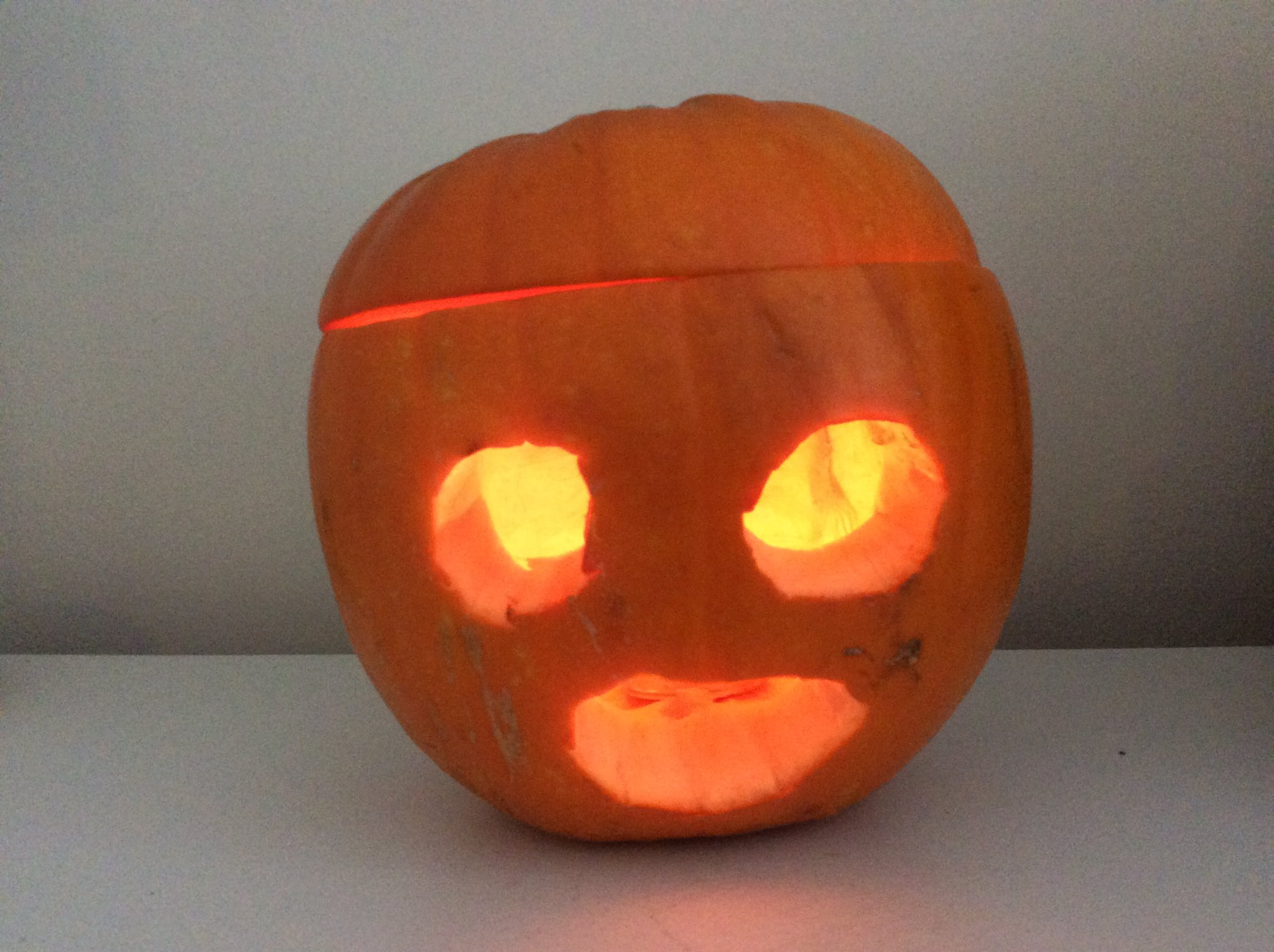
    I have already carved out my pumpkin and prepared my Treats for my stay-at-home-solo-trick-or-treating-activity.  I am going to celebrate the ancient Celtic celebration of Samhain by eating a whole chocolate covered cheesecake and by watching season one of Pose and The Vow, which I’m sure my ancestors would approve of.  After the harvest, we are supposed to enjoy the fruits of the forest, to fatten ourselves up for the dark days of winter ahead.  So eat, be merry, sacrifice a cow or a goat if you have one, and keep terribly cosy and warm.  From here until the solstice in December are the darkest days of the year, but don’t worry about it too much, it will get light again.  Enjoy the blue, full moon on Saturday night and know that soon, it will brighten up again.

    Happy Samhain to you with all of my love.

  • As lakes freeze over

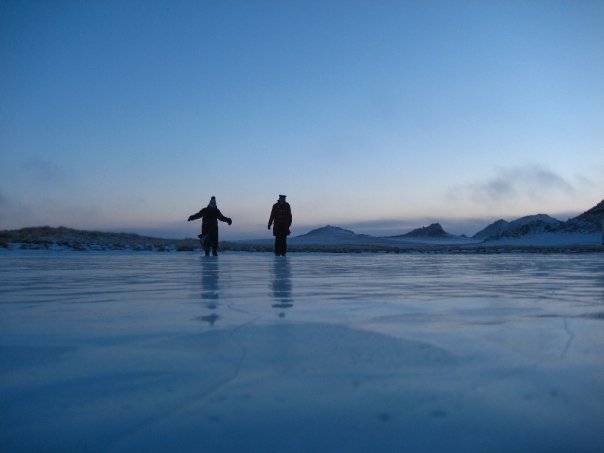
    (photograph by Sophie van den Abeele).

    I am an almost frozen lake, altering this October into solid.

    Every last one of my waves struggles to complete.  I am fresh water, purified and invisible, filtering the bad dreams away.

    In my lake the fish swim for fun and experiment with shoal shapes.  The moon watches over my still water to make promises it keeps.

    Grey moon of October, whistling down for attention!

    It’s OK autumn harvest moon, for we see you.

    As I freeze, I sigh and this movement happens slower now, as my molecules huddle closer.  If you watch me you can’t see it, for your attention isn’t gentle enough, but suddenly I am one. 

    Never moving again, until the light of the next spring, solidly taking a break.

    Sleep with me,

    rest with me,

    breathe with me.

    This late, autumn harvest moon will keep an eye on us together.

    We are safe.

  • Shelf of broken dreams

    What a day, what a week, what a pandemic!

    This week in Ireland our three-party coalition government announced the budget for 2021.  Our country has a deficit of 21.5 billion euro which is why we’ve decided to borrow money from the European Central Bank and spend, spend, spend!  Clearly “borrowing money” is the new “saving money” and I’m more than happy to watch this gamble play out in real time.  It’s like me walking into my bank saying, “I have absolutely no money at all, please give me a million euro” and my bank manager responding with the question “why don’t I give you a billion euro instead?”

    Spend, spend, spend – your money, not your time!

    No sooner had the government informed us that we should be spending as much money as possible to keep the economy alive, they told us not to spend time with family or friends in our own homes.  At least, I think that’s what they said.  It’s hard to keep on top of the instructions at this point.  I believe one of the three men in charge told us that the previous rule of having six visitors per visit, per household was now reduced to zero per household, if you are in a Level Three or Level Four area of the country. 

    Or perhaps it was the other way around.

    In fairness to the government (and that’s the first time I’ve started a sentence this way), we know what the rules are.  The rules are thus: spend as little time with as few people as possible if you want to decrease your chances of picking up the virus, or passing it along.  Those are the rules.  Those have always been the rules.  Those will always be the rules until we invest in a more equal society.

    So spend, spend, spend – your money, not your time!

    It’s tricky to spend money in a pandemic.

    What do you spend money on once you’ve paid for food and shelter?  The cinemas, indoor restaurants and pubs are all closed, it’s pointless buying new clothes or shampoo, and taxis are death traps.  You can’t go on holiday, the internet does everything else and even I can’t spend that much money on chocolates and confectionery.

    Some people have been talking about Covid Fatigue this week and the fact that they are hitting the wall.  I think those people are so optimistic.  Imagine thinking we’re half-way through this thing and imagine thinking that one day it will all be over?  I’ve resigned myself to the idea that I am going to spend the rest of my life watching the lives of others through the internet and group chats.  I am doomed to experience everything either at the wonky table in my living room, or here on the sofa.  Everything I ever see will be through the camera of your machines and I’ll never dance in public to a Prince song again!

    Humans love to name and classify things, don’t we? 

    We say to one another, “that is a white cloud” or “that is a grey squirrel”, but I don’t have a name or description for what I feel right now. It’s not depression or anxiety or existential sadness, although there are shadows of those things nearby; but I think what I’m feeling right now is…under the weather. 

    It started on Monday, when I heard from some Mongolian friends and this set the tone for the week.  I was delighted to hear from them, of course, but as we organised a time and date for a reunion Zoom, it made me kind of wistful too.  I revisited Ulaanbaatar, through Google Earth and visited the university where I used to teach, the Lion’s Bridge and the Wrestling Palace.  As I hopped up and down Peace Avenue I realised how much I missed travelling to new and old places and I craved just one day on the road.

    Then I felt angry that Europe isn’t asking Mongolia for advice on Covid management and containment seeing as they currently have zero deaths from the disease.  Mongolia of course, has been containing outbreaks of the bubonic plague since the Middle Ages, so they have a long history of experience they could share with us.  Every summer one or two people die from the plague, but it never leaves the region and they have a wonderful control and understanding of the disease. 

    Perhaps we should ask for their advice? 

    You should go to Mongolia if you ever get the chance.  I loved living there and learning the things I did.  Even when it was so cold that the water bottle in my bag would freeze or my eye lashes stick together, I loved every day in the land of the eternal blue sky.

    I’m just a little bored and mixed up and under the weather, at the moment, and tired of being told, to spend, spend, spend – my money not my time.

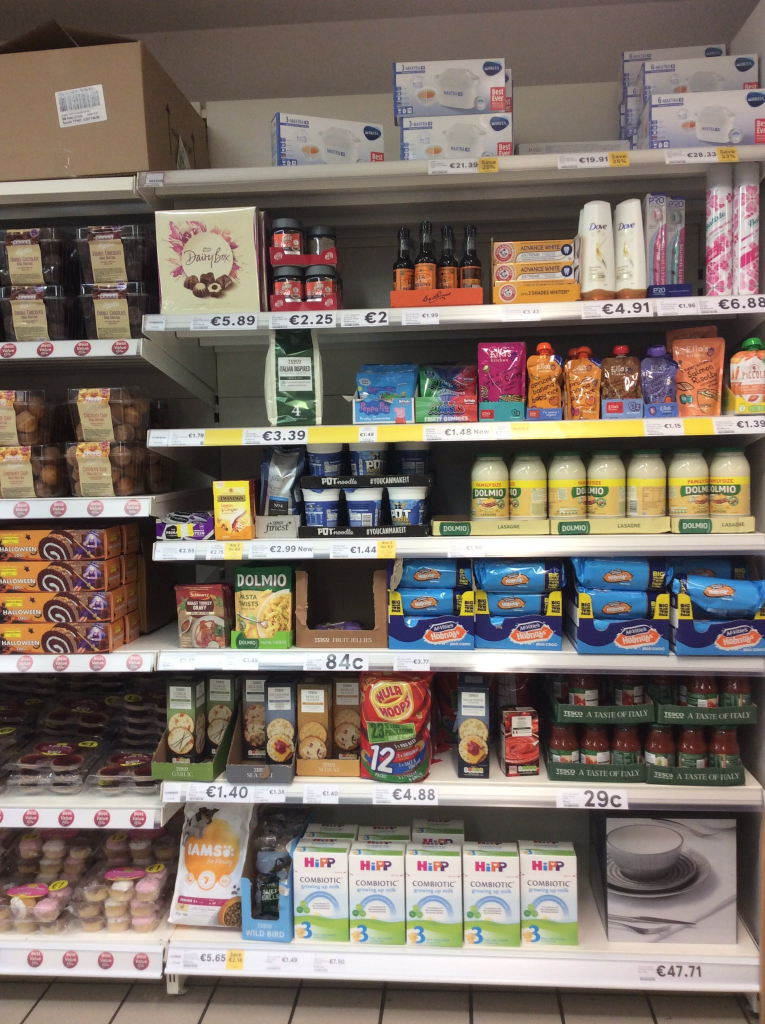
    I feel like the photo at the top of this week’s blog.

    It’s a photo of a corner shelf in my local Tesco and I’m fascinated by it.  Who would decide to put all these things together?  Why would you have all those things in the same place?  Some chocolates near the tooth brushes close to baby food and pot noodles?  Why are those hula hoops there and what is the 18 piece dinner service doing near the floor?  It’s the shelf of confusion, the shelf of broken dreams, the shelf of no clarity and forgetting.  Who stocks this shelf, for the love of god, and what kind of monsters are they?  This shelf has been organised by a mean hearted tyrant, and it very much symbolises the current thoughts in my mind.

    Still I’m happy to see you this week, and I hope you know that you’re doing OK.  Week after week of this, month after month of this, season after season of this, you are doing OK.  I’m giving you a little time lapsed hug right now and an appropriate kiss on the cheek. I’m nodding in your direction and telling you once more, that you and I are doing just fine.

  • Stuff and decoration

    I don’t know about you, but nowadays it takes me at least an hour to leave my home.

    First of all, I need to find my glasses, keys, purse, mask and outdoor-clothes, and then I need to do it all again.  By the time I have everything ready, I’ve forgotten what it is I’m going outside for, so I must look for the note I wrote to myself earlier, to remind me of what it is I think I’m doing.  It’s an endless and thankless task which requires a great deal of patience and strength.

    Once I’m outside I am disorientated. 

    The outside floor needs a different type of foot covering to what I’m used to, and the temperature is changeable. Sometimes there is water in the air which falls onto my head straight on or sideways in, and often there are others in the outside too.  Sometimes I try to communicate with them, but they can’t hear me through my mask, so I gesture with my hands and eyes instead.  I grunt and point wildly at the goods I want to purchase in the shops, and I have difficulties with money and numbers. 

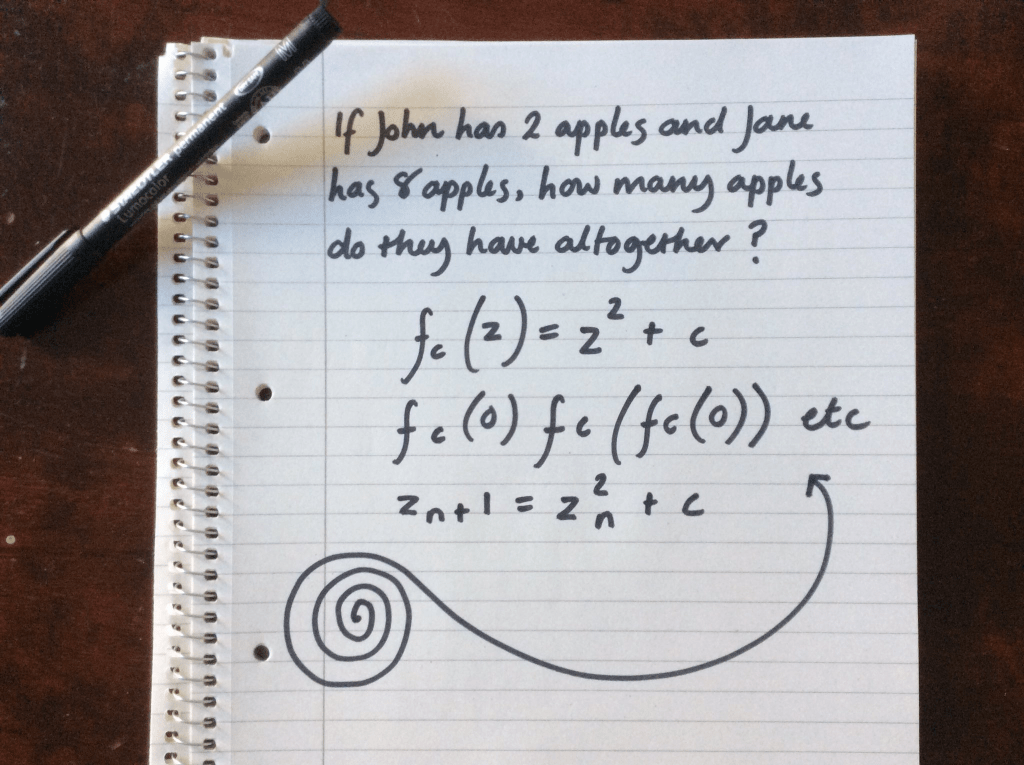
    I’ve always had trouble with numbers and like many young girls, I found maths at school challenging.  In particular, I found the types of problems we had to solve a little distracting, especially the ones that looked like this:

    If John has 2 apples and Jane has 8 apples, how many apples do they have altogether?

    I was always too busy wondering who John and Jane were to worry about how many apples they had.  Where had they come from and why did they want so much fruit?  Were they baking a cake, or did they want the apples as weapons and why didn’t they want any bananas?  Sometimes I would want to warn Jane that by sharing her apples she would be complicit in the patriarchal oppression of all women, and that she would be better off keeping her own.  In fact, I wondered if his name really was John and if he was hiding one or two apples in a basket, boat or bathtub later on in the textbook?  How many apples they had together was the least interesting question you could ask about them, but that didn’t help me at all in the maths examinations. 

    Another person having difficulties with numbers this week was the current President of the United States, and the IRS is still waiting for him to pay up that bill.  He and his current wife claimed they had the virus, but most of the world disbelieve them.  Did they lie to get out of the Biden debates, questions about the pandemic or to stop Pence gaining in popularity?  Or did they do it to distract from the leaked tapes of Melania asking, “who gives a fuck about Christmas stuff and decoration?”

    Thank you Melania, thank you. 

    I’ve been using her words all week as an antidote against all the things I hate and worry about. It’s wonderful and you should try it and I’ll show you how it works:

    Who gives a fuck about corona stuff and decoration?

    Who gives a fuck about zoom fatigue stuff and decoration?

    Who gives a fuck about work stuff and decoration?

    Who gives a fuck about climate stuff and decoration?

    It’s hard to accept that Melania and her husband are just Homo Sapiens, like us. 

    Not long ago they were both microscopic unfertilised eggs in the bodies of other adult females, and then one tiny sperm found each of them.  If those sperms had been tired that day, the Trumps would have missed out on existence and this would be a paragraph about the migration patterns of Monarch Butterflies instead. 

    I think about eggs a lot.

    Once I was an egg in my mother’s womb, and she was an egg in her mother’s womb.

    And she was an egg in her mother’s womb.

    And she was an egg in her mother’s womb.

    All the way back until there were so few of us that you, me and the Trumps were the same egg in the same woman’s womb.  It’s not that we’re interconnected or loosely related, we’re versions of the same.  We are symmetrical Mandelbrot’s, enticing, well-formed fractals, reproducing themselves into infinity, and then we’ll start again.

    Here in Ireland we had our own trouble with numbers this week too. 

    Our government couldn’t decide which level to place the population on, so they leaked some documents to gage public opinion and finally decided on Level Three.  It’s like playing a game of poker with an untrustworthy drunk who’s been on acid all afternoon, and we’ll see the results of this strategy in 10 – 14 days.

    If school A have 100 pupils with 1 virus, and school B have 200 pupils with 2 viruses how many deaths will it take before the politicians accept that there’s a contagious disease in our society that we have absolutely no control over, because we chose not to resource the health, education, and housing sectors? 

    In addition to thinking about eggs and numbers and the innate corruption of the politicians in power, I’ve also been thinking about the Neanderthals.  They were the last species of humanoid to become extinct of course, so I’ve been wondering what the mood was in the camp on those last evenings. Were they sad and wistful and wondering what went wrong?  Were they hopeful that our species, at least, would do great things with our language abilities and tools?  Were they dreaming of the Uffizi Gallery, the moon landing and the possibilities of heart transplants?  Or did they simply think, “who gives a fuck about the future of Homo Sapiens stuff and decoration?”

    I guess we’ll never know.

  • Last of the Summer Sea Swims

    The best we Irish can say about sea swimming is that “it’s grand once you get over the shock”.  The sea water here is simply colder than in any other country in the entire world, or as we might describe it; “fresh”.  I don’t know why this is the case, but trust me, it’s true.  At first you can’t breathe, then your skin turns blue, sometimes you lose all sensation in your fingers and your toes, and it’s also quite magnificent.     

    Dubliners have really embraced outdoor sports and recreational activities since the pandemic made meeting people inside life threatening.  Everyone took up running, cycling, outdoor yoga and sea swimming to a level the government’s healthy living advisory committee could have only dreamt about back in March.  We are all enjoying the outdoors, our bodies and our limitless exercise induced endorphins.  We have hamstring injuries instead of hangovers, and there’s a slight smell of Deep Heat that lingers in the city centre air.

    A couple of months ago, I met some friends for a swim and the afternoon went as expected.  They took ages cajoling me into the icy cold water with encouragement and morale boosting comments.

    “It’s OK.  Really, it’s fine!  It’s honestly not that cold when you get used to it.  I swear it only hurts for a second or two and then everything goes numb, oh come on, just get in!”

    I went into the water, tuned blue and got back out, but happily enjoyed the rest of the afternoon drinking hot drinks and catching up.  Later that evening a strange thing happened. I was curled up on the sofa watching Samsara again, when I noticed that I felt very wonderful.  I felt relaxed, happy, sleepy and calm.

    So the next weekend I went back to the sea, and I’ve been going ever since, and I love every detail of my new ritual.    

    I love the ever-changing colours of the sea and that moment just before you take the plunge when your head is screaming “no, please don’t do it!”  I love the feeling of the icy salt water all over my skin, but most of all, I love the praise. 

    Oh, how I love the sweet sound of all the warm approval. 

    You see, everyone knows that going into the water is a ridiculous thing to do, so the more experienced swimmers commend the efforts of those of us newer to the sport, and these sentences help us through the shivering.   A little “well done you” or “ah, there you are now” translates as admiration and it’s highly intoxicating and addictive.

    I love chatting to the others after I’m warm again.

    I start by asking if they swim all year round and they delight to tell me that they do. I ask them how long they’ve been swimming, and many have been swimming every day since 1953 (apart from the day they got married or had a kidney removed).  I ask for advice and for tips and it’s these comments I look forward to the most.  You, the non-sea-swimmer, might laugh at this and ask “what advice can there be?  You go in, you swim, you come out again!”

    People give advice about all sorts of things.  They talk about the best time to swim in accordance with the tides and how the water feels in comparison to its actual temperature.  People have different ways of warming up afterwards and everyone has an opinion about Dry Robes.  We talk about other water based activities and if wearing a wet suit is cheating.  Sometimes we talk about non-water related issues but not very often if I’m honest. 

    A few weeks ago, I watched a woman on a stand-up paddle board being followed by a group of grey seals.  She didn’t see them at first, but when she realised what was happening she panicked, and started shouting back to shore.

    “They’re following me” she called out “I think the seals are following me”.

    No one paid her any attention which obviously alarmed her more.

    “Oh God” she cried out from the water “Oh God”.

    Sometimes when I’m nervous, I laugh. 

    Laughing while swimming in the cold and open water is difficult and potentially dangerous, but there was something about the sound of her calls for help that I found funny.  “Oh God” she shouted again, this time louder, but no one was going to her rescue.  I couldn’t help her, because I was in enough trouble myself and suddenly, I saw the whole thing unfolding in my mind, as a tragedy reported on the six o’clock news.

    I managed to ask a near by swimmer if he thought she was in any real danger and he frowned and said “not at all”.  Then he swam out to sea, much further than I would ever go, and of course in the end she was fine.  I stopped laughing at her, caught my breath again and I was quite well too.  The seals moved on, the paddle woman came back, I finished my swim and went home.

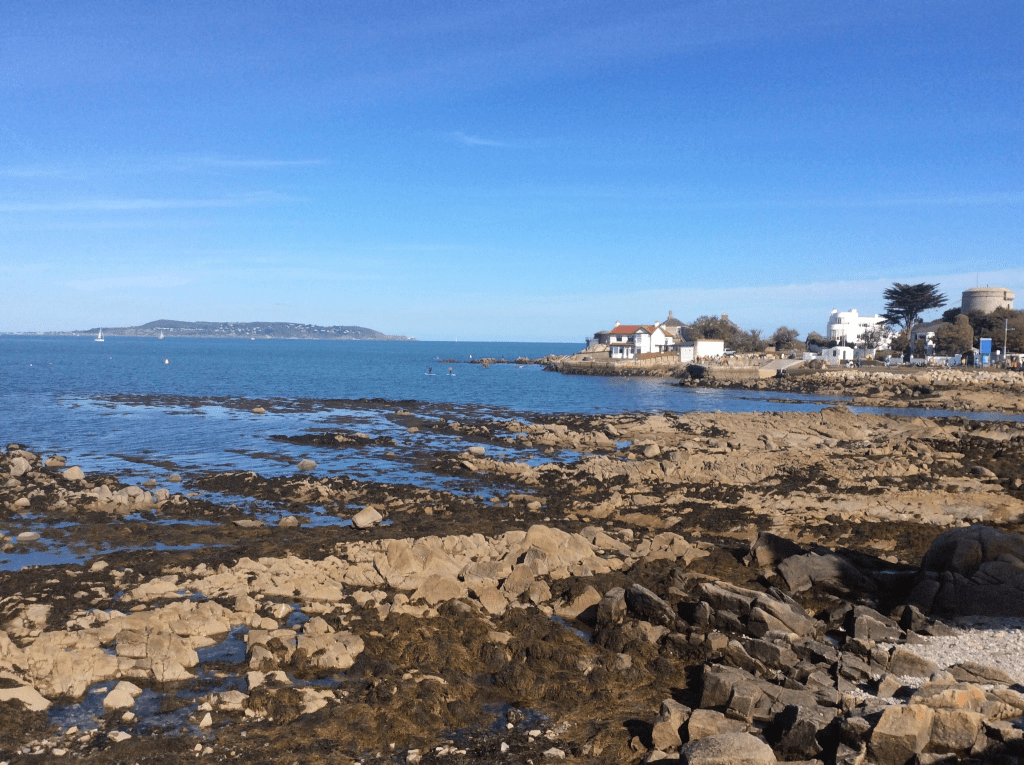
    This weekend might be the last of the summer sea swims as it’s getting colder now.  In fairness, the sea isn’t worse than it was in August, but it’s colder getting dressed afterwards.  We had such a mild and beautiful September, but I think this weekend will be the last one.

    Instead of being sad for my loss, I’m going to practise the gratitude teachings of Thích Nhất Hạnh who tells us that nothing is permanent in the natural world, but everything is as it should be.  Remember how he taught us that if we see a beautiful cloud floating in the sky, we should be grateful that it changes into rain, for this becomes water which we need for our hot tea.  If we look in our teacups and say, “thank you little cloud”, we can’t even help but smile. 

    I brought some shells and pebbles back from the beach to put in a bowl on my book shelf.  I admire their perfect geometry and individual patterns.  I have my social media posts, those cave walls of our times, to remind me of the colours. 

    Finally, of course, I have you.    

    For you have witnessed it too. 

    The tide comes in and the tide goes back out again.  The breath of the sea is the tide that we feel, and the spectacular beauty of reality in 3D leaves me in constant awe.  Today, I am grateful for the sea. 

  • Living with spider plants

    I have been thinking about the 80’s this week, and how brutal that decade was.   

    In Wales we lived with the miners’ strikes, Thatcher and the threat of nuclear annihilation and in our free time we consumed The Thorn Birds mini-series and Flowers in the Attic.  I remember watching The Thorn Birds with my parents at home. Of course I didn’t understand the themes, but I was envious of Rachel Ward’s lovely blue and white towelling robe that she wore on the beach in the famous scene with the priest.  I remember thinking it was very exotic to wear a robe on the beach and the next time I went on holidays with my mam and dad, I started to do the same.  My parents must have found it odd to see me sitting on the beach in Weymouth in my full-length, flammable dressing gown, but they didn’t mention it at all, if they did.

    We were convinced that there would be a nuclear war between the USA and the USSR, and I clearly remember talking about how to survive nuclear winters with my friends in the park during our school lunch hours.  I remember the discussions taking place, but I can’t remember what our tips or recommendations were.  We assumed that omnicide was going to happen, that the human race would be exterminated and that we were the generation who would witness it.

    Isn’t it funny what you remember and what you forget?

    I remember a woman called Sherazade, who I knew, when I lived in Prague.  I moved to Czechia a few years after the Velvet Revolution, when it turned out that the people behind the iron curtain didn’t want nuclear annihilation either. It turned out the people in eastern Europe just wanted to get good jobs and go to the countryside for their holidays, they wanted to meet interesting people and sometimes to go dancing.

    Sherazade came from Canada and was exquisitely beautiful and funny.  She used to carry a violin case around Prague with her, but there was nothing inside except some papers, her purse and her cigarettes.  She would open it up and laugh at people’s confused expressions, but she liked the way it felt on the Metro and in the old town.  The last I heard of Sherazade was that she moved to India where she was collected from the airport by an old boyfriend on his Harley, and I’ve never heard from or about her since. 

    Prague then was full of transitioners; full of artists, writers, poets and film makers.

    It was spectacular in the winter under a fresh coat of snow, and simply charming in the spring dressed in blossom.  We kept the bars and restaurants in business before the tourists arrived for their weekend mini-breaks and stag dos.  We felt that we were watching history unfolding as Czechia moved away from the former Soviet Union, and towards the west.

    Isn’t it funny the things you remember, in amongst all the things you forget? 

    I remember the smell and sound of Sherazade’s violin case as if it were yesterday, and the imagined texture of Rachel Ward’s towelling gown.  But ask me how I’ve spent all the days since the 12 March, and I would be pushed to give you any details.  Sure, I’ve spent time working and time exercising, and there’s been food to enjoy and a visit to Wales.  I’ve read some interesting books and I enjoyed the online courses, but how six months has gone by, I don’t know.

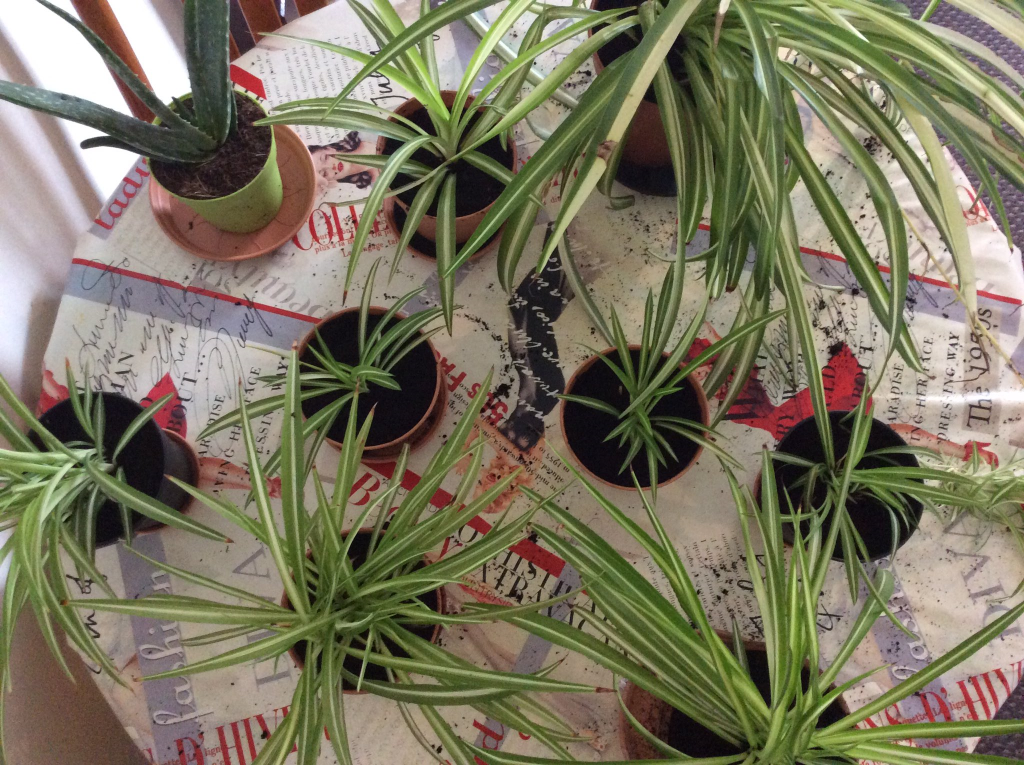
    One thing I have enjoyed is my Spider Plants.

    Originally from southern Africa, Chlorophytum Comosum, was first described by Swedish naturalist Carl Peter Thunberg in 1794.  I brought one home from my office desk in March, and now I have eleven.  They seem to propagate at will and every time I turn my back one of them has sprouted some more plantlets and there’s constant messing around and mischief.

    I have the original plant, who seemed to be suffering with stress related issues in the early spring and didn’t enjoy the move at all.  It’s fine now, but I still have to be careful with the irrigation.  I have a stunningly beautiful one, which is fully symmetrical and has beautiful colouring.  I have a hippie one, and a wayward one, I have two quiet ones and a sombre one.   The three littlest ones are still finding their feet and then I have one that makes creaking sounds when it grows.  I stroke and chat to all of them all most days, but living with eleven spider plants is unsustainable, so if you live in Dublin and you want one, let me know. 

    Last week, after watching a particularly powerful YouTube video I gave them all a steam shower. My partner, who is usually very supportive, simply asked “have we gone too far with this botany project?” so I cut Spa Day short and put them back on their shelves.  Memories of Sherazade’s violin case melts with Rachel’s robe and it all comes together as I chat with the spider plants. 

    Aren’t we people odd, aren’t we funny, aren’t we strange? 

    This week, my favourite twitter account @smolrobots described humans as “apes who learned to star gaze and dreamed of heaven” and it made me think we’ll be OK.  We care for indoor plants that don’t feed us, and we care for women from our past including fictional ones, and those we don’t see now.  The full-blown nuclear war we feared didn’t happen, the quality of TV mini-series improved, and the tide came in and went out again.  We are capable of such gentle thoughts and memories, and I think we’ll be OK.

    In amongst all the harder stuff, I think we’ll be OK.

  • Presence of life


    The smell of cut grass in September is much sadder than in June, but the colours of autumn are spectacular.  Who doesn’t love the sight of orange coloured trees against crisp blue-sky backgrounds in the mornings?  The air is cooler now, and the sun sets earlier every evening, and how beautiful the great oaks look in this season.

    This week in Ireland, one of the three, male rotating Taoiseach announced our road map to 2021, but it felt to many of us like we’d been presented with the plans for a medieval garden maze instead.  In place of the five phases we had been working with since spring, we were introduced to five new levels.  Our objective is to go backwards towards level zero, rather than forwards towards to level five and we were shown pictures of stop signs and traffic lights to help us comprehend the metaphor.  More than a million Dubliners were told that we were definitely not on level two, three, or two and a bit, and as I type, we wait to be told where we are.

    At this stage I feel like Eamon Ryan will never have his turn at being Taoiseach as we might all be dead before then, not from the virus you understand, but due to inconsistent messaging and general confusion.  Let’s see now, can I visit one household of six people, or is it six households of one?  Can six people visit me per visit or per week, and if one of them is very annoying; can I replace that person with someone I like better from a different household?  I can’t leave the city of Dublin unless I fly or sail or drive out, and I can’t leave the county, unless I do.

    Every moment I fret about the virus is one I don’t fret about Brexit, so I should at least be thankful for that.  This was the week we heard that Boris’ oven ready Brexit Deal wasn’t quite as palatable as he may have suggested back in November pre-election.  In fact, now that he’s had a chance to skim through the bloody thing, it turns out it’s not very edible at all, and he’d really rather not keep to the terms he agreed, if that’s alright with everyone.  Some of us were less surprised than others that a Tory PM either lied in November or is lying now, but here we are with this, and there it is.  Mr Johnson may not be reading this week’s blog, but if he is, I have only two things to say to him:  Es scortum obscenus vilis.  Te futueo et caballum tuum.

    I wish that media and friends would warn me when they are about to talk about Covid or Brexit so that I can listen and read if I want to or run away and hide if I don’t. 

    “Warning:  short discussion in the group chat about COXIT for a bit, COXIT article up ahead, COXIT video and meme posted!  COXIT!  COXIT!  COXIT!”

    I could decide if I wanted to engage further with the discourse or if I’d prefer to watch a short film about space exploration instead. Talking about astrophysics, were you following the news about Venus this week; quite exciting, no?  They found some phosphine gas in the clouds of Venus, which is evidence that there either used to be life on the planet or that there could be in the future.  It’s very earth-centric to imagine life on Venus, but I can’t stop thinking about the experiences of some of our nearest neighbours. 

    I wonder if the Venusians were happy and content, or had words for emotions, or had language at all.  I like to think of them hiking up Mount Maxwell Montes, talking about the benefits of veganism, and planning for the October mid-term mini-break. Of course the heat would make holiday plans very difficult, so probably a lot of indoor activities for our friends.  Maybe they looked up in the sky at earth and laughed at the idea that there could be a presence of life here.  Or maybe they weren’t concerned with us at all and were more interested in Mars.  Or maybe their evolution hasn’t happened yet, and the phosphine gas needs to expand or contract, to jump start a big bang, to get them going.

    I liked the fact that as soon as the gas was discovered the Russians claimed the planet as their own and the Vatican announced that God was everywhere, including there on Venus.  All the same, I like to think about the Venusians because Earthlings are getting on my nerves.

    Obviously not all earthlings, but those who want to maximise their profits and refuse to accept that the conditions that turned this potentially manageable pandemic into a humanitarian disaster are the same conditions that are bad for us in general.  Greater resources in health, education, workers’ rights and housing not only stop the spread of the disease but are better for us all in the long run. 

    It’s all so repetitive on this planet. 

    Wasn’t Reagan’s actual election campaign slogan “Wealth not Health” and I’m so tired of spinning around and around on the same old axis.  Government after government show us that they don’t mind sacrificing the lives of the sick and the poor if it maximises profit for them, and that’s all that seems to matter here.  Some humans have forgotten that everything that was invented by us can be dismantled the same way, so let’s just start by getting rid of money and move on.  No more money, no more global debt, no more military spending, no more billionaires.

    Money.

    Poof.

    Gone.

    Vanished.

    Evaporated like the lightest of dew, on the grass in autumn, on Venus. 

    Isn’t that a nice thought (this week if it gets too much) of the dew on the grass, on Venus.

    .

  • Back to Lúnasa

    Hello you.

    How are things? 

    How was your summer and other ridiculous questions?  I’ve missed you and our quiet Friday moments together.  It’s good to be back. 

    Autumn always brings out the shockingly optimistic side of my nature as the leaves colour over and the children go back to school.  I used to love preparing all my new stationery for the year ahead, and even more so when I was teaching.  I experienced great joy from fresh notepads, new pencil cases and ink pens.  Some of that excitement lingers on.

    This year all the grown-ups posted photos of their children on their first days back to school and we all wished them a collective Good Luck and took deep breaths.  Good luck children, good luck teachers, good luck parents and guardians.  Good luck to the home workers and the onsite workers, good luck to the bus drivers, good luck to the people working in the supermarkets.  Good luck to us all. 

    Back to school, back to work, back to Lúnasa.

    Haven’t we come a long way? 

    Remember back in March when we didn’t think we could do this for more than a couple of weeks.  Then April came and went and then the summer months passed through as we saw another season.  I was lucky enough to almost forget about the pandemic in July and August as I managed a couple of sea swims and a picnic or two.  The rest was appreciated, and I enjoyed the sun.

    Here we are now, six months in and mid-Lúnasa, so it’s time for resolutions.

    Firstly, I am going to make a few changes to the way I work.  Remember, also back in March when the world was afloat with advice for working from home.  The general consensus was we needed separate workspaces and we should keep to office hours.  We dutifully set up home offices in spare rooms, if we had them, or on the edges of beds and kitchen tables if we didn’t.  We logged on at 8 and back off at 4, but we stayed online for our 21 days of meditation, family zooms and virtual tennis.

    What a load of bullshit!

    Where and when we work is far less interesting than how we work and this autumn I intend to experiment.  Of course a repetitive working day didn’t suit us all, why would it?  I’m a constantly changing and ageing mammal who works much closer with the 28-day moon calendar than the one established by the discourteous sun.  I do my best work when I’m focussed but relaxed, inspired but playful, when I take the activity seriously, but know my limitations.  I reach these conditions when I’m rested, well fed, well hydrated and physically comfortable.  Or to flip it; when I’m grumpy and blue, the work I submit looks like pig’s waste.  Why on earth did we think that making everyone work the same hours, in the same sitting positions would produce the best results?

    Maybe because office work was always typically the work of women?

    Modern office routines evolved from those typing pools of the 1920s which were poorly paid, monotonous and noisy.  It was assumed that the mostly middle-class women would only work there until they found husbands, so they were rarely promoted or given additional responsibilities.  They were infantilised and their working hours were heavily controlled, and they had no autonomy or wiggle room to change their surroundings.

    Of course the modern office has better conditions but expecting us all to follow the same system at home feels barbaric.  I am discovering the simple truth that my sweet spot is when I am in synch with myself, the needs of my body and my circadian rhythms and these all change daily and alongside the moon.  The closer I am to me, the easier the work is, the quicker it gets done and the better it is in the long run.  It flows over into my real life too.

    I believe we call that a win-win-win-win.

    Try it though and see how you get on.  Send your one line request from your smartphone in the park, while you try to take the perfect photo of an autumn leaf falling.  Come up with your solutions-based responses from a downward dog on your yoga mat.  Reflect on your new mission statement from a run in the rain.  Do your weekly planning curled up on the couch with a cup of Earl Grey and an episode of Mrs America all set to play. Mix it up, juggle it creatively, use your freedom to listen to your needs.

    Or don’t.

    Obviously, it’s up to you. 

    At this stage of the experiment, you know what’s best for you, and if you like to work to the whip of the inbox, go for it!  Do what you need to do, listen to your real voice, do what feels right and take care.  You’ve plenty of unleaded still left in your tank, and you know what sustains you more than I. 

    Traditionally at this time of year we should be feasting, match-making, trading, sacrificing bulls and enjoying the harvest of our crops.   We’re probably only doing two or three of those things right now, so let’s do what we can and move on.  Let’s see what this season brings and let’s do it together like we did in the spring.  One step at a time, one day at a time, one thought at a time, together. 

    It’s nice to be back, happy Lúnasa from me, see you again next Friday.

  • Facebook, Live!

    Facebook, Live!

    Hi and welcome to Facebook Live.  My name is Ruth and I have some news to share this evening.

    Remember about a year ago?  I self-published a book called Smaller than us, alongside the brilliant photographer, Carolina Murari.  Well….here’s the second edition.  Yes, we’re calling it the second edition. 

    Please note some changes.  Look at the spine here…with the title in off brown, almost orange colour there going down the side.  And look, here’s a blurb on the back. 

    It says…“Smaller than us” is a collection of short stories, flash fiction and vignettes from Ruth Powell accompanied by a selection of photographs by Carolina Murari.  The stories are fictionalised versions of nearly factual events and the photos are representations of moments, seen only by the photographer.  The piece of work is a series of snapshots of moments and reflections of memories from two different observers at two separate times.  Despite the geographical and historical disparity, the observers not the common thread of humanity, which links us together, and highlights our connections over our variations.

    Best of all, please note we have our very own ISBN down here at the bottom.  I’ll read the number for you:  978 1 5272 6924 8

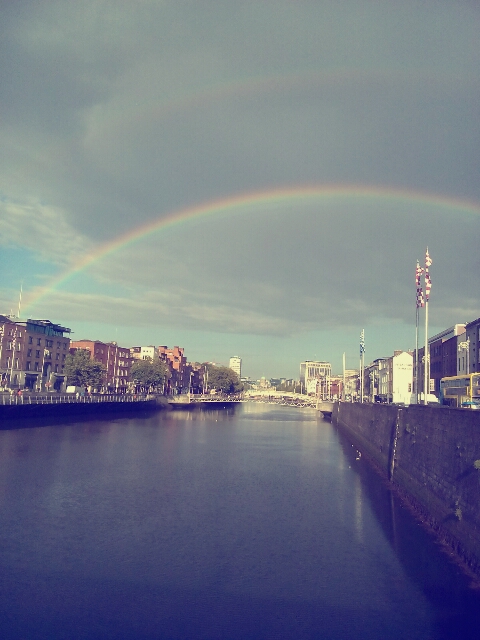
    You can buy a copy of this second edition at the Winding Stair bookshop in Dublin (just over the Ha’ Penny Bridge on the north side of the quays).  Or, you can leave me a message and I’ll get a copy to you.  But if you do live in Dublin it would be amazing to support the Winding Stair and buy this book, or other books if you like, from this gorgeous bookshop.

    Lastly, then, I’ll read something from the book.

    Giving thanks at the National Botanic Gardens, in Glasnevin, in Dublin.  In January.

    “Thank you for my life” I said to the South American cacti in the glasshouse in Glasnevin.

    “I know it’s not mine to own, it’s just on loan, and I’m fine with that”.

    “Thank you for my life” I said to the graceful orchid and resplendent snowdrop.

    To the magnificent hibiscus, I said, “thank you most of all”.

    “I especially adore the sound of your name.  It gives me such pleasure to say it.

    Hibiscus.

    Hibiscus.

    Hibiscus.

    Gentle mysteries of the soil and air, thank you”.

    Link to the Facebook Live below:

  • Machine lives we’re living

    untitled

    Well done you.

    Yes, you my imaginary friend and reader; you who have been reading these musings and vignettes for sixteen solid weeks! Well done you. If I could, I would wash your feet with oils and massage your back and sing you a lullaby until you fell asleep. Or, if you felt that was inappropriate, I could buy you flowers instead. Just to say, for one last time, well done you, and thank you!

    Sunday was a windy day.

    I went to the Botanic Gardens for an hour and tried to enjoy the botany. It was quite hard to relax with all the bright yellow signs reminding us all that a deadly, highly contagious disease is still in our midst, but I tried my best. I noticed how many other people were on their own, just wandering through the gardens alone, and no one seemed to be sitting on benches to absorb it all. Of course that could have been because of the wind, but just near the water lily pond I started to enjoy the chaotic beauty of the nature surrounding me.

    I love nature, who doesn’t?

    This one time, back in the early 90s, I took some particularly potent acid on a white sand beach in the north of Scotland. I spent the entire day in the full and complete understanding of nature. I could see how all the grains of sand were individual and unique and yet a part of the one, larger beach. While dry, I could clearly see them as separate beings, but as the tide came in, I noticed how they became part of a bigger, damp, sea-bed, which was home to many sea creatures. When the tide left again, they returned to their original dry state of solidly separate grains.

    “I can see all the sand” I said. It was all I did say for the bulk of 12 hours, and it was so true; I could see all the sand.

    The water lily pond at the Botanic gardens didn’t quite have that same effect, but I could see how all the leaves of the trees belonged to just one tree, while having their own individual leafiness. I marvelled at how the water lilies come out of the water to blossom, and will return year on year, to do so. They know that the sun and the moon are still continuing their tango, so up again they came, this summer.

    When I got back home, a strange thing happened. A sky blue, plastic, surgical mask was lying on my bedroom floor and I knew it wasn’t one of mine. For a moment, I imagined all sorts of impossible scenarios but then I realised that the wind must have brought the used mask up four stories, and in through my opened window.

    The fact that the mask was someone else’s made me anxious and so I lurched into my emergency and disaster reduction mode. Yes, I photographed it for social media and sat on my sofa trying to think of a caption to go with it. Sadly, I couldn’t think of anything that was funny and silly and yet not dismissive of the fact that half a million people have died in the past six months.

    Not an easy brief.

    I couldn’t think of anything to post, so I was left with the unbearable task of trying to put the mask into my bin without touching it. This involved gloves and dustpans and sounds you make when you’re doing something disgusting, like “urgh and ahgh and urmph”.

    Imagine that I wanted to photograph it! Imagine that my first response and intrinsic motivation was to show other people the mask on my bedroom floor? Why on earth did I want to do that? Has social media and the internet in general, finally broken my brain?

    Some soft wear isn’t even that good and it’s such a poor substitute for real life. I miss actual conversations where people interrupt one another and go off track and don’t just deliver what sounds like pre-prepared monologues which are performed rather than expressed. I want to talk about real events that happened in real time and in physical spaces. Is that so much to ask? Of course the internet has provided Some Very Good Things too, and I wouldn’t want them to turn it off completely, but wouldn’t it be nice to have more physical experiences to accompany the machine lives we’re living?

    I keep thinking about those people who went to the screening of one of the first films in the 1900’s. When they saw the film of a train coming towards them, they screamed and tried to run away because they thought it was real. It looked like a real train and it sounded like a real train and the feeling in the pits of their stomachs felt like real fear, so of course they reacted strongly. They had never seen anything like it before and their brains couldn’t quite decode it. Fast forward a hundred years and here we are doing almost everything via a screen, and our brains don’t seem to mind at all.

    Or do they?

    Perhaps this is why some of us are a little teary and weary and odd and blue? Yes, the pandemic has brought the reality of death closer to our days, a panic about financial insecurity and massive change and transition. But the fact that most people have increased their internet usage by about a 100% isn’t helping the situation either. Mammals weren’t designed to live like this, which is why it’s a great relief that the lockdown/pandemic is over.

    Yes, hadn’t you heard?

    People are talking about their new routines post-pandemic and sharing their post-lockdown life goals. They are comparing photographs of their gardens and the things they learned during the disaster, and some of them are going on holiday. Once again, and no surprises here, I am incredibly out of this new loop.

    I wanted a better ending than this, I wanted a more dramatic denouement.

    The development of a vaccine would have been nice. In my mind, I had everyone reacting to the vaccine news by singing and dancing out on Moore Street in the style of the Singing Detective. In the finale in my head (Fame meets Moulin Rouge meets Flashdance), the staff from the supermarket would have been waving at the LUAS drivers who would have been setting off fireworks, with some synchronised swimming in the Liffey. Tears of laughter would be running down our faces as the final curtain fell.

    Turns out that’s not how it ends at all.

    There was a half a second, back in March, when it looked like we might use the unfolding tragedy to design a better society with cleaner air and a respect for the working class. By July, we had silently agreed that we didn’t mind if intense traffic and industrial construction make it necessary for birds to have to sing much louder than nature intended them to, or if the virus only killed the sick and the poor. This is not the ending I would have written for you, but what can I do?

    What I can do is be grateful for my health today and for the health of those I love. I can be grateful that I have a Stena Line ferry ticket for Wales and that I’ll be with my dad quite soon. I can be grateful that I have a job, and especially one with annual leave, which I am about to enjoy just now. I can be grateful that I have such extraordinary friends who make me laugh and smile every day. I can be grateful that after nearly 20,000 words, you’re still here waiting for a conclusion.

    We’re all just wondering how it all ends.

    untitled2