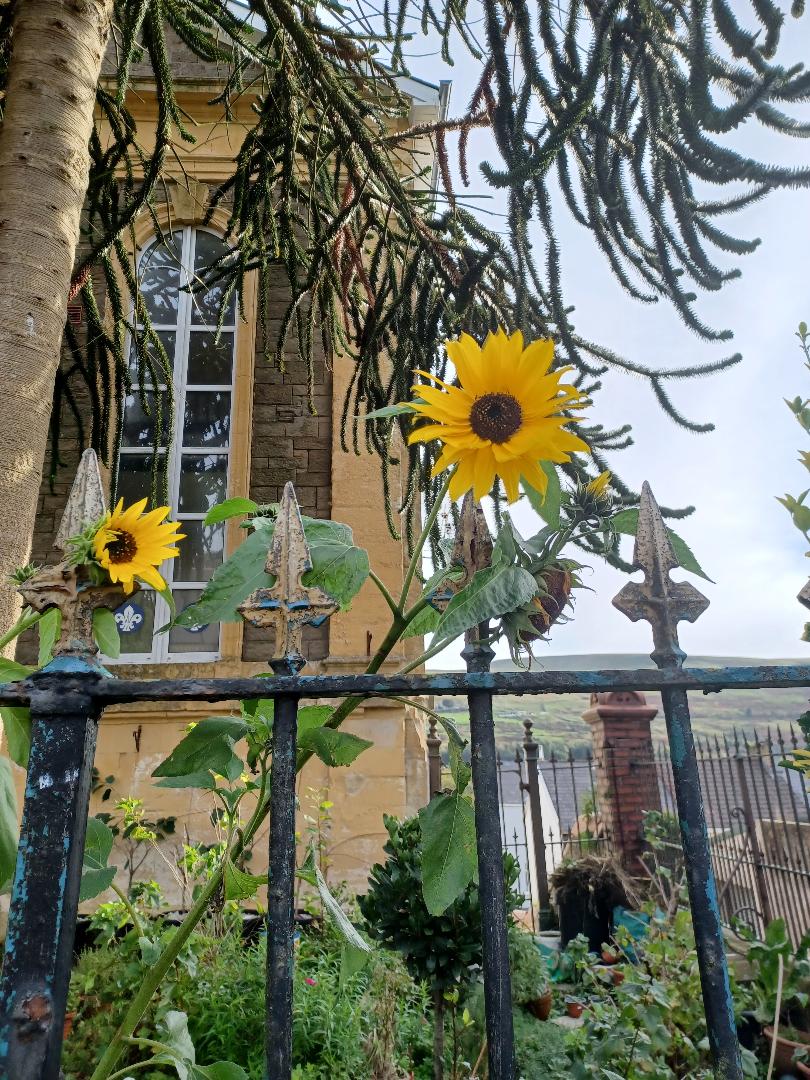
Tell me a story, of October sunflowers, dangling in the wind.
Talk to me of the sunsetting, and the pink skies you saw.
Or tell me a tale of the first time you tasted mango juice.
You thought you had found paradise. A street seller handed you a plastic cup of juice, and you expected it to be orange. But as the mango juice slowly brushed your cheek, your salivary glands secreted extra wet fluids. Your mouth almost ached from it. Your taste buds exploded.
Later, the others would warn you from buying food and drink from the street, but nothing ever tasted like this again. This was your new base line, and a new shared memory of home.
Or tell me again about that time your cousin drove you 1000 km and you stopped to look at the fields of watermelon. Your cousin was tired, so he slept in the car, and you wandered amongst the fruit as the sun went down. Never had you heard fruit sigh before, but just this time you felt it. The soil was full for the melons to thrive, and you could smell them in the wind.
Did you enjoy watching the melons grow, your cousin asked, as he re-started the car.
Or write to me quietly, from a land far away, where life (does) exist. And ask me to explain the words to a small group of women in the Katmandu Kitchen, on a rainy night in Dublin.
“Although I don’t know you, and we might not meet. But I love you and I pray for you. Because it’s humanity that brings us closer together”.
At the Katmandu Kitchen, on a damp night this autumn.
The transition between summer and autumn is the most beautiful one.
We see the sky, feel the air shift, notice the sounds.
We recognise it, yet it changes every year, as every atom of us responds to it differently.
“Hello autumn, I’ve seen you before, perhaps you have something new to teach me”.
As always, the last days of summer are the most exquisite, poignant, and sacred.
Every afternoon of sunshine in September is treated so much more carefully than those we saw in May. Every hour of evening light now, is respected so much more than the same hours in June.
The season changes bring up memories, and for many, memories of home.
Like so many other dutiful daughters, I live in a different country to the one where I was born, and while I try and balance my daily life, with my visits, “back home”, I never seem to get it right.
Guilt and Shame come to visit, uninvited. They settle in, unwelcomed. They stay around, unwanted.
Like so many other dutiful daughters, who are migrants and merchants, I live and work in one place, and go back home, for short periods. So many of us do this.
This is the way it is.
And I wonder, but not for the first time, if I made the right choice, by moving away.
Then I remake the choice every morning, and hope it works out OK. I ask the angels who walk amongst us, to help me out with the harder bits, and I take a deep breath, and repeat.
Little Summer
The funny thing was, the weather
was brilliant. Fluffy clouds hung
from
a perfect blue sky, from childhood.
Let there be a little summer left,
I prayed, and wished, and hoped, and said.
One more knickerbockerglory with a long
handled spoon.
Sandy covered toes, laughter in a beer garden,
a night or two in a caravan
near the sea.
One more afternoon, when I won’t squint from the sunlight
Suzanne bought me a beautiful silver ring for my 50th birthday from a handcrafted jewellery company called The Roots of Ireland. They claim there’s a connection between “their unique jewellery and the magic and mystery of Ireland’s rich heritage”. The Roots of Ireland make a donation to the Irish Native Woodland Trust, to preserve and restore Ireland’s woodlands, every time they make a sale. And on top of it being sustainable, I really liked the ring.
Imagine my horror and disbelief, then, when I lost the ring.
One minute it was on my finger, the next minute it vanished.
Gone!
I spent ages looking for it all over the garden, and I even emptied out the black, brown, and green bins to see if it had slipped inside one of them.
Eventually, I accepted my loss, and I got in touch with The Roots of Ireland, to buy a replacement ring, so that the next time I saw Suzanne, she wouldn’t view me as a careless friend, who didn’t take care of gifts. The new ring arrived, I popped it onto my finger, and I continued with my life.
Some people think that making donations to places such as the Irish Native Woodland Trust or to other groups, that try to slow down the climate crisis, as a waste of time. The Deniers and the Doomers are in unison, in their agreement to do nothing. They watch the burning, flooding, thawing, and steps towards extinction, and they shrug and say, “what can you do?”
I see it all, and I think, “I’ll do what I can,” which might not be much, but it’s something.
One small thing I do is to “sail and rail” from Dublin to Wales and I love to count the flights that I haven’t taken. Another small thing is to try and use eco-friendly methods in my garden, which means no chemicals, pesticides, digging or overly interrupting what nature wants to do first. I’ve much to learn, but the garden is teeming with bees, butterflies, birds, slugs, and snails, which must suggest it’s a little biodiverse.
The animals are incredible.
For a long time, I was accidentally murdering many snails every time I put foot in the garden. I would hear the violent squelching of the snail shell underneath my wellies, and I would feel sick from the senseless death.
“Why, God, why?” I would yell out to the sky, but God didn’t hear me.
So, I constructed a small Zen Pathway from the backdoor to the fence at the bottom of the garden, where I could walk confidently, without being involved in killing small creatures. It seems to be working as there’s nothing of interest on the Zen Pathway, for the snails to eat or do, so they keep away from it, and hang out instead near the organic composter.
I love the baby snails, with their tiny shells, most of all; they’re adorable!
They have funny little heads on them, and they have no sense of direction at all. I like to think that they are safer now, away from the mid-garden traffic.
Snails don’t have to mate to reproduce, as they have both sets of genitalia, but they do it anyway, because they like to. Meanwhile, I sit in the yard and watch the mayhem; and it’s absolutely non-stop!
It’s so beautiful and perfect, and I’d really hate for it all to end. So, I sail and rail, and use sustainable methods on my land, reduce my consumption, sign petitions, go on protests, and join campaigns.
I want to keep it nice.
Keep it beautiful and kind.
I want others to enjoy it too.
One evening last week, I was trying to straighten out some wildflowers after all the rain and wind, and there, at the bottom of the stem of some Ragwort, was the silver ring Suzanne bought for me.
The ring looked like someone had placed it down carefully.
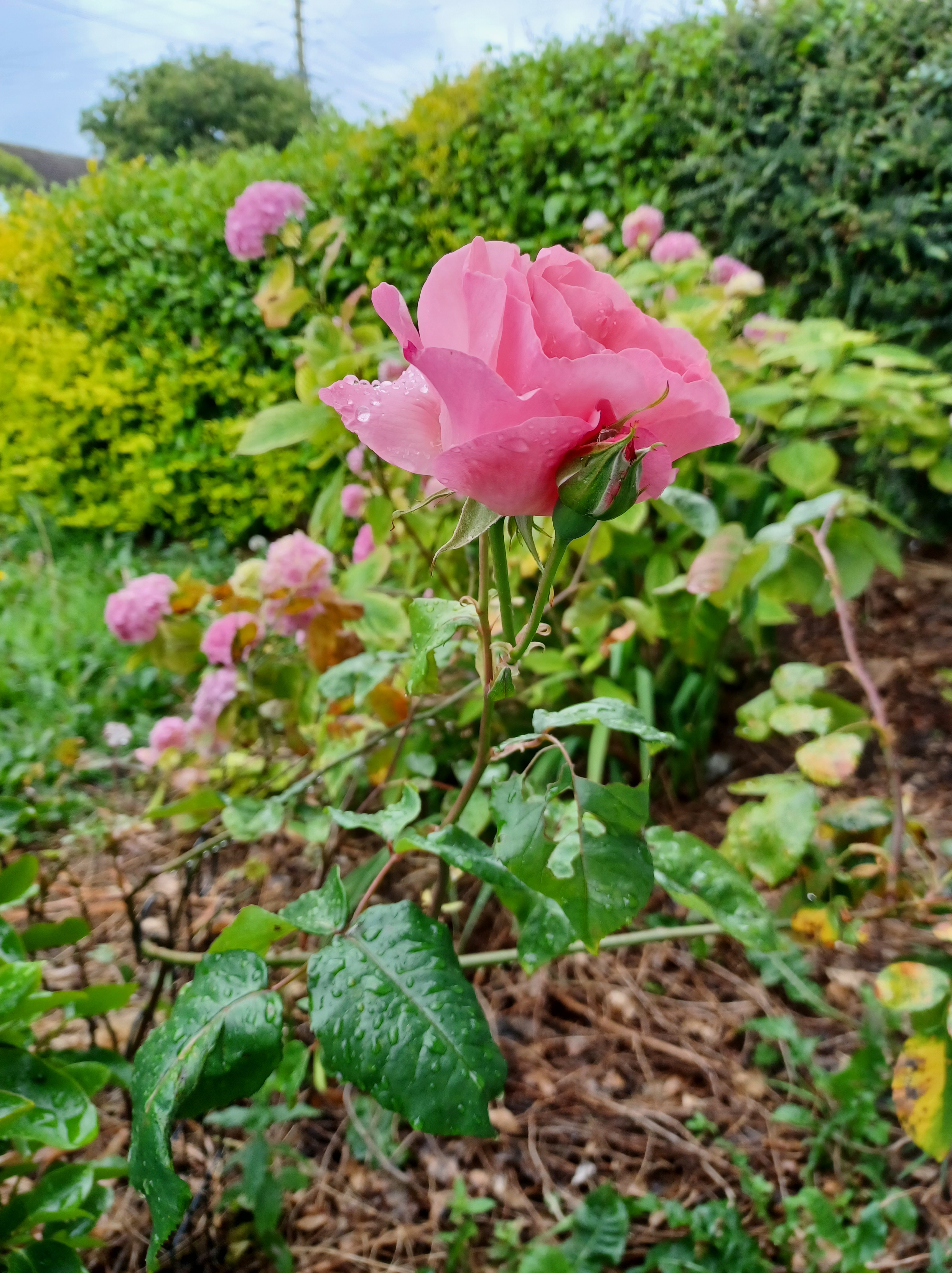
The only possible explanation for this, was that the Fairies put it there, under the light of the last super moon. There’s simply no other way to explain it. Fairies or butterflies, or dancing summer roses found it, and placed it gently there.
Delighted, I took the new-old ring inside, and put it in its Roots of Ireland box, and I’ll keep it there safely.
I would really like it, if we could all collectively agree, to stop using “out of office” messages.
I understand and accept that “you” will reply to my message when you have the time, the information I’m looking for, or the inclination. You do not need to send me a message, to tell me that you will respond to my message, in another message, in the future.
I would also really like it, if we could all collectively agree, to stop inventing new ways to send these messages.
There’s enough.
There are more than enough ways for me to apologise for not responding to your message, with my message, earlier. I was probably apologising to another person, at the time, which is why I couldn’t get back to you.
Stop sending all the messages!
And also, when did “checking my emails” become an activity? Emails are the how we work, not the work itself, and they are nothing more than a tool. They are not sentient beings. Stop giving them immortal powers.
I’m so tired of all the different messages in all the different places. It’s taking my energy away from me, and time away from worrying and overthinking other issues, instead.
Like, what is this blog for?
I used to share stories on here, until I began trying to get them published in magazines and Ezines. This takes up a lot of time, and so what can I share here? Do I simply write, “Great news! My story, Pointless, was published in Alien Buddha Press this week! Thanks Red for including me!” It seems a little redundant as I’ve already shared this on Facebook and Twitter, so what can I say here?
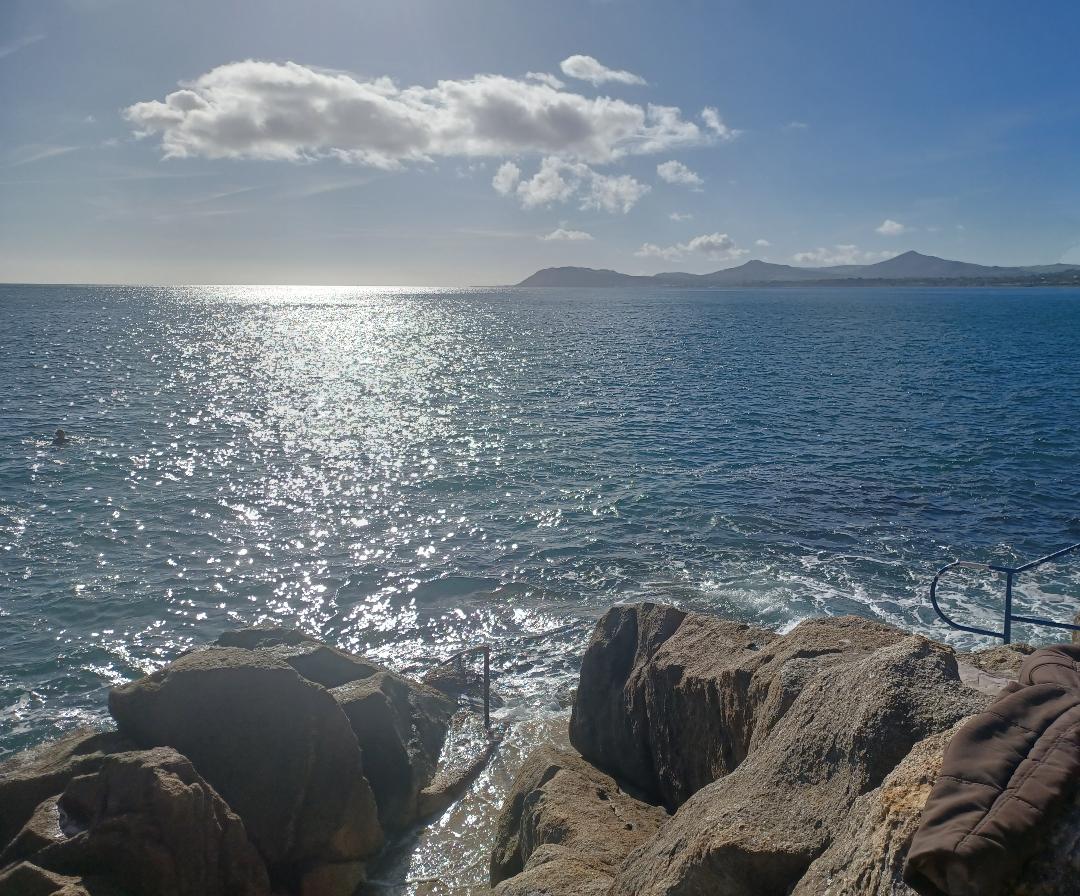
Can I tell you about the books I’ve read lately, like “Elsewhere” by Yan Ge, or “192 Batu Road” by Viji Krishnamoorthy? Or do I tell you about weekend sea-swimming at the 40 Foot, or how much litter I’ve picked up from the ground?
Or can I show you some writing, in progress?
A piece of flash-fiction, that I read aloud at an open mic event recently, with Anne Tannam and Fiona Bolger? You might find it interesting, and it’s called Schuman Resonance, and it starts like this…
Never trust a prose writer with an attic conversion, directions to a destination, or a seven-digit code. But ask them instead, to describe cerulean, the taste of obsidian, or to talk about sunshine.
Never trust a prose writer, to compose minutes from a meeting, to send a WhatsApp message or to answer a phone. But ask them instead to explain why summer breezes, how to live with grief, and when to dance.
Tea-dances in the vestry of the chapel, were fine things.
This was when girls still wore long dresses to parties.
Some of the older women, who are all wearing hats, are serving small dishes of jelly and ice-cream to the children, and tea and sandwiches to the grown-ups. The best chapel chinar has been brought out, and unwrapped from old newspaper for the party, and everyone is happy.
Some of the older women, are talking in the kitchen. They are worried that Collins, the mare, got out of the field again.
I knew this would happen, says the woman with the snarling mouth.
Last week, Collins broke the narrow wooden gate, coming back into the farm, and if someone had been standing the way, Lord knows what could have happened. The problem, is of course, as I’ve said many times, that those two boys don’t know how to control her.
Oh, they know how to manage her, says the woman with the walking cane. They like to wind her up and excite her energy. It’s just a game to them, but one day, you mark my words, that mare will break through the field, and hurt Lord knows who.
Collins is a gentle old mare.
She has a quiet nature, which is good for pulling the milk cart. She plods along and is patient enough to wait for the milk to be delivered. All the neighbours say that the fresh, creamy milk is delicious, and they stroke her while she stands outside their houses.
Yet sometimes, and sometimes again, she likes to run.
She can feel her heartbeat alter with the rhythm and tempo. When she flies through the field, she thinks, how wonderful this is, let me run instead.
The two boys are enjoying the ice-cream and jelly in the vestry of the chapel and have stuffed their pockets with cakes and cream buns. They don’t care about what the old women are saying in the kitchen, they only care about the sweets and the treats.
Their hands are always a little bit dirty from the farm, even when they go to tea-dances, and especially underneath their nails. Their mother tries desperately to clean them, every Sunday night. They sit in the tin bath near the fire, and she scrubs them as much as she can without hurting them. After that, they sit with their mother and listen to the radio, and she allows herself to love them entirely.
It’s then, when their hair is still damp, and they smell of soap and happiness, that their mother hugs them close. They pretend they’re too big for this nonsense and they squirm, and they frown, but secretly they enjoy it.
Tonight, after the tea dance and the party, the boys will go home with their loot and share it with their mother, who couldn’t come to the party on account of her nerves. They will watch her carefully eat the fairy cakes, and they will promise her tomorrow, that she will run again.
At first, no one knew where to put the furniture in the new house. All that was known for sure, was where the furniture should not be.
“That chair shouldn’t be up against the wall. I don’t know where it would fit better, but it sure as hell can’t stay there!”
Boxes were unpacked, and things were put into places, and on top of other things.
The house haemorrhaged cardboard, as more items were delivered in additional boxes, but worse than that, the house didn’t smell like home.
It smelt and felt like cold concrete and plaster, and it was cold, hostile and didn’t sound familiar. We continued to refer to the apartment, that we had left behind us in the city, as “home”, and we felt like visitors in the new place.
But for the gardens.
There is a modest front and back garden, at the front and back of the mid-terraced house, and one of the reasons we moved.
A robin was the first to remind us.
He was curious and friendly, and he came to look at us from the elder flower tree just near the back door and the kitchen window. We gave him some sunflower seeds to apologise for the noise and disruption from the renovation, and to help him through the last of the wet and grey winter. He came back for more, and he brought some sparrows and blue tits with him. Someone said to stop feeding the birds during nesting season, or else the new chicks won’t learn how to feed themselves, so we stopped filling up the sunflower feeder in April.
Then the foxes came in May.
I saw a fox in the garden, early one morning and I was thrilled. Nothing prepared me for how delighted I was a moment later, when I saw her four cubs following. I stayed as quiet as the air, and I tried not to move or frighten them. They’ve been visiting every couple of days since, and the cubs are getting big now.
After the rain came the slugs and the snails, which are our garden’s most unfortunate looking residents. These ancient beings irrigate the soil and improve its quality and fertility. You wonder how these ridiculously slow animals, with both their male and female sex organs on their heads, ever survived evolution, and are still here, keeping us company.
Perhaps they say the same things about us.
A neighbour, a few streets down keeps pigeons, and they come home to the coup every evening when he calls them. And now the butterflies have arrived, and they must barge past the bees if they want to get to the flowers. It’s good then, in hindsight, that the robin, blue tits and sparrows have made room in the elder flower tree, for these smaller things to feed.
The butterflies are gloriously colourful, and I love watching them fly around the ever-changing garden. Once they were caterpillars, but now they can fly.
Just before the sunset each evening, come the swifts, (or the swallows).
They swoop around, scooping up the insects. They manoeuvre so elegantly, at great heights and at high speed, and for a while, I thought they were bats. Everyone nodded kindly when I told them how much I liked the evening bat show, but it turns out they’re not bats at all.
It doesn’t matter if they’re called swifts, or swallows, just like it doesn’t matter where the furniture should be. What matters most is that I have a sunset seat to watch this world I live in, and to observe the wildlife in suburbia. On my sunset seat, on this new moon, at midsummer, I watch the world that I’m a guest of, and I am in awe.
Everything is so green now, and new life is everywhere.
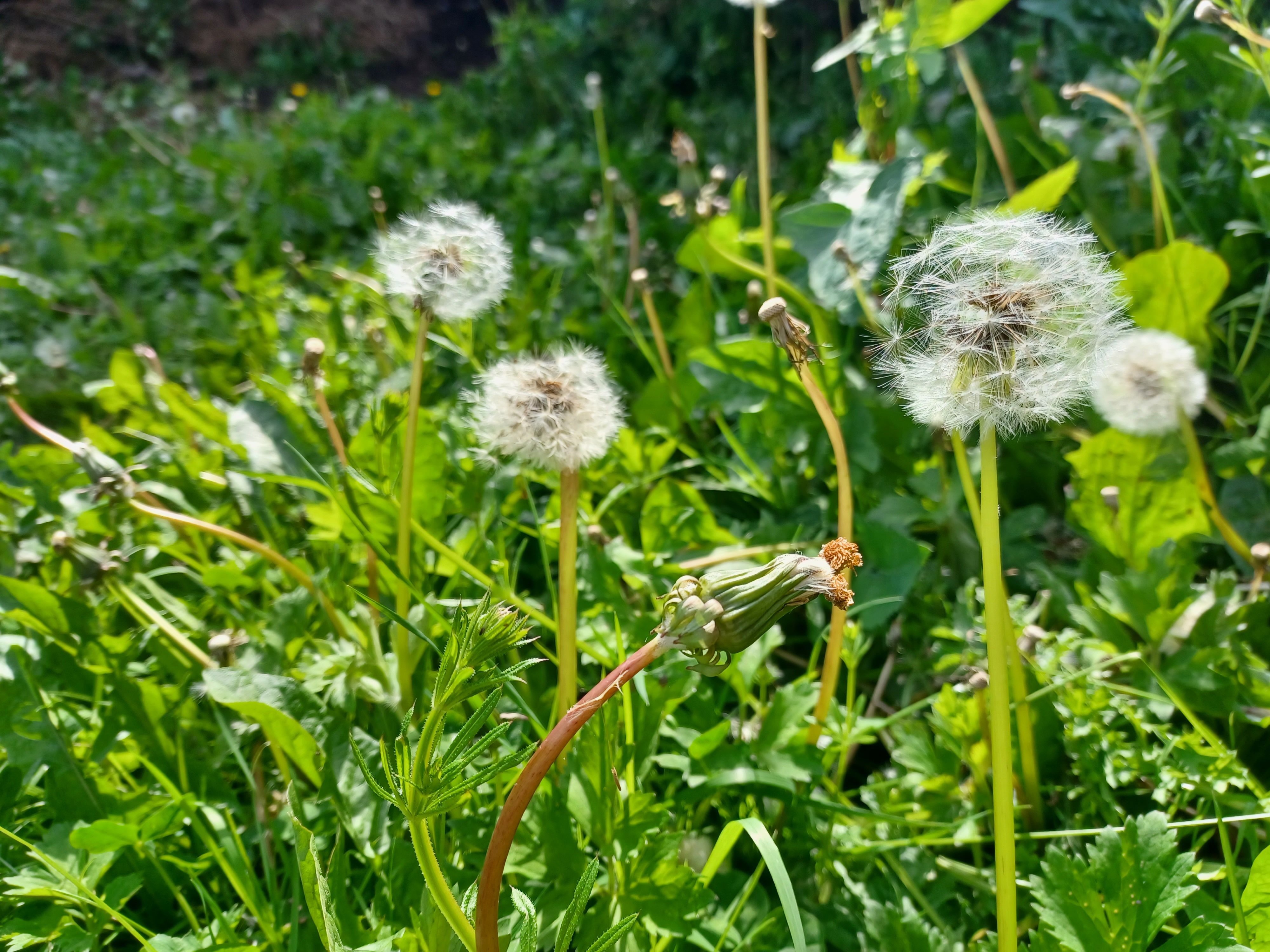
The dandelions have turned to seed, and it’s time again for the buttercups and daisies. The trees are displaying their newest green leaves, and some mornings the mist is intoxicating.
Long summer nights lean out, which bring some melancholy, but to many enthusiasms and excitement and joy; it just depends.
Remember in the nursery when we played, “how green you are?” and we sang loudly or quietly to help find the treasure. Softly when far away, and loud when close. We couldn’t smell spring then, because we were too young, and sometimes we couldn’t hear it either.
Remember another May in Mongolia when the snow melted, and everyone learned to walk on solid ground again. Small pop-up cafes sold beer that you could drink from the bottle while sitting on plastic chairs, listening to American songs on the radio. Harold said, “this is just like Ibiza” and we all laughed hard. Eating shislek and talking about Kazikstan.
I might have told you that before.
I told you about a fox, that time.
This time the fox is at the bottom of the garden, and she has four cubs. I’ve seen them in the early morning, once by accident and later by design. They hide beneath the hedges and come out to play when she’s out hunting for food. I smile when I see them, when the earth seems at its finest.
Earlier in the week, there was rain.
The water dripped off the hedges and quenched the thirst of the slugs, snails, and worms at the “all you can” eat buffet.
In my universe, this subjective, unique space and time is the tranquil peace and the air. In another place, bigger and smaller than now, there’s an ocean where the salt water heals and there, there is quiet.
My enjoyment and trust in the day begins, middles, and ends with one grateful thought, that I am happy to be here. Let me heal, says the May flower and the May fly, let me do my work. The May-Mess all around us, the wild purple flowers that entice all the bees. This short-lived festival of luminescence, this special time of song birds.
New Year’s Eve is putting on lipstick and applying nail varnish to all of the fingernails: the short ones, the long ones, the scary ones, and the ones that look like they’ve been nibbled down too much.
Sometimes New Year’s Eve arrives like a gentle, kitten who wants to hide in the corner, mewing quietly. At other times, New Year’s Eve arrives with the chaotic energy of Laura Palmer, who wants to do shots with you in the kitchen and tell you all her stories. You’re hesitant, and you say, “I’m not sure Laura Palmer. I just wanted a quiet night in, watching old movies”. But Laura doesn’t listen.
Laura doesn’t hear you.
I’m not going to wish you a happy new year.
How can I?
The year is too long and opaque to know, for sure, if it will bring us any type of happiness. The best I can hope for, is that you have a happy New Year’s Day, and then another happy day, after that. I hope that when shitty, inexplicable horror comes to your door, that you will have the wherewithall not to let it stay too long.
I hope you will learn and grow from the bad things that will happen.
In 2022, I made a list of 50 fine things to do and think about, during my 50th year.
The things that worked very well all had a teacher, guide or mentor to help me, such as, my writing and meditation courses. The things that had a sense of community worked well too, such as swimming with friends and getting involved in Ebbw Vale Institute. The running went well because, this in turn, helps me to eat well, sleep well, and stay hydrated.
I liked learning more about the phases of the moon.
The things that didn’t work well were the Spanish classes with DuoLingo, the sit ups alone in my living room, and the #2minutestreetcleans, when Diane stopped helping me.
My main criticism of the whole experiment was the list in general.
50 things were too many. Far and way too many.
Also, turning our lives into checklists of efficient productivity, which demand external validation, is probably not the most helpful way to live. It removes the magic, mystery and miracles of this incredible experience, and summarising “life” with outcome success stories, makes me want to vomit.
Really, it does.
This is a fine way to approach our jobs and our tax returns, but not life in general. Life is too precious.
I forgot the basic advice from Marcus Aurelius, who says, “concentrate every minute, on doing what’s in front of you with precise and genuine seriousness, tenderly, willingly, with justice” instead of worrying about the future. Working my way through a 50-piece checklist, was at times, another thing to worry about. Better, that I had prioritised four or five things. Or not worried about anything at all.
The Tibetans have advice about worrying. They say that if the problem has a solution, then there’s no point in worrying. And if the problem doesn’t have a solution, then worrying is not going to solve it.
I should have listened to the advice of Tom Robbins, who tells us to never hesitate to trade our cow, for a handful of magic beans.
He also says,
“I want to travel on a train that smells like snowflakes. I want to sip in cafes that smell like comets. Under the pressure of my step, I want the streets to emit the precise odour of a diamond necklace. I want the newspapers I read to smell like the violins left in pawnshops by weeping hobos on Christmas Eve. I want to carry luggage that reeks of neurons in Einstein’s brain. I want a city’s gases to smell like golden belly hairs of the gods. And when I gaze at a televised picture of the moon, I want to detect, from a distance of 239, 000 miles, the aroma of fresh mozzarella”.
2023 has no such list: I simply wish that you and I have a good day, and then perhaps another one after that. I will try and savour the good bits and learn and grow from the hard parts. I will try to be kinder, listen better, and be more patient. I till try and catch the magic, miracles, and mysteries of this awesome life, and give time to the raindrops and the frost.
“If something was worth writing down, it was worth writing down in full. And she had a horror of lists–grocery lists, Christmas card lists, and most grisly of all, to-do lists. Lists, like appointment books, were nails driven into the future. She knew this was an odd objection to be raised by a person whose daily life was utterly predictable, who never threw caution, or anything else, to the winds, who never packed light, because she never packed at all. Still, the future was a sleeping monster, not to be poked.” ― Jincy Willett, The Writing Class
“Sometimes the most important things don’t fit on lists.” ― Andrew David MacDonald, When We Were Vikings
#50finethings was born into January darkness out of fear of a 50th birthday. It started as a list of things to do but became an abstract inventory for people who don’t like to follow structure and rules. It could have been an evolving distraction, but in the end, it might just be an outline of some things that happened.
If January is a harsh, annoying alarm clock at 6.30am, then October is a 9.00pm film, with the dinner dishes tidied away, and the reading lamps turned on. Autumn is the most middle class of all the seasons, with its insistence on cosy, warm jumpers, and frolics in the orchards. Autumn demands waterproof boots.
At 50 we have the confidence to be modest, and we accept that so much of this life is a mystery. We have moved away from the cockiness of the 20s, the horrific mistakes of the 30s, and the constant backtracking and reversing of the 40s. Instead, we are faced with some quiet waters of the 50s, where silent waves stir. 50 is a harvest, a latter midway point, a resting place where we can gather our berries and nuts, and hold them safe for wintertime.
We can do just one thing at a time.
Would we prefer to scroll, or watch the rainwater trickle down the window? Would we hear bad news, or listen carefully to the rhythm of the thunder? Do we complain about our city, or try and make it better? Can we remove the cause of suffering, or the symptoms of pain?
Many of us have plenty and many have nothing at all.
At 50, we know what we think about poverty; if we want to eradicate poverty, we will need to take away capitalism, and if we want to evolve and find honest fulfilment, we probably need to do both. We know now, what we think about everything, and we know what we need to do. At 50, we can also change our minds.
With autumn comes the harvest, and for some of us, grief.
We learn our subjects at school and read what pleases and interests us, yet it’s shocking how little we know about grief. Why not learn about, and be prepared for grief? Better then, to take grief by the hand, and welcome it onto our path then to run away from it. Be good at grief: not mawkish or sentimental, dismissive, or ignorant, but learn wisdom from it, grow compassion, find grace.
Even ordinary, uncomplicated grief can be a friend. A harsh friend who can teach about kindness and love. If #50finethings was a distraction from grief, then it brings us back to the start now.
Here we are at the 11th new moon of this year. We wade from the Harvest Moon into the Mourning Moon, while the final two moons await in the wings.
This new moon, this other new beginning.
This new start is the beginning of ahimsa.
Ahimsa is the ancient practice of non-violence, non-injury and non-harm to self, others, and all sentient beings, in thoughts, words, and actions.
Now that’s some list!
This list transcends #50finethings and is unending and spiralling, and could take a lifetime to get the hang of. Imagine, having only non-harmful thoughts about ourselves, all the other people we know *and* all sentient beings! No harsh thoughts or words or deeds about ANYTHING or ANYONE in this whole world, and beyond.
Even for an hour.
This life is a privilege. To wake and watch the beautiful miracle, a simple mystery, a spectacular essence of life; this life, this time, this now. We are gentle paper boats, floating down the canal and we are precious, and alive, and we matter.
The finest things in life are the people we love and the time we spend with them. We know that, we knew that, we must remember that. A love for this horrific, absurd, charming life with its poverty, and its grief, and its miracles.
Photo with kind permission of the official twitter account for Brú na Bóinne, Newgrange and Knowth
#50finethings: 41 – 45
“I declare after all there is no enjoyment like reading! How much sooner one tires of anything than of a book! — When I have a house of my own, I shall be miserable if I have not an excellent library.” ― Jane Austen, Pride and Prejudice
“Isn’t it odd how much fatter a book gets when you’ve read it several times?” Mo had said…”As if something were left between the pages every time you read it. Feelings, thoughts, sounds, smells…and then, when you look at the book again many years later, you find yourself there, too, a slightly younger self, slightly different, as if the book had preserved you like a pressed flower…both strange and familiar.” ― Cornelia Funke, Inkspell
There’s a short video that goes viral, sometimes, of a bird helping a hedgehog to cross a busy road. The bird seems to be nudging and pushing the hedgehog to the safer side of the street, out of the way of the fast and heavy cars. One of the drivers stops, to film the helpful kindness of the bird, and decides to share this on a social media platform. It’s there we remark that the bird is not trying to help the hedgehog cross the road at all.
The bird is trying to eat him.
It’s unclear if the bird thinks the hedgehog’s spikes are worms, or if he’s trying to devour the entire creature, but what we do know is that the hedgehog is in danger. The hedgehog can do very little. Its best hope is that a vehicle travelling in the other direction, will mow down the bird, shockingly and violently.
Seemingly we are on the side of the hedgehog, and not the bird.
If January is the month of lists and lies, then September must be the month of sign-ups. New courses, crisp uniforms, and goals for the academic year, as we cross our fingers and hope that this is the semester that we fulfil our true potential, and apply ourselves properly. We pack our leather satchels full of hope and excitement, and yet we also feel that we are out of our own league. It’s like going to Anne’s Bakery on Moore Street, and ordering an egg white omelette, on rye bread, with a hazelnut coffee, made with almond milk; it’s the wrong order, in the wrong place and we should simply go somewhere else.
September should instead be a time of slowing down. We ought to bring out those winter blankets and become autumn book worms. We should simply read articles about awe, and those moons around Saturn, for no other reason than the equinox. We should harvest our nuts and berries in preparation for the colder months, and we should bid farewell to the summer.
We need to read to escape more news of Billionaires who buy rockets to fly near to space, and who buy luxury bunkers to hide in when the next pandemic, war, drought, or flood comes. The Billionaires fill those underground safety nests with bowling allies, swimming pools and cinemas and we can only ask, what films will they watch after the apocalypse?
Don’t cry for the Billionaires when they die.
Or cry but know that for the Billionaires, we are just hedgehogs, or maybe worms.
If the Billionaires cared for us, they would sell just one of their paintings, to help cure malaria. They would sell one of their super yachts, and put an end to homelessness. They could sell one of their private jets, so that the air we breathe is clearer; or perhaps they could stop buying rockets.
The Billionaires don’t worry about worms.
Perhaps they should.
It’s we the worms who keep the eco-system going and without us, the soil would rot and fail. Sometimes we’re enormous, at other times microscopic, our strength is in our numbers, and how unseen we seem.
We are Darwin’s “ploughs,” who lived when dinosaurs ruled. We’re adaptable little invertebrates, and we glisten in the sun.
We have one good ticket for this ride, and there seems to be a strict no-refund policy. Fair, unkind, good, or bad, we must play the hand we’re dealt, as there’s simply no other choice. Be kind, generous, laugh, and leave it better than how we found it. Not exactly a meaning of life, but a list of fine things we could do.
Happy new harvest moon, little worm, and a happy, gentle equinox.
Practicing an art, no matter how well or badly, is a way to make your soul grow, for heaven’s sake. Sing in the shower. Dance to the radio. Tell stories. Write a poem to a friend, even a lousy poem. Do it as well as you possibly can. You will get an enormous reward. You will have created something.” ― Kurt Vonnegut, A Man Without a Country
“your art is not about how many people like your work your art is about if your heart likes your work if your soul likes your work it’s about how honest you are with yourself and you must never trade honesty for relatability”
Visitors to Dublin storm through the narrow streets, searching for An Experience.
Sometimes the visitors walk four or five abreast, as if they’re in a row, in a marching band, on St Patrick’s Day. They do not rest until they have captured the perfect, unique, picture, for their followers. They race towards the galleries and museums, and when they’re safely inside, they consume art.
Dublin is littered with art: graffiti, buskers, the clouds, and the sounds of the streets. The city sings, shouts, swears, and gasps for breath as it tries to adapt to the changes. Go to an art gallery, then, and ask yourself, “does this art move me, is it memorable, is it honest?” Listen to the Key Waste rubbish truck, and LUAS bells from the street, as you do.
A photograph of a street scene can be artistic, but how can you photograph homelessness and hunger in a city that sells the craic agus ceol? There’s nothing as artistic as the food queues outside the GPO every night, or watching a kid eat their dinner on the pavement. Can you video a street dispute, and film the passion of the anger involved?
Art is a beautiful blue sky sitting on a horizon, or it is human shit at the bus stop, with some stiff, rotting tissue beside it. Art is love, and jealousy, and integrating death into every smoothie. Art is watching a young child look terrified.
Observe art, enjoy art, and make art.
Or don’t.
But if you do make art, make it about why the rich never feel shame about their wealth, and make art about grief, and our own insignificance.
Dublin has poets and prose authors, memoir, and postcard writers, and those who send letters to the Irish Times about the high cost of the TV licence. Dublin has people who publish on social media, and those who invent catchy hashtags.
Dublin has open air opera and drama at the market stalls. Art should be free, and all artists paid. Capitalism should be sent to the farm in the countryside, with the ageing donkeys, the cat, and that puppy who died. This earth of ours, has an underlying condition, and capitalism isn’t going to help it feel better.
Art is the wind.
Art is the horror, boredom, and pleasures of our lives. We’re here and we love, and we’re part of it.
Art fights for and against all sides on all wars. Artists are heroes, villains and indifferent. Art is a seven worded text, to tell you someone is dead. Art is salt water on your face, at sunrise.
It’s the night before Christmas: a foghorn that scares you; a whisper; a leaf drop; a home.
36: go to a FREE art gallery in Dublin.
37: better still, paint something. I did, I loved it.



 Shorter than me