Will the new year come with love and warmth and joy? Will the bells sound of pleasure? Will it bring with it, good cheer and peacefulness? Maybe it’s too soon to tell.
Better to try for attention and brighter mornings. Tether the distraction to the wall. Sing more, learn the jitterbug, walk slower through the day. Purposely slow it down.
Honestly, though, it’s just too soon to tell.
The secret hush of the eve falls. And like Janus, we see both years for the shortest of times. While noting the past and the future we, ofcourse, miss right now.
What did we learn? What did we find out more about? How were we kinder and more loving? What did we give our attention to, and what filled us with excitement and delight?
Maybe just do more of that?
When there’s a fork in the road, and we have to choose which path to take, how do we discern better? Should we take the easy road, with the daisies and the smiling cow? Or should we, instead, choose the harsher way, where the dragons spill out loss, sorrow and evil from their noses, and rancid pain from inside of their mouths? There’s a better story in the poorer choice, and a stronger lesson to be learned.
What to do if this year, is surprisingly sadder even than last year? Yes, pain. They said, “pain, my dear is a part of it” and it seems to be quite central. I’m afraid.
So it comes: another year of life. Of this mystery and magic and gravity. All that we are, were and will be, sits for a moment in quiet stillness. Mistakes and sins, accolades and prideful times, sleep and starlight.
Back straight, eyes forward. Attention. Love and kindness.
Once a year, the Sun God demands a sacrifice, on the morning of the winter solstice, of three young maidens. They are to wade into the cold water, and give of themselves freely, so that the rains can be secured for next spring.
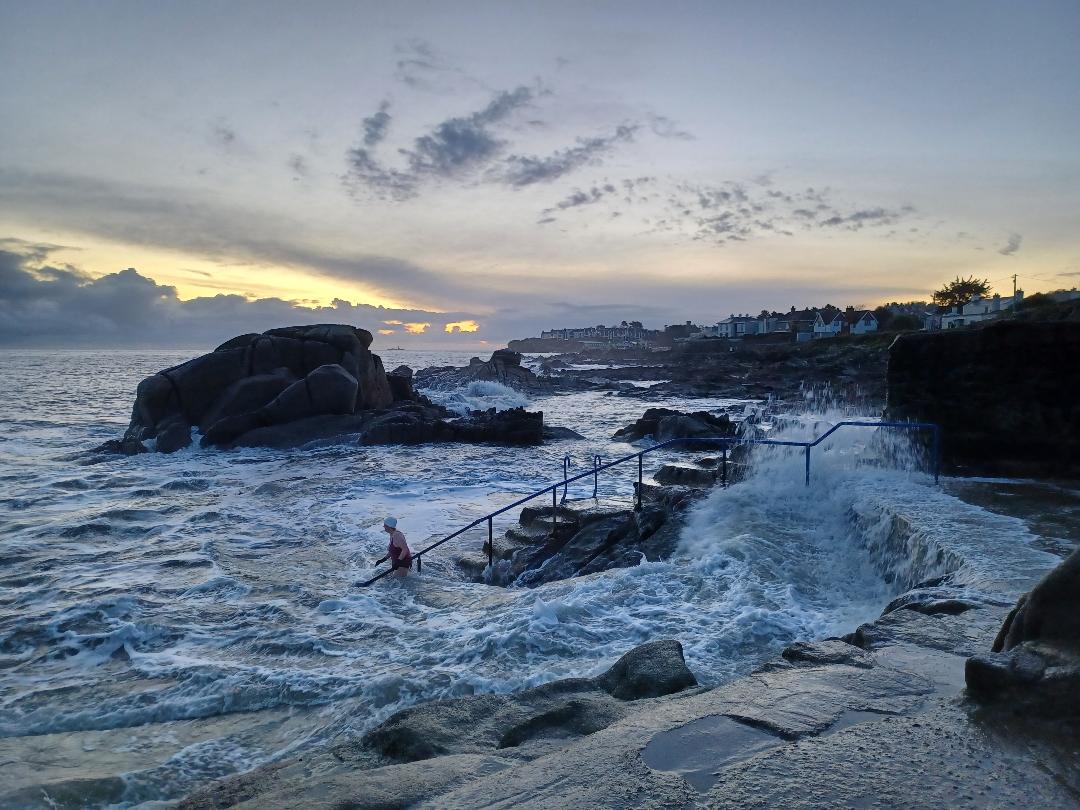
There were no fine, young maidens around yesterday morning, so Julia, Teresa and I threw ourselves into the Irish sea at 8.28am, in time for sunrise. The Irish Sea quickly spat us back out again, as the sacrifice was unwanted.
The three of us have been sea-swimming every weekend, from April until the shortest day, for five seasons and we have a very strong safety record. Many a time we’ve abandoned a swim at the 40 Foot if it’s too wild, and we only ever swim at Vico on the calmest of days. We only swim when there are others in the sea, and when our capabilities match the conditions. We swim when it feels right.
Yesterday, it didn’t feel right.
The wind and tide were low, but there was a very strong swell, which made it challenging to walk down the stone steps, into the sea. More importantly, while there were lots of spectators, sitting on the rocks to enjoy the sunrise, there was only one other swimmer in the water.
A random stranger took charge of us and began to give instructions. We should go in via the side steps, we should time our entry and exit well, we should be careful and watch the high waves. All of this was interesting and potentially helpful information, had we paid any head to him.
Instead, what followed was a spectacular 90 seconds of seriously unhinged chaos.
Julia was the first one to get battered into the railings, but undeterred she did a 360 turn around, caught her breath, and dived headfirst into the oncoming high waves. Teresa followed steadily, with a magnificent belly flop into the cold water. I didn’t even get off the steps before a wave took me under, and for a while I was neither on the steps, nor off the steps, but simply under the water circling around within the swirl. Eventually, my hand found the railing, and I popped back up again, and waved at our Stranger-Instructor to tell him everything was OK. Teresa and Julia stayed afloat for a minute, before climbing up the ladder, back to dry land.
The sunrise spectators were watching, in horror from the rocks, as we dived, jumped and fell into the water. They looked like a Greek chorus who could be singing, “why did you go into the water, on such a choppy day? Why, why, why why?”
And why did we?
I blame the Internet Machine.
The Internet Machine has made babies of us all.
It makes me impatient, desperate for attention, unwise and envious. There was a part of me yesterday, that wanted to go into the water for the photo I would be able to share on my social media. My desire for the solstice swim, pictures and all, was stronger than the inner voice telling me to go around to Sandy Cove for a calmer swim. No one would have minded if I hadn’t swum. Yet, this is the life we live.
We spend more time online than offline and even our offline lives are fodder for our content. We over-share, post for likes, offer up our secrets and private moments in exchange for attention, and we make poor decisions.
If I have one resolution this year, it is to leave my mobile phone at home more often. I plan to treat it like a land-line, and leave it tethered to a wall, in the corner of the living room. I will go outside without it, like I always did, and check it for important messages a few times a day.
This is a funny old time of year, with the darkest of days and the longest of nights, designed for sitting around a fire, listening to stories. Yet, the busyness of Christmas is marketed for relentless commercialism, high energy social interactions and envy. Instead of giving and receiving blessings, we can feel fatigued, bluesy and alone.
Some people are having fun.
And some of them are stuck in traffic behind Chris de Burgh, waiting at airports, getting stressed by family, hungover, resentful and sad. Some people are having a happy, joyful and hilarious time and some people are doing both things. The Internet Machine seems to think we must be blissed out all the time, if we are to be happy when the fully rounded human being can feel happy and sad, excited and low, jealous and kind, all at the same time.
That’s our primate condition.
Yesterday morning in the sea, I was scared at the hairy bits and exhilarated by the beauty. I was happy the situation didn’t escalate, and I wouldn’t have missed it for the world. I won’t make that mistake again, but I completely understand the pull. I am grateful I have such wonderful friends in my life, who I can count on to laugh with, at all the times.
This Christmas, I wish you wisdom.
I wish that you may discern between which political arguments you will pursue with your family this season, and which ones you will let lie at the door.
I wish that you buy yourself one nice gift, to unwrap on Christmas morning.
I wish that you notice how lucky you are, to be here at this festive time.
I wish that you enjoy the tinsel and decoration and note that they are temporary.
I wish that you are blessed by your elders, or your Sun God, or your Santa, and that they thank you for all you did for others throughout the year: that you loved, comforted and supported the people in your lives, and that they did it back to you.
I wander among them, the fiddlers and the fishermen, the goddesses and the followers of the moon. The poets and the selkies.
They opened the door, and I walked in.
They promised me honey and pomegranate and we feasted and we danced. After morning tea, the older women gave me gloves and taught me how to tend the land. In another chance meeting, they showed me how to clean an ancient well. Sometimes I smile before I rest.
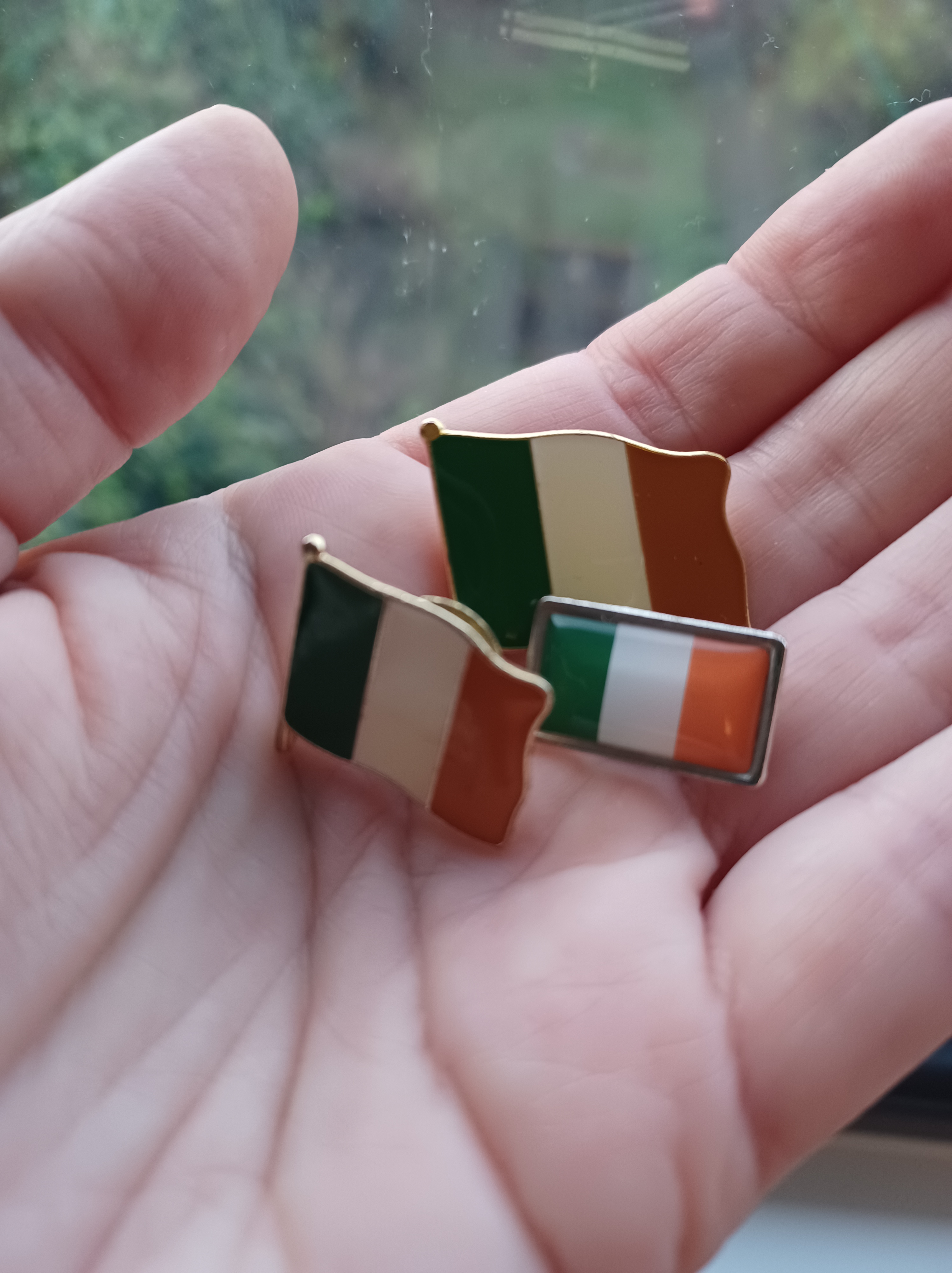
I curl under our flag, and it warms me.
It settles me when my mind wants to chase after the wind, and the rain, and the cattle, straight over the cliff’s edge and fall over into where the ships wreck on rocks underneath. Something whispers, “only follow the star that knows the way”.
Then it admits change, “No. Better still. Only follow the star that isn’t sure which way to go yet”.
Our flag feels like that childhood blanket, with a satin edge. Velvet from a curtain that kept the draft from the hallway. Warm silk, from imagined ball gowns, in children’s books.
I first met Monica Corish in the old Irish Aid Centre at the top of O’Connell Street, Dublin, back in the summer of 2012. She was facilitating a creative writing workshop for returned volunteer development workers, and I loved the Amherst teaching method she used, and the lovely tone and style she applied to it. I left the workshop thinking, “that went very well”, and we started it then.
I attended many of her workshops after that. I went to more sessions at the Irish Aid Centre, then at the Comhlámh offices on Parliament Street and later again, online. I met her creative partner and partner in life, the writer, Tom Sigafoos and I enjoyed learning from her.
I always loved her poetry.
Her beautiful, “Slow Mysteries”, (2012, Doghouse), is a sublime collection of poems about Monica’s home, “and where are you from, and who are your people?” and Monica’s travels, both in and outside of Ireland.
In, “And yes, the waves were sparkling”, she takes us to Donegal Bay where the sea was “the happiest bluest turquoise/ I had ever seen” to Ntarama, Rwanda to witness “our own unbearable grief/ for the loss of unbearable joy”.
It’s testament to her skill as a writer, and creative coach that she can lead the reader safely through difficult terrain. And it’s those guide-like ways that have come into their own in her debut novel, “Leaflight Moon” (2025, Púca Books).
“Leaflight Moon” is a story of Sligo, Ireland in 4000 BC, when our ancient hunter gather-ancestors, met the first farmers, who cut down trees and kept their animals in cages. It’s an extraordinary tale and it’s a wonderful story.
At first, this period of time, might be disorientation for readers without knowledge of prehistoric landscape. But what Monica does, and where some of her magic lies, is she treats her characters from six thousand years ago, with the same respect and dignity as she might new friends from the coffee shop, from across the street. She assumes they have desires and fears, and she gives them voice, through her poetic prose.
Monica describes the landscape of the time beautifully.
“The waning-crescent Moon moved slowly through a cloudless sky. The sea was perfectly calm, the horizon straight as a reed. They paddled past mountains – WolfHowl – Eyrie – Blade – Boar – all leafing green and speckled white with sloe thorn”.
Monica’s characters, who change names as they grow and learn more about the land, and their place in it, are fully capable of making mistakes, doing terrible things and learning from their tragic errors. Monica takes the reader by the hand and whispers, “I know this is a bit unusual, but I am a storyteller and a poet, and you can trust me. If you stay with me, I’ll show you a story as ancient as the moon”.
Some of her characters have issues with the newcomers, and their modern ways of doing things. Some of her characters fall in love, and experience pain, grief, sorrow and loss.
One of the interesting aspects of the pages, is how characters can sound so reflectively modern, without us suspending our disbelief. The assumption that they couldn’t possibly be as thoughtful as we are now, is removed, as it is their relationship with the land, the seasons, the animals and of course the moon, which leaves us lacking.
Whoever, “us” is.
Change is inevitable in this book and the desire for our species to adapt is essential if they, and we, are to survive.
“Leaflight Moon” needs concentration, in a world where our concentration is sold to the highest bidder. The reader has to orientate themselves in an unfamiliar setting and Monica is there to help us. Characters change names just as we are getting to know them, and we need to adapt if we are to keep up. Why shouldn’t our ancient ancestors get the attention they deserve as we sit around our virtual fires and listen to the stories under night fall?
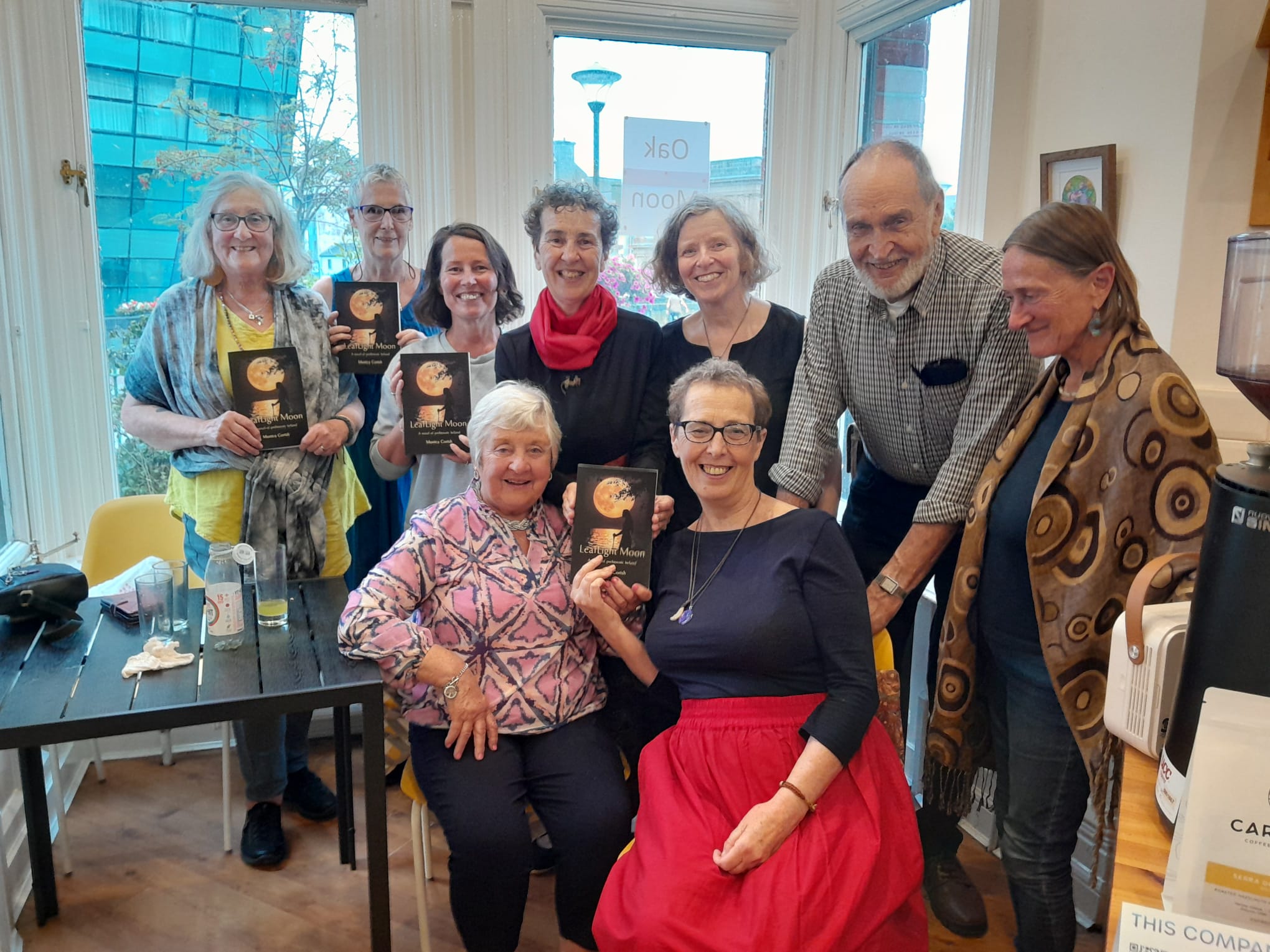
I was lucky enough to go to the Sligo launch of “Leaflight Moon” and was delighted to meet so many alumni from Kimmage Development Studies Centre, where so many volunteer development workers studied either before, during or after their overseas work. And of course, the Yeats Centre, where the book was launched, was full of Monica’s supporters, friends, family and other story tellers.
I was then later delighted to hear that “Leaflight Moon” won, the Carousel Aware Prize (CAP), award for fiction and the Golden CAP for best independently published books, at the award ceremony in Chapters Bookstore, on 10 October, 2025.
Monica is a poet, creative coach, teacher and friend and now she is a successful novelist. She has done so much, over the years, to support other writers through her writing circles, workshops and mentoring. Her warmth and wisdom deserve the success she is having with this book, and I hope she is enjoying every moment.
Much love Monica,
From Ruth, Dublin.
You can buy copies of Leaflight Moon in Chapters Bookstore, and Books Upstairs (Dublin).
My friend, Katie Moynagh, was the one who told me all about the International Dublin Writers’ Festival, and so it was she who called me to the adventure. Katie writes beautiful poems and short stories, and I enjoy listening to her read them aloud, and I trust her opinions on all things literary. All the same, I declined at first, as I had other plans for that weekend, but as things moved around and I adjusted my diary, I found myself in attendance at the festival, at the Academy Hotel, just off O’Connell Street, in Dublin city.
As soon as I arrived, I felt the fear. What on earth was I doing attending a writers’ festival in Dublin? I wasn’t established, successful, well read or reviewed. I like to write, of course, I do, but what did I think I was doing?
I met Katie in the foyer. She smiled, and said she was happy to see me, and suddenly I felt better. It turned out, no one minded at all, about my status or lack of it. In fact, everyone was far too busy having a great time, to worry about my worries, and soon I didn’t worry either.
There were over 20 presentations over the next three days divided loosely into the creative inspiration of writing, and the business of writing. There were presentations by writers, publishers, agents and companies offering help to writers. The Irish Writers’ Union of Ireland were there, talking about their “Grand Theft Author” campaign, which tries stop Artificial Intelligence (AI) from stealing writers’ work. There were Hollywood screen writers, and a member of the Ottoman Imperial Family.
There was even an improvisation session.
Some writers read their pieces aloud in an open mic session, and I enjoyed hearing Katie read again. Some writers got to pitch their ideas for books and plays to our new friends from Hollywood, and after the scariest 90 seconds, received constructive feedback.
If there was a dark cave, during the weekend, it might be my reluctance to monetise my hobby of writing. I love writing. I’ve always loved writing. I love my daily practice of trying to put into word form, the experiences of being in this world. I try to connect, with my honest, messy and incongruous inner world and try, if I can, to make sense of it. The idea of selling this seems ugly.
And yet, of course, I would.
In a heartbeat, and a nano second and without asking any questions. Which is why I joined the Irish Writers’ Union of Ireland, so that if I ever did get a book deal, someone would read my contract for me and tell me if it was safe to sign.
As well as joining the Union, I bought some books. I made some new friends, and I absolutely adored being surrounded by writers, and people who love the business of writing, for the whole weekend.
I really thank the lovely organiser, Laurence O’Bryan and his team at Books Go Social, and I look forward to seeing everyone next year.
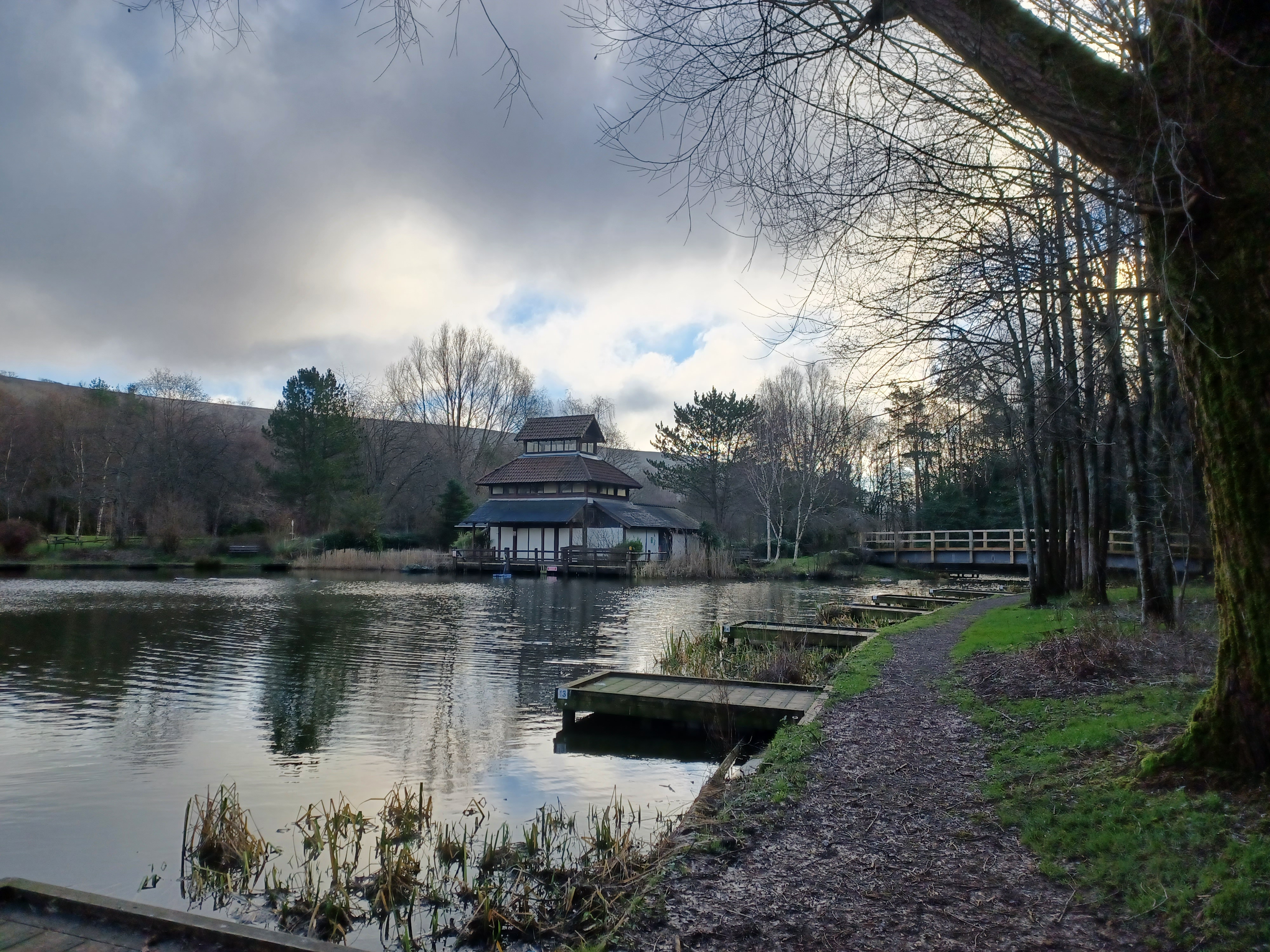
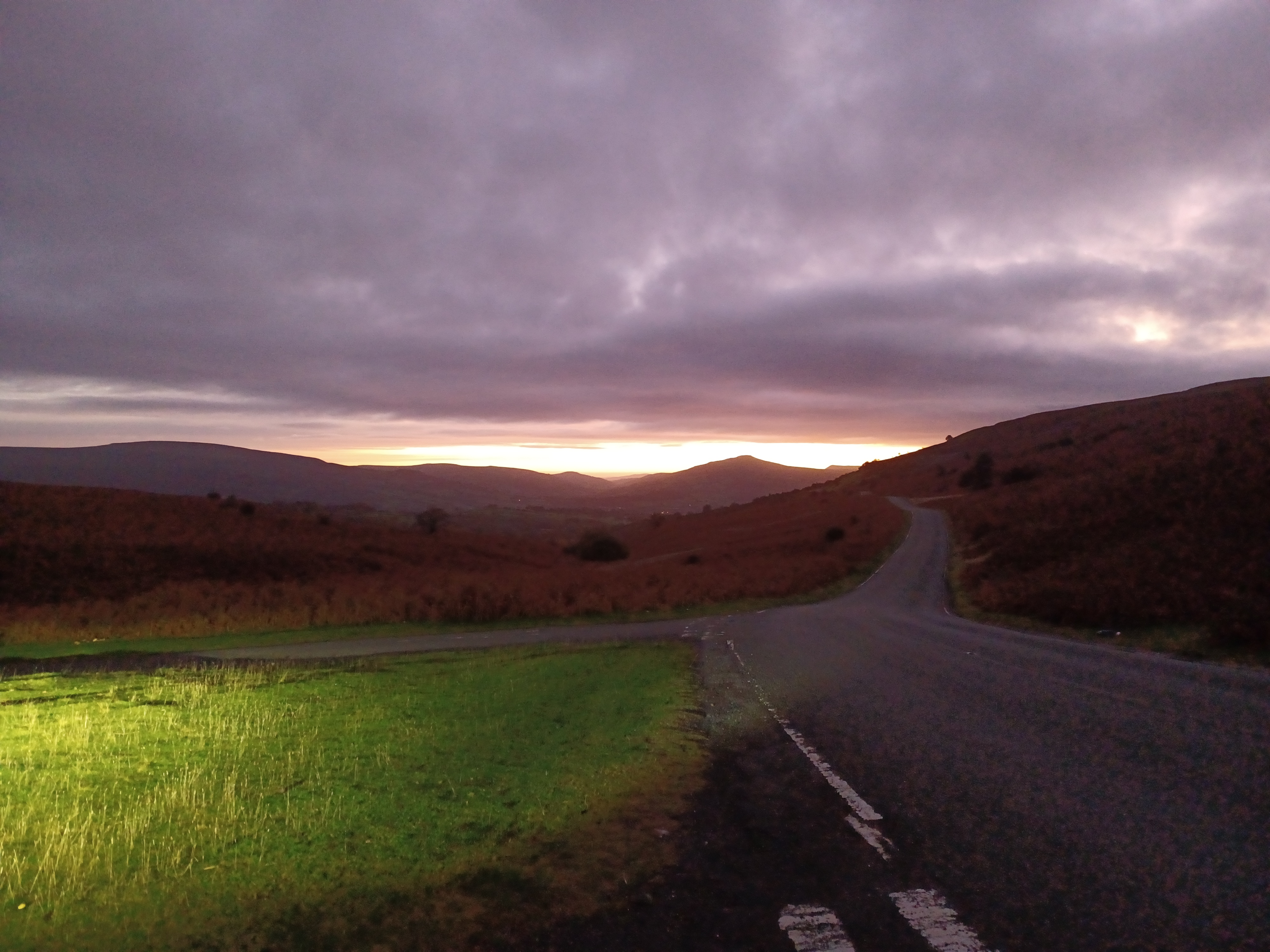
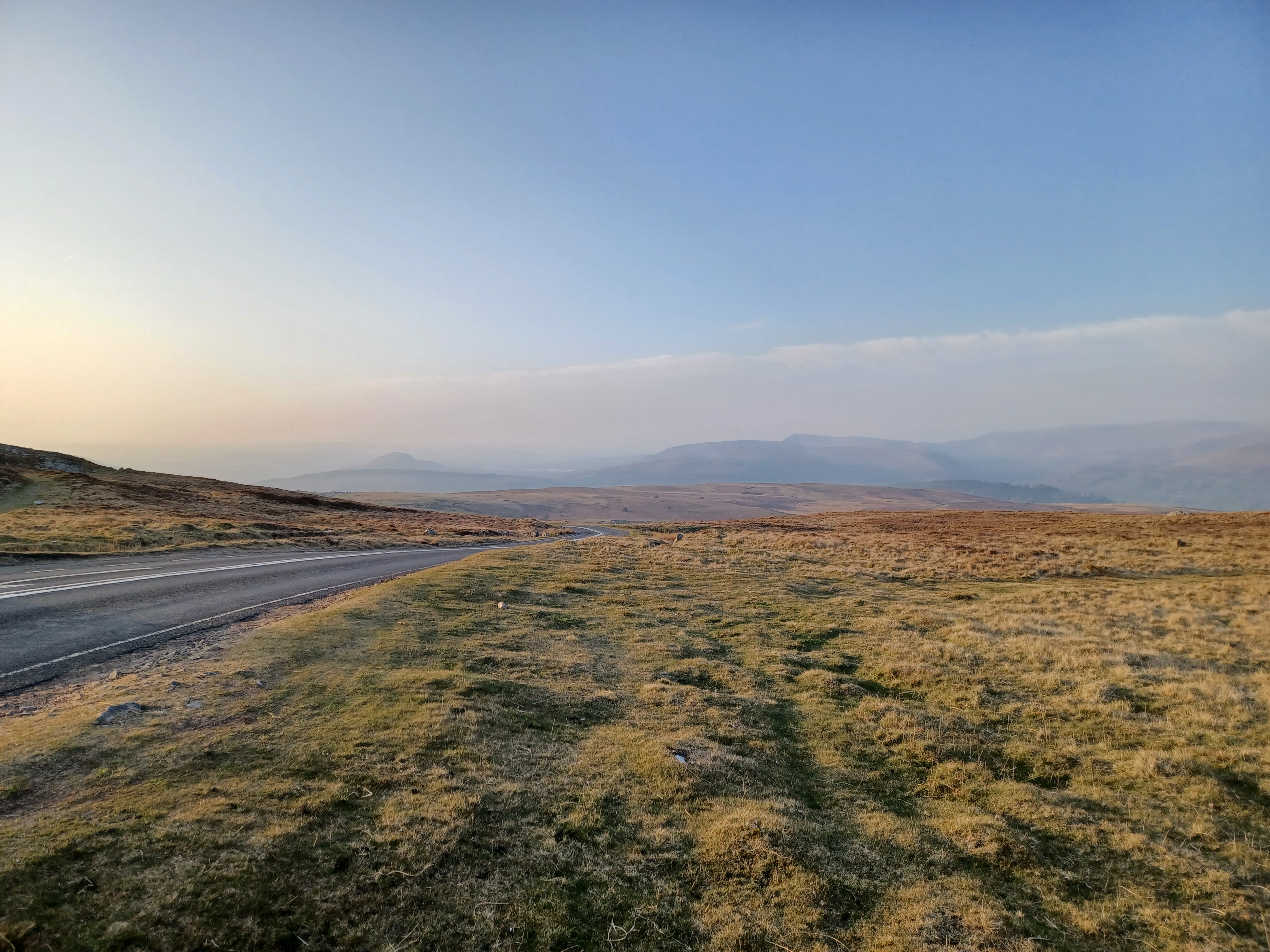
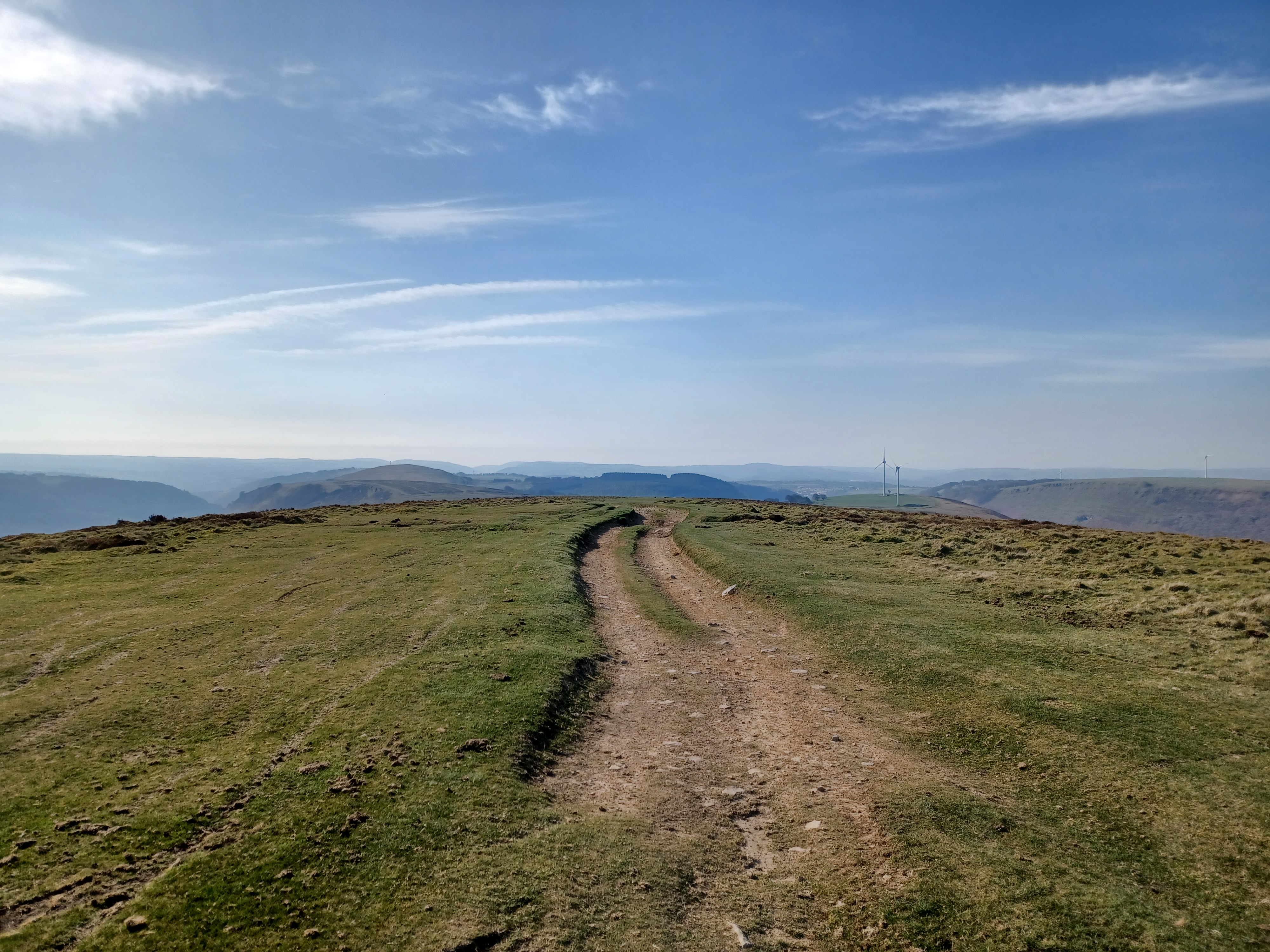
Last week, at dusk, on the Llangynidr Moors, the view of Llangorse Lake seemed like a semblance of a dream. Its ancient sunset sauntered over the horizon and into eternity.
It’s beauty reminiscent of a memory from before.
The mystery of it all, is that it was made so beautiful: it didn’t have to be so symmetrical, and so pleasing to look at.
Sometimes, it’s easier to remember the purest of all loves. We are alive right now, and this feeling is joy.
All is thank you.
You remember not why, or how, but when.
When the songbirds bathe before sundown, and the river otters prepare their food. Foxes and owls, respond to the light of the salmon-coloured sunset, and they too are nostalgic for their dreams.
When at other times, on the Llangynidr Moors, looking over at LLangorse Lake, the view is obliterated by clouds so low down, that they feel like fog. When even the Anfanc, from the deep waters of the lake, is too tired to move. When the Anfanc growls and scowls it does so with vanity and pointlessness and greed! Its ugliness terrorises the twilight, until it sinks to the bottom of the lake again.
When it’s all rain and no view at all, the density and magnitude of the time makes us afraid and sad.
Sometimes, looking at Llangorse Lake from the Llangynidr Moors, we see where the magic lives and how the mystery is yet part of the medicine. The softness whispers to us that the earth is here to hold us. A fox makes a cradle from the ground, and as he turns to the earth to rest, he is a guardian of the soil. Waiting for him to wake again, and letting the world be marvellously unfixable, as it drifts between day and night, dusk and sunset.
 Shorter than me