At least at the Gresham everything stays the same, thought Lydia as she ordered a pot of coffee for one. The black velvet cushions, with the golden embroidered letter G’s on them, would always remain the same. Here one could rely on the peacefulness of softly spoken voices, as an oasis of calm away from O’Connell Street. Here one could relax.
The first time Lydia came to the hotel was shortly after her arrival in Ireland, almost three decades before. She came in for Sister Ann, who said “if you do nothing else in Dublin, promise me you’ll have tea in the Gresham”. And so she did. A young naïve Ethiopian girl, ordering tea she didn’t like, for a promise to a missionary in a far-away land.
It was a long time and distance away from Ethiopia that Lydia was now. And did it seem to be moving further along the horizon?
Sister Ann was Lydia’s English teacher back home in Bahar Dar. She taught English songs, letters and even grammar to the children who lived down near the lake. But the Sister had a special affection for Lydia and would brush her hair and give her extra pieces of injera at meal times. Sister Ann was always reading aloud from the most obscure of text books, big smelly books with crusty jackets and strange curricular inside. But Lydia loved to listen to the poems and the stories about animals most of all. One of her favourite stories was about the lungfish of Ethiopia.
Tell me about the lungfish, tell me about the lungfish.
“Lungfish can estivate, which means that they can spend the long hot dry season in a state of suspended animation, neither breathing nor eating, but simply hibernating under the mud, waiting for the rains to come, waiting for the time when they can go back to the water”.
Lydia’s pot of coffee arrived and the waiter asked “is there anything else Mrs O’Sullivan?” but she shook her head slightly and he glided away from the table. She inspected her newly French manicured nails, as she placed a cube of sugar into her cup and poured coffee from the pot. She liked the new nails, they were subtle and they elongated her fingers. She also glanced once more at her new Mary-Jane shoes, and admired them also.
Lydia stayed in contact with Sister Ann after she moved to Ireland. She was homesick for the first half decade so she wrote the missionary long letters about every detail of her new life. She wrote about the smells and tastes of Dublin, the food, the accents and the weather. The letters would take months to travel to Bahar Dar, and more months again before the return letter would come back to Dublin. Ann would write about news from the Lake, how the other children were, what the fishermen were catching, how the rainy season was effecting the maise crops. She wrote about injera, chicken wats and music.
Lydia would tell gossip from the Church and the congregation, Ann would write about the mountains and the new hotels being built. Lydia would describe the shops on Parnell Street, which were starting to sell yams and plantains. Ann would explain how tourists from Europe were beginning to come to Bahar Dar for their holidays, that they were staying in the new hotels with views over Lake Tana.
For some reason Ann always seemed sadder around Easter time, so Lydia would always make a special letter for this time, full of promises and flowers, drawings and sometimes poems.
After a decade, Lydia started writing about a man in the Church who was starting to smile at her knowingly. He was a little older, but he was a kind and decent man and his name was William. The letters slowed down for a while after that, while Lydia concentrated on marriage and children, and correspondence was kept to greeting cards. But when the children left for college, and William left her for someone else in the congregation, she found that she had more time for writing and reading letters again.
It was then she started visiting the Gresham more frequently. Her ritual involved coffee, correspondence and sometimes cake. Strangely, it was at the Gresham that she felt most at home at. Even after almost three decades Ireland didn’t feel like home, but only a place where she lived. It wasn’t a bad life, no indeed not, and she as very grateful for her blessings and thanked God regularly. It just wasn’t what was promised, that was all.
When technology suggested that the women could replace paper and pens with emails or Skype, the two women kindly ignored it. They kept to their old ways and wrote pages of news to one another, in almost identical handwriting on good quality smooth paper, with matching envelopes. Theirs were not the words of emails.
Lydia wrote about the changes in Dublin, how one saw more homeless people now than before and how the young people seemed to be so different. Ann wrote about the rude tourists in Bahar Dar and how they were quite hostile to local people at times, and how they sometimes drove like maniacs. Then one day Lydia noticed, almost by accident, that she had started addressing the old missionary and friend as simply “Ann”.
The final letter Lydia received from Ann came in February. She wrote about the new road from Addis to Bahar Dar and how it made the journey so much easier. She also wrote about her plans for Easter and how she hoped to finish her ministry by that time, and have more time for her own projects. But the part of the letter Lydia loved to read and re-read came at the very end.
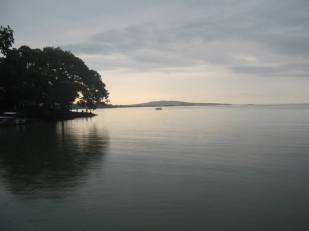
“But my dearest Lydia the strangest of all things occurred two nights ago, and I wonder if you’ll even believe me. I was taking my evening walk, at the shore of Lake Tana, while the sun was setting and the fishermen were bringing their boats in. When what should I see but a lungfish! He was covered so safely in the mud and I suspect he was hibernating through this long dry spell. I suspect he was waiting for the rains to come, and I hope he will make it back to the water”.
Lydia put the letter on her lap, smiled at the waiter and thought of her friend back home in Bahar Dar.
 Shorter than me
Leave a comment