Lough Ree is in the middle of Ireland, an easy ten-minute taxi drive from Athlone train station, and it’s on Lough Ree that fifty-two islands sit. One for every week of the year. The water rises during the wintertime, and it drops during the summer months and that is the way it has always been.
Tourists flock to the edge of the water and they learn about Queen Maeve of Connaught who lived and bathed off Inis Cloitherann. She was a brave and ambitious warrior queen, and stole Ulster’s prize bull, the Donn Cualing after a long conversation, with her then husband, about who owned the most impressive cattle collection.
She had many lovers, and several husbands and was said to be beautiful, charming and fun. She had seven sons, who were all called Maine, and two daughters, and it was said that she had a great sense of humour and was wise.
This was a queen, when queens were queens. She was not the queen of Instagram.
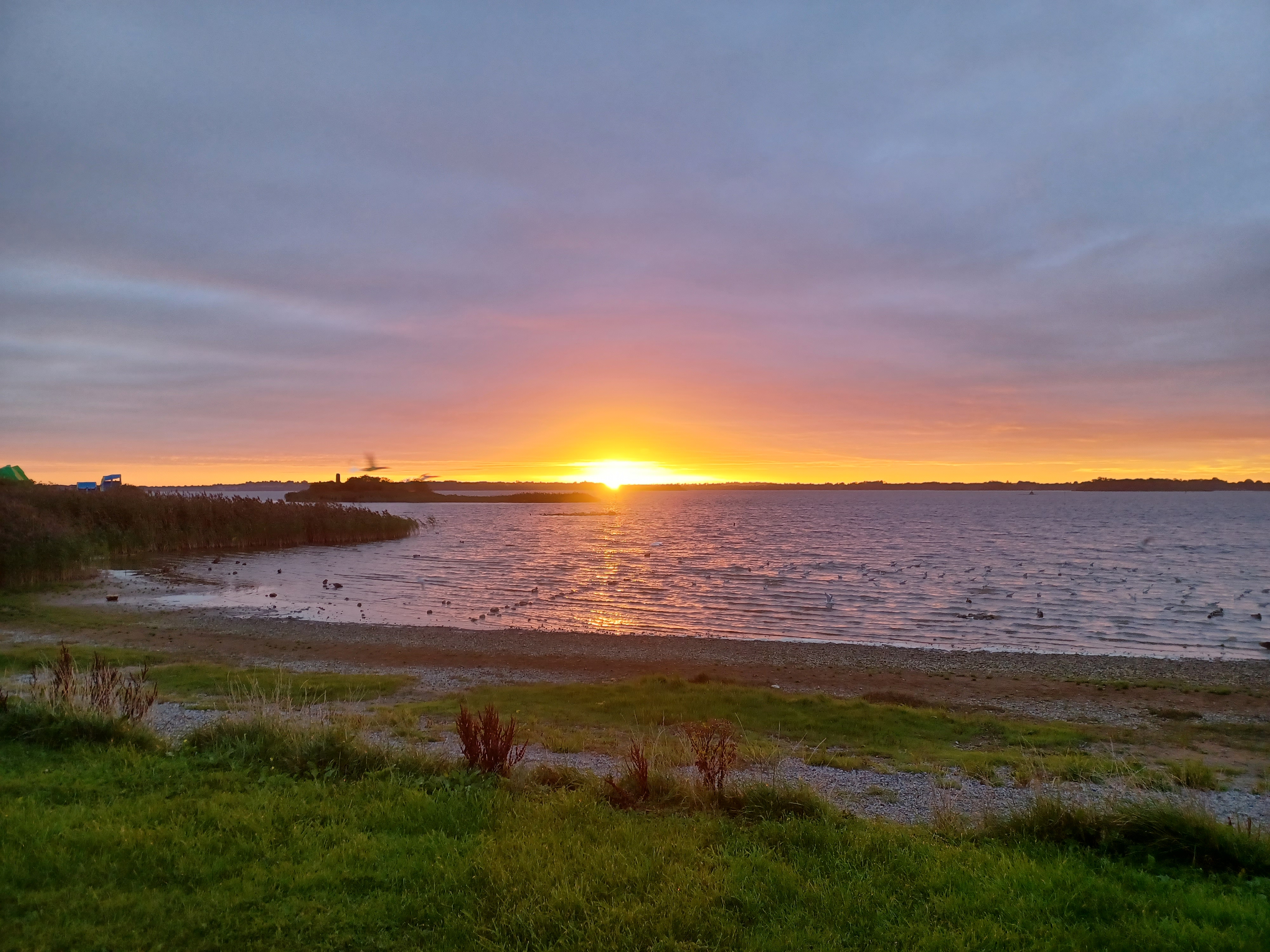
When the sun rises over Lough Ree, you can’t help but feel connected to it all.
The tourists sit on benches or on blankets on the ground, and everyone feels peaceful there.
It can be hazy, misty, orangey and sinewy.
It reminds you that life is temporary and today wasn’t guaranteed. No matter what, we may as well be grateful for the sunrise over Lough Ree. Not because of oneness, or wellness or fruitfulness or soulness or anything else you can buy and sell, but because it would be rude not to.
The tourists notice that roses are still blooming, in the gardens near Lough Ree.
Their delicate petals on show for such a short time. All year through they survive drought, heavy wind, rain and all the frost. For this surprisingly short chapter of bloom.
That’s what it’s for.
Strangest of all are the memories.
Time hops back and forward near Lough Ree. Now, and later and before, are all in the same colander, mixing around gently. One piece simply doesn’t work alone, and everything is clear and extraordinary.
Queen Maeve would want us to bathe in the waters and laugh with friends, and feast after successful cattle run, before someone tries to take our queendom away.
Autumn approaches, the nights draw in, and a coolness comes in the air.
It is said that it is harder for a rich, young man to enter the kingdom of heaven than it is for a camel to go through the eye of a needle. Thankfully, I’m not rich, young or male, so this is one problem I don’t have to give my attention to.
Nevertheless, back in chapel, in south Wales in the 1970s and 80s I learned about the parable of the rich, young man and I imagined the camel squeezing itself, headfirst, through the tiniest of needles, that my mother kept in a pin cushion, in her corner of the room. There were treasures in that corner, alongside her glasses, left-handed scissors that no one was allowed to use, chocolates, cigarettes, and tin boxes that housed other surprises such as cut-out articles from the newspapers and postcards from France. There were new envelopes in that corner, waiting to be used, but rarely a camel.
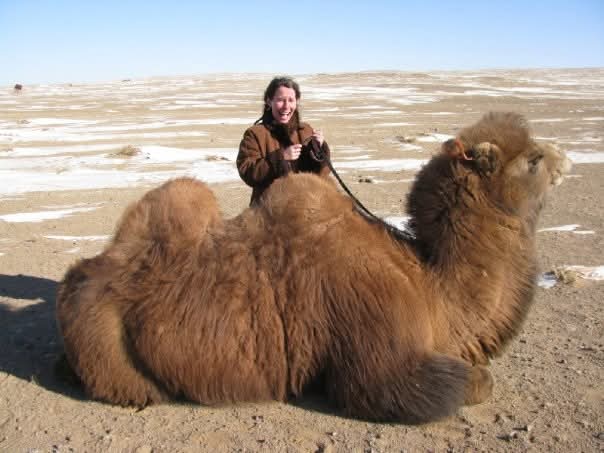
In Mongolia, they play camel polo on the main square with the two humped Bactrian camels, but not during mating times when the males can be violent and bite and spit and sit on other male camels. Those camels too, were unlikely to fit through the eye of a needle.
No one ever asked the camel if it wanted to complete the ridiculous and absurd task?
No one ever told it, what it would win, if it completed the task?
The camel might respond, “no thank you. Honestly, I’m grand as I am”. Or it might speak Mongolian or Welsh. It’s hard to know, for sure, where the camel’s back story begins or ends, and in any case how it says it doesn’t want to do something, is less interesting than the sentiment, to begin with.
Do camels like the autumn?
They might enjoy a change in air temperature, and the fading light, or perhaps it might make them melancholy. Perhaps they welcome the start of the darker nights, as it gives them a chance to catch up with correspondence.
All silliness aside: some teachers said that the “Eye of the Needle” was slang for a tiny gate in the wall of the city, where traders would enter and exit before going back to the desert. The camel driver, now must try time and time again to manoeuvrer the hissing, spitting frustrated camel into a smaller space.
Gone was the freedom of the sandy dunes and mirages.
Replaced instead with a settlement of noisy people, pushing and moving and trading and being annoying. Of course, the camel preferred the outside space with the wide-open expanse of sky, sand and nothing to set the time by. No shadow, shade, remorse or regret, no horizon, or river or mountain.
Gentle camels of the steppe, let us be.
Watching my mother knit, crochet and sew is a wonderful memory that I can re-watch any time. She could talk, drink coffee, watch TV and even nod off for a nap while knitting baby clothes and blankets, jumpers and doll’s clothes. There was a rhythm to her quiet hobby, and it was all for her. Someone ended up with the finished product, and then she started a new one, all over again. It wasn’t for content or the spotlight; it was simply a hobby that she had.
Now we can’t sneeze without recording it and blasting it out to the stratosphere to wait for validation and admiration. On occasion, someone doesn’t like our sneeze or thinks our sneeze is offensive, or out of lane. Then we curl up like a hedgehog and wait for the threatening enemy to move away and find something else to worry about.
Camels don’t know that hedgehogs exist, and hedgehogs can’t even dream of camels.
It turns out that ancient Greek scholars dispel the idea that the “Eye of a Needle” was slang for a tiny gate, after all. And so, we return to the fact that it was a metaphor all along.
For four days and nights in July this year, I was lucky enough to be one of the sixty participants on the School of Myth summer school programme, at a manor house, on the edge of Dartmoor. We listened to Dr Martin Shaw, tell us ancient Celtic myths, Arthurian stories, and folk tales from Siberia, for hour after hour, and day into eve.
Sometimes, the stories were accompanied by the smell of an open burning fire, and sage. Sometimes, the sound of drums walked the stories in.
When was the last time someone told you a story?
When was the last time you gave your full, undivided attention to a storyteller?
Martin would start each story in the same way, by asking us, “shall we go?” We would answer him, “let’s go!”
For a second time he asked us, “shall we go?”
And again, we shouted back, “let’s go!”
Finally, when he asked us a third time, “shall we go?” glee and laughter filled the room, as we cried back loudly, “LET’S GO!”
Martin then took us gently back to kingdoms far away and long ago, and into deep, dark forests and sacred rivers, and to a lake that three large cows walked out of.
It was magnificent.
I arrived at the manor, with my pre-conceived modern ideas that this workshop or retreat would have an agenda, and name tags and a welcome folder with all the necessary handouts. In preparation for the week, I had re-read The Hound of the Baskervilles, because it was set on Dartmoor, and I thought it would get me into the mood.
Oh blessed, sweet, gentle child. I was in the wrong century. I did not need those things. I would need to go further back.
What I needed to do, was listen carefully.
What I needed to do, was hear the stories with an open heart and kindness.
What I needed to do, was be still and leave distractions at the train station at Newton Abbott. What I needed to do, was walk down to the ancient stone bridge, turn right at the fairy forest, walk past the Alpacas and take a long relaxing swim in the lake, under the silver-grey clouds, in the grounds of the manor.
The other participants were storytellers: writers, actors, dancers, teachers, yogis, grief counsellors, psychotherapists, NGO workers, preachers, a hypnotist and a shaman. We were all on the edge of Dartmoor, looking for magic.
On the last night, we watched a performance of a few scenes from A Midsummer Night’s Dream outdoors, and then we huddled around the bonfire. Some people wore flowers in their hair, and there was music. The staff of The School of Myth were kind, and thoughtful, and prepared our feasts, and took care of us.
I’m not sure why I went, but I’m happy I did, because it changed my life.
I’m not sure how, or even if the changes will be visible from the outside, but something has shifted my heart. A tiny piece of me has altered indefinitely, and I will never be the same.
Since my return from the moors, I’ve been swimming in Martin’s back catalogue of work: his Jawbone YouTube channel, and his books.
I thoroughly enjoyed “Smoke Hole: Looking to the Wild in the Time of the Spyglass” and “Red Bead Woman: Consequence and Longing in the Myth World”. I’ll need to re-read both books many times if I want to ponder them carefully and reflect wisely. I’ll need to read his other work, and see him when he comes to Dublin in October, and hopefully go back to summer school, next year. I’ll stay in touch with some of my new friends, and I’ll learn more.
Once in a while, this life offers up beauty, joy and safety in ways we couldn’t have planned for, or imagined. When it does, it’s our duty to note the extraordinariness, bow our heads, and gratefully say, “let’s go”.
A few years ago, when I first noticed younger people offering me their seats on public transport, I would shake my head and hands furiously and say, “no thank you”. Lately, when offered a seat, I smile sweetly and take it immediately. I don’t care if there are more deserving people on the bus. I barge past them and sit on the throne offered. Then like everyone else on the bus, I open my phone and inhale its content, slack jawed and vacant eye’d.
People on the buses are fascinating.
My favourite seat is the one at the front, on the upper deck. I love the views and there’s extra space for my bags, and there’s an unwritten rule that you’re not here to chat or make friends, but simply to enjoy the ride.
I try to avoid the back seat on the upper desk, as that’s where all the mischief makers head. The back seat on the upper deck, is where groups of unruly youths go to vape and play their music loudly, and cause trouble. They’ll scream and laugh and be a nuisance.
The downstairs back seat row is more subdued. This is a cave of safety where the serious gather. It’s here you’ll see people reading books or listening to self-help podcasts. The downstairs front area, meanwhile, is an eclectic mix of older people, tourists and drug users.
The tourists can be further divided into those wearing decent rain gear and those who don’t know where they are, or where they’re going. Some of them put their suitcases in the carriage near the driver and then regret this decision bitterly. They ask everyone, many times, where O’Connell Street is, and they look both scared and disappointed. They seem aghast at the weather, prices and lack of glamour, and they seem so wildly unimpressed, you wonder what they’d hoped for.
Dublin bus drivers are the most patient drivers in the whole world.
They are tourist guides, agony aunts, mediators, healers and they bestow sacred rites. I love to hear their responses to some questions, including “do you accept dollars,” “is this the way to Belfast” and “do you know my cousin John?” I love watching two bus drivers stop their vehicles on opposite sides of the street, just to say hello, or, how’s it going? I always say, “good morning” and “thank you” to the drivers, and sometimes I wave when I leave.
Nowadays, people enjoy having full blown conversations on their mobiles, on the buses, and they don’t mind who listens in. Sometimes the conversations are incredibly personal or scrappy or illegal. Sometimes, more than one person is on the phone, almost screaming down the line: and like a bar after 8.00pm the noise gets exponentially higher and higher.
Eventually, one of them yells, “I’ll call you back later, I can’t hear myself think on this bus”.
When did we, as a species, learn not to be alone with our thoughts for more than 17 seconds at a time?
I feel like it happened lately, but perhaps I’m wrong.
Like children in the nursery, we need the constant reassurance, company, approval and entertainment of the ever-fixed blue light, and that sense of comfort that scrolling gives to us. Rock us silently to sleep, friendly phone, remove our discomfort, boredom and stress, help us manage the pain.
Beep, beep, ping, ping.
A place for all the thoughts of all the people, all the time. A magic hat of all the feelings and all the facts and all the fights. A goldfish bowl of stale cold water, with bits of rotten dead fish fins in them.
A mirror, a window, a light, an overfilled bin.
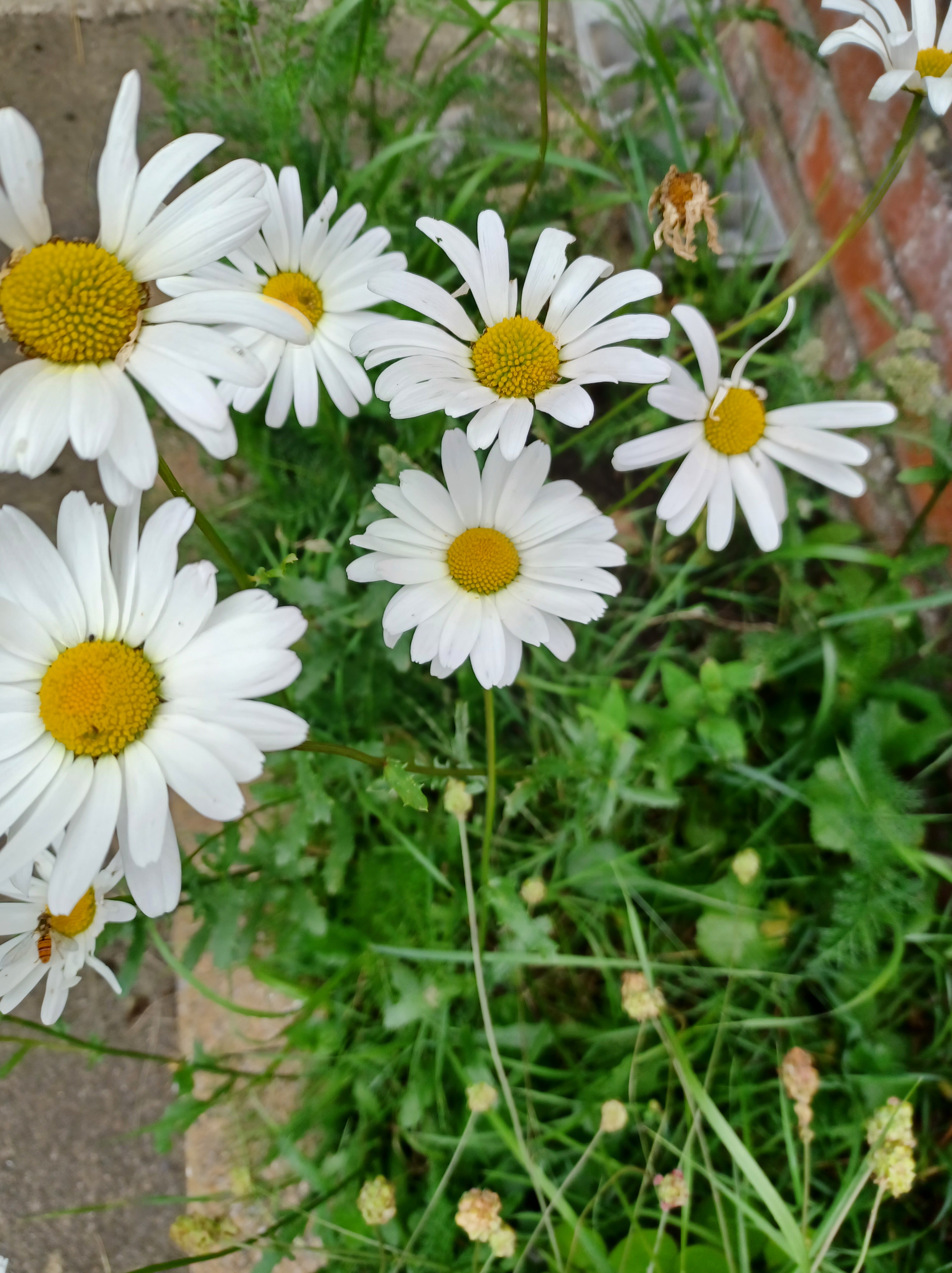
In time, the daisies in the garden are not entitled.
They stand, in these weeks protecting those we can’t see, from the wind and rain. Their petals so soft to the touch. They remind you of a satin edged blanket, that comforted your chin, in your childhood bed. Or the forehead of a puppy from a farm, you can’t remember the name of just now. But strangely, the sounds from the horseshoes in the stable, has come to you.
Hay smells of summertime.
And when you wake and sleep at light time, while other street noises continue, you have the sense of being watched over.
Minded by the daisies.
The bicycle wheel white petals are also Flamenco dancers, in part, with wild arms flaying to music. Or sleeves on silk dresses. Their tiny yellow heads, move, and like lighthouses for the snails and slugs, or umbrellas for the hotter days.
Exhausted from their journeys through the dark earth and clay, until finally they sing, “hello, we are here”.
Unordered, delightful daisies, swaying in the back yard for us and for them.
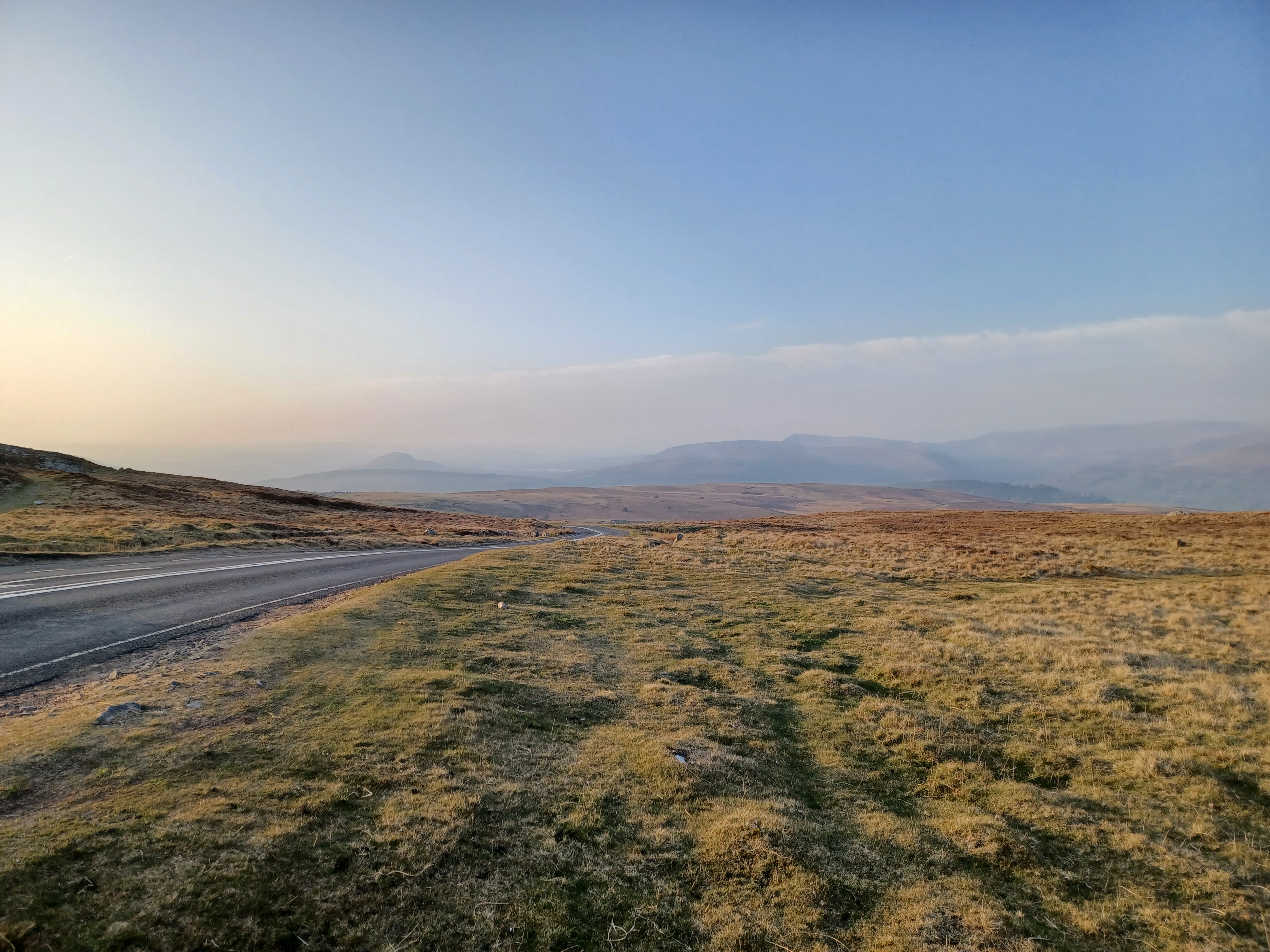
Last week, at dusk, on the Llangynidr Moors, the view of Llangorse Lake seemed like a semblance of a dream. Its ancient sunset sauntered over the horizon and into eternity.
It’s beauty reminiscent of a memory from before.
The mystery of it all, is that it was made so beautiful: it didn’t have to be so symmetrical, and so pleasing to look at.
Sometimes, it’s easier to remember the purest of all loves. We are alive right now, and this feeling is joy.
All is thank you.
You remember not why, or how, but when.
When the songbirds bathe before sundown, and the river otters prepare their food. Foxes and owls, respond to the light of the salmon-coloured sunset, and they too are nostalgic for their dreams.
When at other times, on the Llangynidr Moors, looking over at LLangorse Lake, the view is obliterated by clouds so low down, that they feel like fog. When even the Anfanc, from the deep waters of the lake, is too tired to move. When the Anfanc growls and scowls it does so with vanity and pointlessness and greed! Its ugliness terrorises the twilight, until it sinks to the bottom of the lake again.
When it’s all rain and no view at all, the density and magnitude of the time makes us afraid and sad.
Sometimes, looking at Llangorse Lake from the Llangynidr Moors, we see where the magic lives and how the mystery is yet part of the medicine. The softness whispers to us that the earth is here to hold us. A fox makes a cradle from the ground, and as he turns to the earth to rest, he is a guardian of the soil. Waiting for him to wake again, and letting the world be marvellously unfixable, as it drifts between day and night, dusk and sunset.
Many years ago, during a summer holiday in Italy, I found myself on a tour of the most famous volcanic eruption in the world, Pompei. Like everyone else that day, I found the remains of the town a mix of fascinating, beautiful, horrific and, in eerie ways that I couldn’t understand, poetic. Our tour guide took us down streets, and into fragments of lives, that all ended the day that Vesuvius erupted.
One woman, an American walking closely behind me, wanted to know if there were any survivors of the tragedy, who might be still alive. Maybe they lived in a small village nearby, and maybe we could talk to them?
It’s easy to tease American tourists, when they ask questions like these and of course, it’s mean spirited and unkind.
When American tourists come to Ireland, they do so often times, because they have Irish ancestors or want to see Connemara or they have a romantic view of Dublin. They are incredibly pleasant, chatty, open and they tip well. They are super polite, when asking for directions or wondering about recommendations.
But some say harsh things about Dublin, such as, “Dublin is nothing to write home about!”
Dubliners see our city as a beloved family member, or dear, old friend. We can criticise the housing crisis, rise in crime, rain, traffic, food, prices and the rain again until the Kerry cows come home, but woe betide anyone else should do so!
When American tourists talk poorly about our capital, or indeed, when anyone from outside the pale speaks badly of it, we skulk, and frown and look away and say under our breaths…“aithníonn ciaróg ciaróg eile”.
Dublin is the best city in the world.
This is not for the Instagram competition but for the more intangible reasons such as the craic, live music, poetry, and soul of the place, that makes you feel alive when you’re here.
Some aspects of the city are unforgivable, such as housing policies and the rise in xenophobia that affects me, and all the other migrants. But I love the eruptions of significance that happens every time one Dubliner makes another Dubliner laugh.
Better than that, when one Dubliner makes another one smirk!
Before the English came to Dublin, or the Normans or Saints or Vikings passed through, and even before the Celts, the dragons lived here. When they breathed, the lava erupted and everyone knew it was true, and everyone sang songs to make them sleep.
But even then, it seemed like a difference of sorts, and I can’t understand what happened next.