Tag: dublin

  • September Breezes

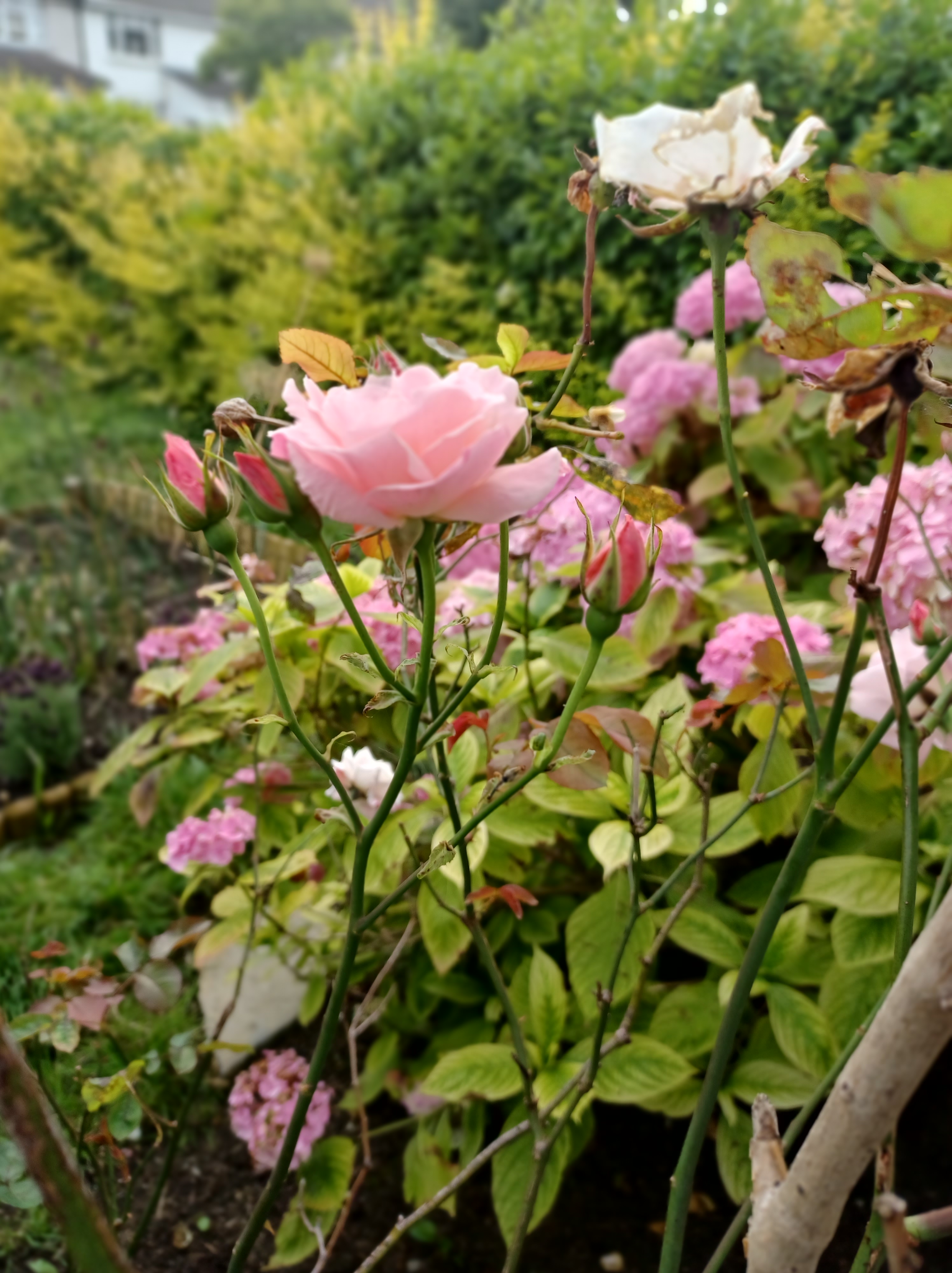
    The summer went by so quickly, and now the first days of September have presented themselves, in grey, damp scarves that threat of dark evenings.  The garden birds, unused to falling water, are learning how to ride the wind. They realise that they no longer need to clean their feathers in the dry soil anymore.  Their bird shaped dents in the dust, are fading.

    Is there anything as nostalgic as September breezes?

    Especially after a summer of funerals, fires, urban tragedies and loss.  Summer is meant to be filled with ice cream and long evenings at the beach, with the setting sun as the clock.  There are not supposed to be tears in August.

    This life is short.

    It makes no sense to hoard all our pebbles to ourselves, be mean spirited or unkind.  If there is an afterlife, we need to be accountable for our days here.  If there is no afterlife then it’s even more important to tend well, while we breathe.

    The young birds in the garden are learning about rain, after the drought, while we shake our heads and try to make sense of it all.

    This August in Ireland another car filled with teenage boys died sudden, violent deaths, after slamming into another car of people going to the airport for their holidays.  The boys drove the wrong way on purpose, so it was a type of suicide, encouraged by having nothing much to lose.

    All the adults stand by and say, “this sorrow I blame on social media” because they can’t blame rock’n roll music and video nasties, anymore.  Some adults observe the heavier breadcrumbs, as these boys (now dead) are forever hated.

    Loss feels wrong in summer.

    It feels wrong to sit outside a funeral and notice the smells of cut-crass, suncream and a distant barbeque.  The blue skies over the mourners, dressed in black.

    And fires too: set off by other boys, with no one to guide them.  The villagers blame the parents and the fact that young men will always be wild.  Can we bear to lift the mirror up to selves?

    How did we not mind them better?  Keep them more carefully, teach them wisdom, and how to keep well?  It is us who left the matches out, left the vehicle unattended, built enormous chasms that cannot easily be marched over. 

    If not us, then who?

    It begins with the sentence, “we could have done better”.

    So this September breezes come, and they will go too.  Its distance travelled can be light.  The tomatoes ripen, the birds re-visit, the sky changes shape.  We are here now, we live, we breathe and we are extraordinary. 

    Its ever-changing beauty is for us.
  • Made in Dublin: into today

    When the greens are different.

    Not of the light luminescence of spring, but a darker green now.

    When the richer greens are more complicated, and more mature, and heavier.

    When the green of the grass is fuller then, than the younger grass, only then are the ants ready to fly.

    One evening in July, between the dusk and sunset, when the temperature, light and humidity are just right, and when the grass is long enough and strong enough, to launch them. 

    Then and only then, can the ants file one by one, and fly into the sky.

    Straight up, and into the wild awaiting air for them.

    Their first flight with their new, tiny, translucent wings takes their weight and the wind, and takes them high, into the blue sky still.  The clouds wait, and the air supports them.

    Off they fly, into today and into the summer eve’s blue.  And it will be the blue that’s a part of it.  When the sky is Maya blue, or cornflower blue, or wait, of course…cerulean.

    Some ants are brave and Gung ho.  They fly off on the adventure with big, lascivious grins. They can’t wait to mate, and start new colonies wherever they land, far away from the backyards where they started from.

    Other ants have summer melancholia and are wistful for their old homes, which were familiar and safe.  They feel vertiginous, and nauseous, and teary.  They will never enjoy the evening acrobatics, or the free falling or the dangers.  They look backwards, towards the homes where they once belonged.

    Some ants are neutral:  neither excited nor dreading the event.  They simply accept it’s what they do, on this one night in July, alongside all the other ants.

    All the thoughts and doubts.  The awe ants, and doubting ants, sad ants and excited ants, joyful ants and naughty ants, funny ants and deeply, earnest ants. 

    All flying in the sky, spectacularly.

    All the other ants, know the moment of flight from the temperature, the light, the humidity and the way the green grass looks different now, from the luminescence of the spring.  But now a darker green, a more mature green and a more complicated colour. 

    This tremendous journey under azure skies, timelessly.

  • Made in Dublin: the age of entitlement

    A few years ago, when I first noticed younger people offering me their seats on public transport, I would shake my head and hands furiously and say, “no thank you”.  Lately, when offered a seat, I smile sweetly and take it immediately.  I don’t care if there are more deserving people on the bus.  I barge past them and sit on the throne offered.  Then like everyone else on the bus, I open my phone and inhale its content, slack jawed and vacant eye’d.

    People on the buses are fascinating.

    My favourite seat is the one at the front, on the upper deck.  I love the views and there’s extra space for my bags, and there’s an unwritten rule that you’re not here to chat or make friends, but simply to enjoy the ride.

    I try to avoid the back seat on the upper desk, as that’s where all the mischief makers head.  The back seat on the upper deck, is where groups of unruly youths go to vape and play their music loudly, and cause trouble.  They’ll scream and laugh and be a nuisance.

    The downstairs back seat row is more subdued.  This is a cave of safety where the serious gather.  It’s here you’ll see people reading books or listening to self-help podcasts.  The downstairs front area, meanwhile, is an eclectic mix of older people, tourists and drug users. 

    The tourists can be further divided into those wearing decent rain gear and those who don’t know where they are, or where they’re going.  Some of them put their suitcases in the carriage near the driver and then regret this decision bitterly.  They ask everyone, many times, where O’Connell Street is, and they look both scared and disappointed.  They seem aghast at the weather, prices and lack of glamour, and they seem so wildly unimpressed, you wonder what they’d hoped for.

    Dublin bus drivers are the most patient drivers in the whole world.

    They are tourist guides, agony aunts, mediators, healers and they bestow sacred rites.  I love to hear their responses to some questions, including “do you accept dollars,” “is this the way to Belfast” and “do you know my cousin John?”  I love watching two bus drivers stop their vehicles on opposite sides of the street, just to say hello, or, how’s it going?  I always say, “good morning” and “thank you” to the drivers, and sometimes I wave when I leave.

    Nowadays, people enjoy having full blown conversations on their mobiles, on the buses, and they don’t mind who listens in.  Sometimes the conversations are incredibly personal or scrappy or illegal.  Sometimes, more than one person is on the phone, almost screaming down the line: and like a bar after 8.00pm the noise gets exponentially higher and higher.

    Eventually, one of them yells, “I’ll call you back later, I can’t hear myself think on this bus”.

    When did we, as a species, learn not to be alone with our thoughts for more than 17 seconds at a time? 

    I feel like it happened lately, but perhaps I’m wrong. 

    Like children in the nursery, we need the constant reassurance, company, approval and entertainment of the ever-fixed blue light, and that sense of comfort that scrolling gives to us.  Rock us silently to sleep, friendly phone, remove our discomfort, boredom and stress, help us manage the pain.

    Beep, beep, ping, ping.

    A place for all the thoughts of all the people, all the time.  A magic hat of all the feelings and all the facts and all the fights.  A goldfish bowl of stale cold water, with bits of rotten dead fish fins in them.

    A mirror, a window, a light, an overfilled bin.

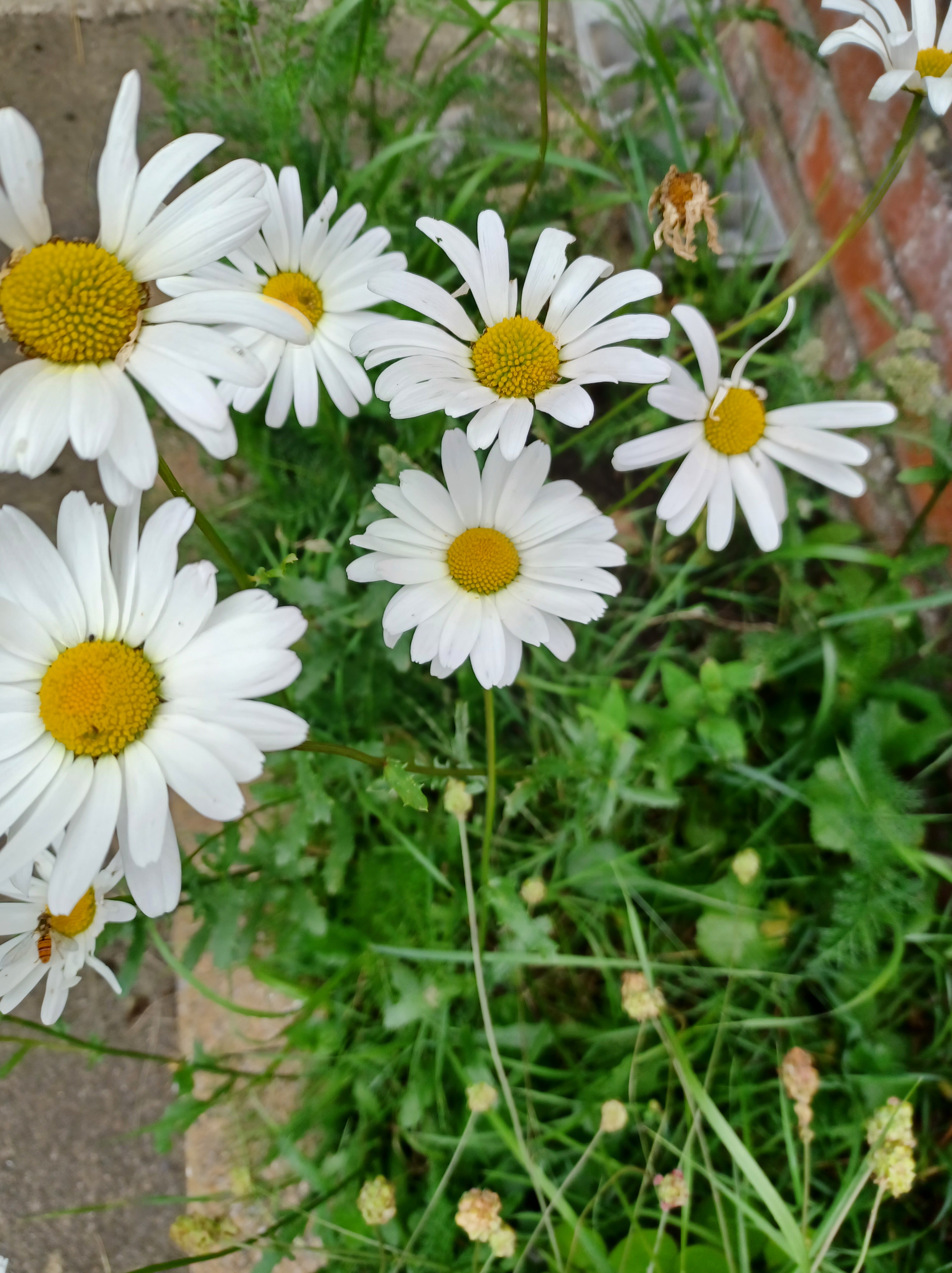
    In time, the daisies in the garden are not entitled. 

    They stand, in these weeks protecting those we can’t see, from the wind and rain.  Their petals so soft to the touch.  They remind you of a satin edged blanket, that comforted your chin, in your childhood bed.  Or the forehead of a puppy from a farm, you can’t remember the name of just now.  But strangely, the sounds from the horseshoes in the stable, has come to you.

    Hay smells of summertime.

    And when you wake and sleep at light time, while other street noises continue, you have the sense of being watched over. 

    Minded by the daisies.

    The bicycle wheel white petals are also Flamenco dancers, in part, with wild arms flaying to music.  Or sleeves on silk dresses.  Their tiny yellow heads, move, and like lighthouses for the snails and slugs, or umbrellas for the hotter days.

    Exhausted from their journeys through the dark earth and clay, until finally they sing, “hello, we are here”. 

    Unordered, delightful daisies, swaying in the back yard for us and for them.

  • Made in Dublin: eruptions of significance

    Many years ago, during a summer holiday in Italy, I found myself on a tour of the most famous volcanic eruption in the world, Pompei. Like everyone else that day, I found the remains of the town a mix of fascinating, beautiful, horrific and, in eerie ways that I couldn’t understand, poetic.  Our tour guide took us down streets, and into fragments of lives, that all ended the day that Vesuvius erupted.

    One woman, an American walking closely behind me, wanted to know if there were any survivors of the tragedy, who might be still alive.  Maybe they lived in a small village nearby, and maybe we could talk to them?

    It’s easy to tease American tourists, when they ask questions like these and of course, it’s mean spirited and unkind.

    When American tourists come to Ireland, they do so often times, because they have Irish ancestors or want to see Connemara or they have a romantic view of Dublin.  They are incredibly pleasant, chatty, open and they tip well.  They are super polite, when asking for directions or wondering about recommendations.

    But some say harsh things about Dublin, such as, “Dublin is nothing to write home about!”

    Dubliners see our city as a beloved family member, or dear, old friend.  We can criticise the housing crisis, rise in crime, rain, traffic, food, prices and the rain again until the Kerry cows come home, but woe betide anyone else should do so!

    When American tourists talk poorly about our capital, or indeed, when anyone from outside the pale speaks badly of it, we skulk, and frown and look away and say under our breaths…“aithníonn ciaróg ciaróg eile”.

    Dublin is the best city in the world.

    This is not for the Instagram competition but for the more intangible reasons such as the craic, live music, poetry, and soul of the place, that makes you feel alive when you’re here.

    Some aspects of the city are unforgivable, such as housing policies and the rise in xenophobia that affects me, and all the other migrants.  But I love the eruptions of significance that happens every time one Dubliner makes another Dubliner laugh.

    Better than that, when one Dubliner makes another one smirk!

    Before the English came to Dublin, or the Normans or Saints or Vikings passed through, and even before the Celts, the dragons lived here.  When they breathed, the lava erupted and everyone knew it was true, and everyone sang songs to make them sleep. 

    But even then, it seemed like a difference of sorts, and I can’t understand what happened next. 

    I’m waiting for the dragon to wake.