Blog

  • Thousands of shillings (part two)

    Tanzania 2

    Madam Leemo did it differently.  She protected us with her paper-work, ink stamps, and permission letters and without her we couldn’t have been in Tanzania at all.

    One afternoon she took us to her office and gave us coffee and mandeza with bananas and said “you are very welcome to Tanzania, thank you for coming all this way with the new computers”.  We told her that the pleasure was all ours and we smiled while the wooden fan dragged some air around the ceiling.

    Her office overlooked the movements in Morogoro and she had been watching from the hillside since the 70s.  She had been a teacher herself at one time, and while she loved her country she told us that she worried about the schools, the books and the students.  She told us how important it was for the teachers to learn how to use computers, so that they could then teach their pupils.  And even though so many schools didn’t have electricity, this was bound to change sooner than later.  Computers were the future, ICT training the way forward, and Tanzanian teachers were ready for tuition.

    She took us to the balcony where the Germans had once looked out for enemies “but I look out for friends” she said and smiled.  Then she gave us tourist advice about walks in the mountains, the best places for the best views and how to look after our belongings in the market.  She was also concerned about the sickness in our team and asked “is it true you now have two people in your group with malaria?” and she shook her head.  The afternoon ended with the start of the sunset, so we left her on her balcony and returned down the hill.

    They day before we left she said “please come back next year with more volunteers, more computers, more time” and I think she believed we would.  We didn’t even take new computers to her teachers and her schools, but second-hand old ones we were throwing out anyway.  She may have suspected that we weren’t really aid workers, but holiday makers with a bit of tame guilt, but like Sister Salome she didn’t breathe a word of it.

    This was very un-like Claudia.  Claudia was the doctor at the hospital we visited and she did it differently again.  Not with paper-work, food or a soft place to sleep but with medical training and a prescription for thoughts.

    .

  • Thousands of shillings (part one)

    10330379_10152672928742664_3841750368974826886_nMadam Leemo and Sister Salome both claimed they’d seen me before, but as last summer was my first time in Tanzania, that couldn’t have been the case.  They told me they were sure they had met me in summers gone by and I assured them I’d never spent evenings under the shadow of the Uluguru Mountains until then.  They had mistaken me for another one.  That was all.

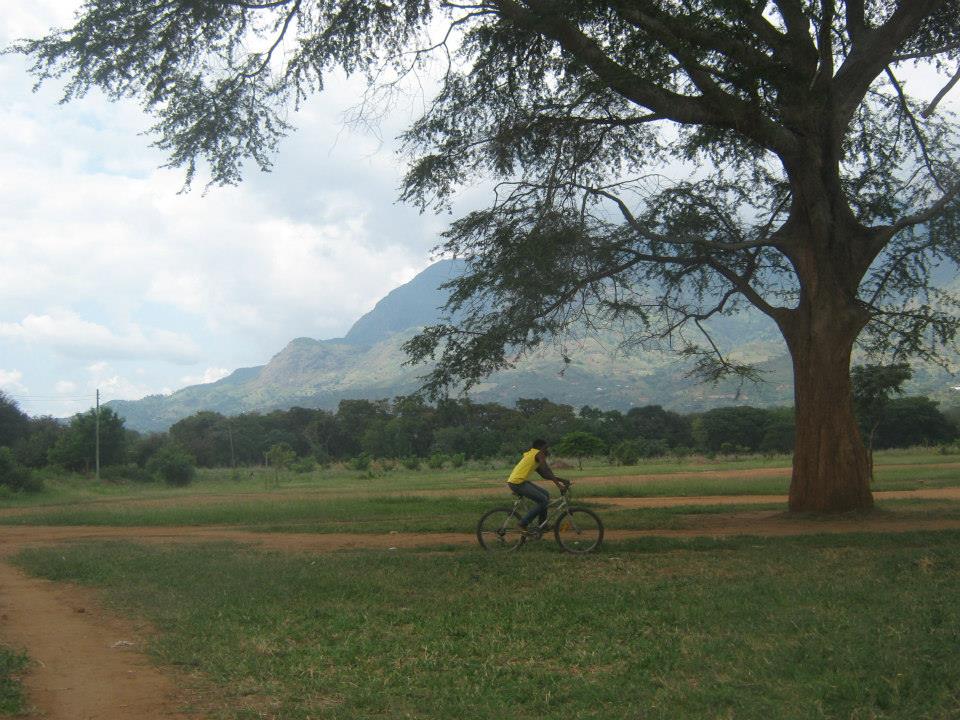
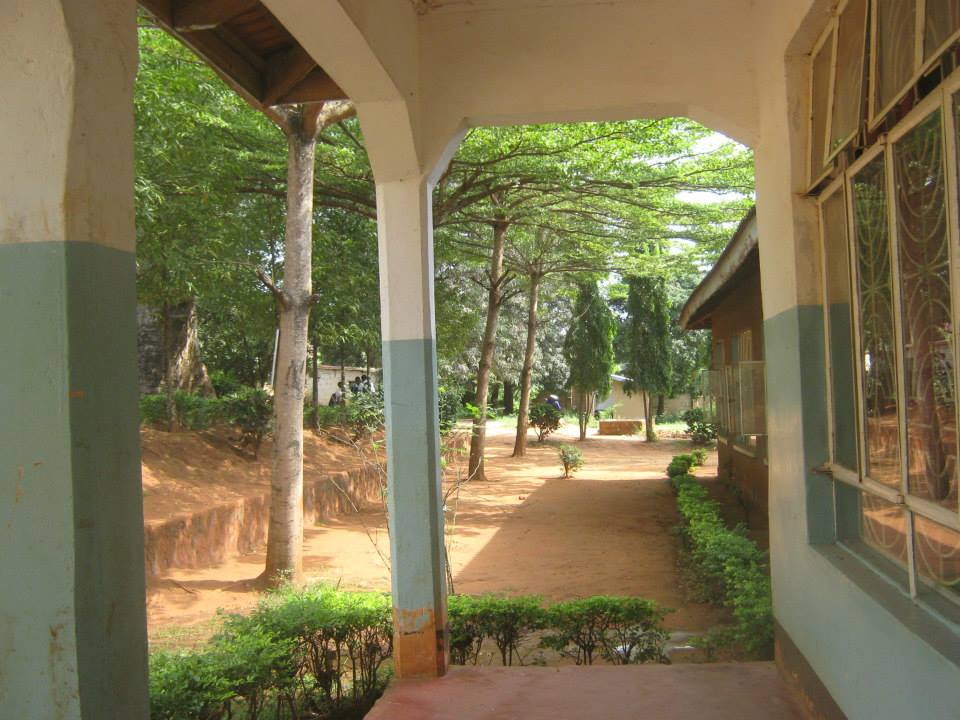
    We were in the middle of Tanzania working and teaching and living.  Days began with the sound of the monkeys jumping onto the iron rooftops joined with the voices of the nuns singing.  The smell of the incense coming out from the small church melted with the fog snailing down the mountain to come and greet us.  There was time to wait to heat up the milk for the morning coffee and time to breathe in deeply.  Days would end with the smell of the red caked soil in between tired toes and the touch of overly washed bed sheets, hand- knitted blankets and old mosquito nets with too many holes in them.   There were 24 of us in our group, and we lived there.

    The first time I met Sister Salome she asked me if I were Catholic, married or a mother and when I told her I was none of these things she sighed.  The first time she saw me smoking in the garden she shook her head and said “my dear me, you are a troublesome one” but her smile had no anger.  I enjoyed our chats in the garden at the start and at the end of days and I missed her when she had to stay in bed because of typhoid.  When she recovered she told me that typhoid was a nuisance for her and her work.  A nuisance.

    When people in our group became sick it was a nuisance for them and for our work.  The first one got sick on a Thursday and we went to the hospital nearby where he was diagnosed with malaria and told to take tablets from a plain brown envelope with no instructions or packaging.  When Sister Salome heard about the malaria she said “what a shame” she said to me “you come all this way and you work with us and you get sick.  Of course malaria is normal for us, but for you it is very sad”.

    Like the others before us, we went to Morogoro with our plans, cameras and bicycle helmets and insisted on helping those there by sharing our skills and changing their lives.  While the sister just simply fed, protected and restored us when we weren’t looking and smiled slowly while the month moved by.  She did it differently to Madam Leemo, but the upshot was the same, in their unique ways they both looked after us…

  • Sunny areas cloudy

    Every summer we packed into buses and travelled the 50 mile journey from Ebbw Vale to Barry Island for the annual chapel day out to the sea-side. Buses would fill with excited children and grown-ups, large plastic bags of food, wind-breakers and flasks of hot tea. We chatted and sang all the way to the coastline, interrupted by at least one person with travel sickness and the weather reports on the radio.

    “Today in south Wales, it will be overcast with sunny areas cloudy”.

    Once parked, we would assemble deck-chairs and then divide into smaller sub-groups and factions. Women and children would manage the general set-up and cucumber sandwiches. Men would co-ordinate donkey rides, sea activities, crab hunting and the finances for the day. Barry Island was a Mecca of promise. There were sand and bouncy castles, candy floss, ice-cream with raspberry sauce and chocolate flakes. There wasn’t a bottle of sun-cream or a camera in sight, and the day would stretch out before us like a two week holiday. The soundtrack for the day was not only laughter, but also announcements over a loud speaker by the same man every year. He would give a variety of bulletins through the day giving advice to all us day-trippers.

    “Would the parents of a little six year old girl, named Kelly, please come and collect her from the lost children’s office” was a typical report. Parents in large groups would have thought that Kelly was in the sea with her cousins and not realised she’d wandered off to the penny arcade.

    “Would the owner of a small black and white dog, I think he’s a spaniel, come and collect him from the lost property office”.

    One year there was a particular notification.

    “We have a little lost boy of about 2 years of age. He’s wearing a white t-shirt and blue shorts; he’s carrying a red bucket and spade. He’s wearing black rimmed national health glasses and there’s a plaster over his left eye. Can his parents please come and collect him from the lost children’s office” asked the speaker at first.

    This was different. Usually one announcement was enough for the parents to panic, run over and collect the child and have the story to tell on the bus home later that night. But the speaker repeated this information a couple of times that day
    “We still have the little boy with us, and he’s getting quite distressed now. Would the parents please come and collect him?”
    I was fascinated. Where were his parents? If they didn’t go and collect him soon he might miss his bus home. Who would give him his tea? Who would put him to bed later that night, or help him get ready in the morning?

    “Can we go and look at the little lost boy?” I asked a grown-up
    “Why do you want to go and look at the little lost boy?”
    “I don’t know. I just want to look at him” I said.
    “That’s not a very nice thing to say” I was told, but I didn’t think it was mean at all. I thought it would be helpful to see him and ask him his name, maybe ask him where he came from. Or what his favourite colour was.

    The bus left the car park at 6.00pm on the dot which left one hour for the fair ground at the end of the day. So with sandy feet and sun-burnt noses we went on terrifying rides on clunky old log flumes, waltzers and ghost trains. We bought sticks of rock to take home as presents for those not lucky enough to come to the beach, and we left the ocean.

    Now most of the chapels lie empty, have been turned into Bingo halls or have just been knocked down and no one goes to Barry Island anymore. They go to Spain or France or America, children eat sugar free snacks and no one sings. No one climbs onto a bus at the end of a day, tired and happy and thinking about little lost boys.

    No one at all.

  • The start of something

    In 2007, it was revealed that Tania Head, the president of the World Trade Survivors’ Network, had fabricated her story and had not been in the towers during the 9/11 attacks.  She wasn’t living in the United States in 2001 and her name wasn’t even Tania.

    You want to know how it started?

    It started so easily and there are so many others to blame.  Not just me.  I blame it on the internet, the fact that my mother is left-handed, and because my star sign is Leo.  I blame it on the first smell of cut-grass, a sea breeze in Andorra and staying up late one night drinking whiskey.  I would also then have to blame it on the whiskey stained wooden table that next morning and Meg.  But most of all I blame it on a phone call from Dave.

    Dave was the light in my life.  I had loved him a long time before I spoke to him and would spend hours just delighting in his beauty, intellect and wit.  I was drawn to him from the start and as he was the only other American in the office that spring, we shared an immediate connection.

    We spent many happy afternoons together and I felt at home with him.  I even liked myself when I was around him and didn’t worry about my weight or my shyness.  Briefly put, he made me feel beautiful and wanted and as if I were a part of something.

    But “I don’t love you” was all Dave said on the phone that night and I felt like I had vanished.  The disorientation lasted a long time and I felt beached and sick and could hardly recognise myself in the bathroom mirror.

    “I’ll change” I promised

    “No you won’t.  You’re a liar” he said and he hung-up the phone.

    I didn’t tell lies I told stories. The stories came so easily to me and I told them casually and without malice.  Sometimes I changed a bit of detail to spice-up the mundane or to offer a little character to an otherwise boring anecdote.  But they weren’t lies, they were stories.

    So I couldn’t believe it when he asked me to stop calling him and he returned the watch I had given him for his birthday.  One day we were eating fresh strawberries in the park, laughing at the people walking by and the next day he hated me and thought I was a liar.  He made it impossible for me to see out my contract in Barcelona which is why I had to get a transfer back to the States.

    It took me a long time to settle into New York.  My tasks at work were almost the same as in Barcelona but my colleagues did things with so much more confidence and ease.  I organised my new life, rented a cheap apartment in Brooklyn and tried to walk around the city as if I really did live and belong there, but it was futile.  I didn’t understand the new city I lived in, I couldn’t go back to Barcelona and I didn’t want to go home.  I was stuck.

    But life improved when my colleague and my only friend at the time, Meg, asked me out for lunch one Friday.  She said she had been meaning to invite me for weeks, but between one deadline and another, time had just slipped by.  I accepted and we headed to her favourite place on 42nd street, which is where she started to asking me about my personal life.

    “So tell me all about yourself” she commanded “any lovers, stories, secrets to share?”

    “There was a man, yes there was one” I said.  “His name was Dave, but he…he died in the towers”.

    Her immediate grief and empathy seduced me and I felt at home, safe and nested and no longer stuck or cemented as I had been.  I looked at her eyes filled with sorrow for me, and when she held my hand I started to cry too.

    “Dave died in the towers” I repeated.  “I survived.  Of course, most days I wish I hadn’t”.

    “My God, I had no idea” she said “you are so brave, so strong”.  She was overwhelmed with the proximity of the tragedy.

    Neither of us went back to work that day.  We called in sick with some excuse about food poisoning and went back to her apartment with whiskey.  We talked and cried until early the next morning and it was wonderful.  But I often think if she had stopped me there in that café that I might not have continued.  If only she had doubted my claim for one second and not comforted me or encouraged me to tell her more gruesome detail, I might not have gone on with my story.  My version.  My history.

    So it’s really all Meg’s fault when you think of it.  She’s far more to blame than Dave ever was or could be.  And so I incriminate and charge her.  For the deeds at her feet and those muddy ones at mine that I don’t like looking at.  For all that has passed since and for some future sins that none of us have thought about, developed or are aware of yet.  It’s all her fault and I blame her.


  • Meaning a lot to me

    No one was more surprised than I was when Christopher Walken called me up on my mobile phone from LA.

    “Hi Ruth, it’s Chris.  Christopher Walken.  Do you have a minute, is now a good time?”

    “Well Chris” I replied, “I have to say, you’ve caught me at a bit of an awkward moment.  I’m meeting some friends in a while and I’ve a few things to do before then.  But perhaps I have a minute or two, how can I help?”

    “I won’t keep you” promised Christopher Walken.”Well alright then” I replied.

    “I’ve been offered the role of a Welsh man in a movie next year” he continued “and, you know, I was just hoping that you might be able to offer me advice and guidance as I prepare for the role.  I was hoping you would come out to LA tomorrow and work with me on the accent”.

    “I don’t know Chris” I said “see the thing is, how will I get there?”

    “My jet is on stand by in Paris with Marty and Bob.  They’re good people and looking forward to working with you too.  We’ll do voice-work, party, I’ll show you the west coast.  It will be great.  I mean, everyone is really excited out here”.

    “Oh I don’t know Chris” I said “to be honest with you the Welsh accent is one of the hardest things for an actor to take on, see.  The best most actors can do, and I mean the very best they can hope for is to sound like they come from Islamabad.  I don’t know if I can help you at all.  Have you tried a professional voice coach?”

    “No Ruthy.  No Ruthy baby, that’s not my road” he replied.

    “Well Chris” I said “I won’t lie to you.  I’ve loads on this weekend, it’s mental, I don’t think I can help you at all.  Sorry love”.

    “OK, OK, OK.  Well thanks Ruthy and I hope to see you at the premier right?”

    “Yeah, you too Chris” I said “oh, before you go though, I’ve said it before to others so I’ll say it to your face now.  The Deer Hunter is one of my favourite films of all times.  Honestly”.

    “Thank you” said Christopher Walken “that means a lot to me”.

  • Nara’s News

    Image

    Once a week the Ulaanbaatar Post would be published and for a dollar I could gather up all the world’s news in English, on six crisp sheets of paper.

    My Tuesday morning ritual involved me buying the Post, heading to Nara’s for coffee and studying every word of every item.  The situation in Palestine.  50 words.  The US elections.  50 words.  The copper mine crisis in the Gobi.  50 words.  The Beijing Olympics.  50 words.

    My favourite headline in the paper was “when is New Year’s Eve?”  Question Mark.  There was a dispute between the elder monks in Mongolia about the date and time of the new lunar sighting to mark the start of the new year.  The Chinese were already going with late February early March, but some people, my friend Nara for example, disagreed.

    “That’s not the correct date for the new year” she stated “it must be sooner”.

    I checked with my diary where there it clearly stated that the new moon would appear again on 10 February.  Who needed monks to discuss?  I had the answer because it was written in my stationery.

    Nara didn’t like this at all.

    “Everything is so directive with you” she complained “you can’t timetable the moon.  How can you know that your printed book is real?  We have to wait for the monks”.  She didn’t finish her coffee, but poured it out as often she did when she thought I wasn’t looking.

    Then we went to the market.  We both wanted to buy some meat and vegetables, but when we arrived one of the stalls had over a hundred small hand painted orange wooden stools for sale.  The ones you see in every ger and home in Mongolia and I wanted one for my own room.  They were standing there proudly like Ghengis Khan warriors only this time being sold for 5 dollars a piece.  Nara thought I was crazy to buy one, but I laughed and made the purchase and said we should stop for milky tea on our way home.  She liked that idea.  I knew she didn’t like the coffee.

    As I was ordering the tea, Nara said “I think I’m going to Seattle”.

    “When?”

    “In the fall”.

    And all my movements stopped.  I pretended to be happy for her and lied about my excitement about her visas, plans and ideas for her new life.  Her news, her moons, her wonder.  But all I could really think about was my life in Mongolia and about all the people coming and going and staying and leaving and how my Tuesday mornings, new years, moons and lives would be altered by her moving.  For a moment I longed for a fixed thing.  Something set in stone or stationery, something that I could rely on, trust or believe in.

    We drank our tea.  She had waited 8 years for her visa to come through and I looked at my hand painted orange wooden stool and thought about my life without her.  I never learned to wait.  I always jumped again ahead of myself into other predicaments and never allowed new moons to show themselves and arrive when they felt the need.

    I should have.

  • Bangles in Rajastan

    Image


    It is the silver bangle I am drawn to.

    I am sitting in the shadows, waiting for the bus.  She is selling single cigarettes and asking tourists for their empty water bottles.  She is wearing an orange dress three sizes too big and her Mini-Mouse flip-flops are broken and too small for her feet.  She is wearing a silver bangle around her delicate left wrist and she touches it from time to time with her right index finger.

    I finish the water from my bottle and she runs up to me and points at the plastic.  I give it to her and I buy two cigarettes.  I light one but the heat from the day and the nicotine make me feel nauseous, so put it out almost immediately.  She laughs, picks it up from the ground and puts it back into her packet to re-sell later.

    She sits down next to me and wipes the hair from her forehead slowly.

    I point at her bangle and I say “very beautiful”.  She repeats the words carefully “very beautiful, very beautiful”.

    She is very beautiful.  Sitting there in the sun of the day, her eyes are shinning and she resembles dancing.

    A man approaches.  She stands-up and offers him cigarettes.  He is busy and in a rush.  He hands her some rupees and she tries to sell him the cigarette I had out earlier.  He sees that it is second-hand and he hits her.  She laughs.  She apologises and she sells him a new one.   He is happy now and he walks away.

    A young boy comes up to her.  He is about the same age and in the same trade.  He is selling cigarettes and collecting water bottles too, but he is also selling single pieces of chewing gum.  He offers me his wares, but I shake my head.  He is angry with her and there is a dispute.  He pushes her to the ground.  She gets up and walks away from the shade towards the buses and the heat and the fumes from the engines.

    I had a silver bangle.  I bought it in a cut price factory in Deli two weeks ago, but I lost it on the way.  I don’t know where I left it, perhaps in one of the hotels, the restaurants, the taxis or on the beach.  Now I wonder.

    My bus is ready so I stand up and walk past the little girl with the tiny shoulders who is dressed in orange.  I buy the rest of the packet of cigarettes from her.  There are five left, but I pay for ten.  She says to me “very beautiful” and then I leave.


  • As good as any place

    Image

    It was a Monday when it happened.  Mirela had an overwhelming urge to buy flowers after her early morning shift cleaning hotel rooms on O’Connell Street so decided to wander over to Moore Street to treat herself to colours.  The autumnal days in Dublin sometimes saddened her, made her think of home and all she missed, but this day was providing her with a delicious lightness of spirit and a giddy glow of excitement. 

    When she first moved to Dublin she wrote that Summerhill was a pleasant enough place to live and that her apartment would be cosy once she’d made some small changes.  New curtains, a rug, some china cups with saucers and a tablecloth had dramatically changed the interior and she felt at home now.  She didn’t have many visitors or parties, but it was warm there and she could study her English, listen to the radio, prepare food and relax.  She liked the nights in her apartment best of all when she would light some candles and she slept very well there.  It was as good as any place and it was getting better all the time.

    Her English teacher was a young man with a name like Conor or Colm and her evening classes gave a structure to her weeks and months.   The work in the hotel was boring but not difficult and lately, her supervisor was beginning to treat her more politely, with more patience and with occassional smiles.  The money she earned, with some tips from guests, meant that she could live quite well and could still send money back to Salonta.  Even twice a year she could send parcels with clothes, chocolates and medicines, to her sisters back home,  and once a month she went to the cinema.

    So Mirela bought the flowers on Moore Street.  A delightful bouquet of late summer sun-flowers which were wrapped in simple white plain paper and she held them as a bride might as she began her walk home.  And then it happened.  From nowhere, a woman about the same age as Mirela but with vague eyes and a venomous anger spoke to her.

    “Any smokes?” asked the women and Mirela shook her head. 

    The woman repeated “I said, do you have a cigarette?” 

    Mirela tried to walk on past, but the woman hissed  “you greedy smug cunt, you go back to wherever it is you come from, you dirty piece of filth”.

    Mirela  felt so suddenly disorientated that she dropped the bouquet to the ground.  She wanted to pick the flowers up but everything was moving slower now, and she was unable to do.  She was feeling almost sea-sick.  She wrapped her scarf closer to her face and hurried along the road, not looking backwards nor forwards even, and she tried to disappear into the crowd of other shoppers.  The flowers remained on the ground with the slight wind moving them gently into the traffic as Mirela walked home to Summerhill.  There she would lock the door, listen to the radio and wait for the night to come.

  • The Road from Baltimore

    Image

    We couldn’t have been cooler. At least we thought we couldn’t have been cooler which at 19 years of age adds up to the same thing. There we were driving north from Baltimore on route 95 to our temporary home in Philadelphia, stopping off at a drive-through, singing along to the sounds on the radio, watching all the states roll by. We didn’t think we were invincible. We simply assumed it.

    It looks so much like America” Davy said to me and I laughed and replied “that’s because it is America”.

    There were four of us in the car. A great big hulking long red and white Ford Torino and I was in charge of the machine. We’d spent the weekend in Baltimore to celebrate my biggest sale of the summer, selling aerial views of the local area to the white middle-class house owners in the suburbs of Philadelphia. I had gone across the Atlantic for a summer job and on the fourth of July I cleared over 500 dollars in commission from knocking on the right door at the right time. An entire extended family bought the photos of their childhood home and so I spent the afternoon in their back-yard with my hot feet dangling in their pool. Eating barbeque, telling stories of Europe, drinking beers. I might have even sung the American national anthem when it got later.

    So the four of us thought a trip to Baltimore would be the right thing to do and we headed south to spend my fortune on a baseball game, cocktails, motel bills and t-shirts with “I love Baltimore” on them. We couldn’t have been cooler.

    But it was late in the night and the other three must have drifted off to sleep somehow, so there I was driving up the edge of America alone. It dawned on me that apart from my passengers there wasn’t another on the planet who knew where I was at that precise moment in time. Or what I was doing. I was overcome with the excitement of this, so didn’t notice when I started drifting across the lane onto the left-hand side of the road. I was listening to the radio, singing along softly and a calm sense of love was beginning to approach me too. An idea that just two seconds of sleep would make me even happier.

    And then I heard it. The police siren. I think it woke-me up. I pulled over and stopped and, instinctively got out of our car to address the men in their uniforms.

    Get back in the car ma’am, get back in the car” the officer with the gun shouted. His instructions were not so clear to me, so I kept walking towards them.

    Get back in the car” the second officer called out. This time I listened and retreated back to the driving seat and waited for them to come to me. They were not happy. But I had youth, an accent and arrogance on my side and managed to convince them that I realised the error of my ways and that this would never, ever, happen again. I would never again fall asleep, drive the wrong side of the highway, be so content.

    So they took us to the station, and this detail I do remember after over two decades. They gave us blankets and warm tea while they filled out their forms and checked the vehicle. “You drive carefully now ma’am”was all they said as we left. And we drove home in silence, all the way home. We didn’t know why they were so kind to us, or why we were so lucky, but I was right, it did never, ever happen again.

    There have been other journeys, other fine days and other Davys but that was different. Now as a middle-aged mother of none, I think of that trip often and always with the same sadness. We didn’t concern ourselves with plans for tomorrow, we didn’t even have a map, we just followed some signs. The small details of life didn’t concern us and we had a disinterest in the future and a peace in the moment. Riding up beside the Hudson River all the way to Philly, and how easy and pleasing it was.

  • Miss the sea

    Image

    I didn’t even want to see the lake but Odtsegseg insisted, so we went. Three days of bumpy van driving didn’t excite me at all, but she couldn’t have been happier. “The best time to visit Lake Khovsgol is in the spring when it rains less and the flowers and bird-life are at their best” she read aloud from my English version of the Lonely Planet. “Imagine a lake in Mongolia” she said sighing in contentment. “Imagine a lake frozen in time withholding billions of litres of fresh water. Imagine it frozen just for us”.

    I smiled and pretended excitement but it was hard to convince her of my longing for the lake. Other Mongolian friends had told me about it and had always used the words sea or ocean when describing it. I had pointed out that landlocked countries couldn’t have oceans but this was met with giggles. In truth, I simply wasn’t in the mood for further scenery. I’d done all I’d wanted to do during my moons in Mongolia and had all the photos and anecdotes I could desire. In fact, all I really wanted to do for my last few weeks was hang out in favourite bars in the city, the ones that played Abba songs and dance and laugh and relax. But Odstegseg was adamant

    For two years we had been colleagues in Ulaanbaatar. Working and worrying, laughing and crying and she couldn’t believe I was planning on leaving the country of a thousand blue-skies without a trip up north. So this was my last trip to the countryside, our last trip together.

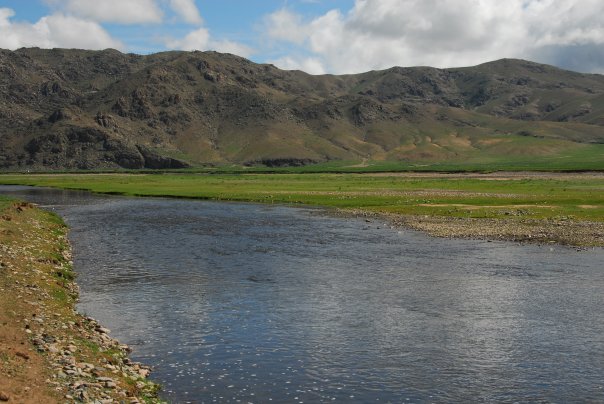
    We approached the lake from the south side in the late afternoon and I felt that yelling of adrenalin only felt fully in beautiful and new places. The lake was still half frozen and seemed to be moving under the closing light mirrors of the day. The alpine style sunset and mountains reflected on the water and the ice was still and silent. I smiled and looked over to her, expecting that radiant look of wonderment she gave me, without expectation, so often. But she was looking elsewhere. There in the foreground of my view, was a dead yak drifting on the edge of the water. She looked as though she were going to cry which I couldn’t understand at all. She’d seen dead animals before, she wasn’t sentimental about that. But then I saw it too. Surrounding the yak were empty vodka bottles, plastic bags, finished cigarettes, papers and rubbish. All cajoled around the animal, and this decay would now evaporate the thousand images she wanted to show me.

    We drove on by until we found a place to pitch our tent. We set-up in silence and ate the last of the brown bread from lunch with some meat and butter. She said she was going to go to sleep, but I found the bottle of Russian champagne I had in the van for emergencies and so we drank it sip by sip from the bottle. She drank more than she normally did and was so distant from me so I let her wander. The lake, still not fully defrosted yet, made a unique sound of crushing ice movement and this was echoed by the sound of shamans praying in the distance. We let the fire go out, the champagne was gone and then she asked me.

    What will you miss about my Mongolia”

    ““I’ll miss so many things about your home.” I told her.

    I’ll miss marmot sandwiches and camel polo. Snow on the ground and blue-sky. Sand-storms in the city and the delight of transparency, mostly my own. There are some things here which will never leave me, and I will miss them all.”

    For the first time in hours she smiled at me.

    Actually, do you know what I’ll miss the most about Mongolia?” I asked her.

    I’ll miss the sea”.