Category: Uncategorized

  • Comfort of fog horns

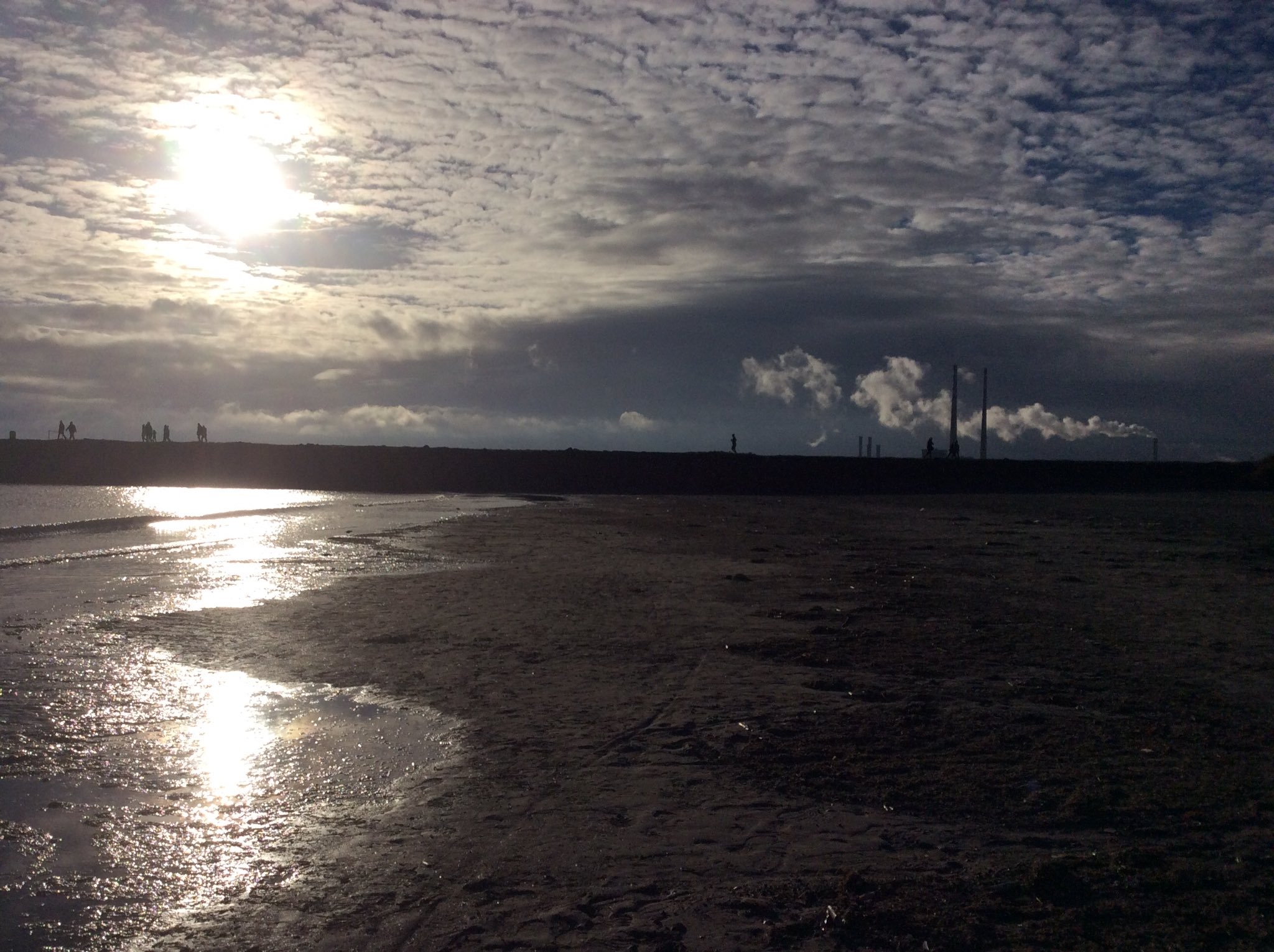
    On the first day of time, a freezing fog descended over the sea near Dublin.  It settled on the surface of the water for just a moment, then the clouds gathered it back into themselves before they drifted out of sight.

    “I’ve never seen anything like it,” said a woman I didn’t know.

    “Me neither,” I replied, and we smiled at the mystery, and at one another.

    The horizon was a mix between the colours of peachy-salmon, indigo and the grey of the evaporating fog.  Later, the sound of fog horns accompanied me home across the city, and it’s how I fell asleep on Sunday night:  to the comforting sound of the fog horns.

    I wish I could feel more comfort from the news about the vaccines this week. 

    On Tuesday, the first woman and the first man received their Covid19 vaccinations, but I wonder why this doesn’t fill me with more excitement?  I was concerned that the vaccinators who vaccinated the first man and the first woman were vaccinated, and then the obvious next question needed to be answered:  who vaccinated them?

    Another concern I have is about the freezers. 

    The live vaccines need to be kept in super freezers and Ireland has bought nine of them.  I don’t know if nine is enough.  I might have ordered fifteen to twenty super freezers, just to be on the safe side if one malfunctions, but nine was the decision, and nine have been bought.

    Many countries won’t be able to buy the super freezers to store the vaccines.  Some regions of the world don’t have access to reliable electricity or have extra money in their health budgets to vaccinate a population for a disease we didn’t even know about this time last year.

    If only we’d developed a vaccine for inequality instead.

    Here in Ireland the plan is to get us all done.  The government published a list of the demographic groupings, in the order they will be vaccinated and listed people into fifteen different categories.  I’m in group fourteen.  I’m just ahead of children, teenagers and pregnant people, but below everyone else in the country.  Seeing my lack of essentiality written in a list like that was a little harsh, I don’t mind telling you.  I knew I wasn’t a key worker in society, but fourteen out of fifteen!  Nevertheless, all going well, I should get my injections before next summer.

    Probably not before spring.

    In the meantime, we have to continue living as we have been because even the vaccinated can pick the virus up, and possibly pass it on.  Maybe that’s why I’m not on Tick Tock singing “Forget your troubles, come on get happy”.  The vaccine is good news, and perhaps we’re half-way through this thing, but it’s not all over yet. 

    We’re back at Level Three here in the Republic of Ireland, which is a bit more manageable than Level Five, and somehow it feels easier.  Although, to be honest, the whole level thing is giving me déjà vu. Sometimes, when I’m half-way through a particularly intense sensation of déjà vu, I feel like I’m looping into another one.  I call these déjà two, and they are all so familiar yet stranger than before.  Perhaps I already mentioned that in last week’s blog?

    I feel like we’ve done it all before? 

    Didn’t we?  Haven’t we?  Didn’t I write about it already?

    Didn’t we close everything down once, and open back up? 

    Then we closed it all down again, and opened back up? 

    It’s a macabre game where winners get to go onto another level and the losers die on ventilators in ICU.  Still, at least we have Christmas, hey?

    I’m finding our attachment to Christmas and the complete denial that it’s our first Pandemic Christmas completely hilarious.  I’m not sure if our insistence that Christmas will go ahead makes us the most ridiculous species on earth, or the most endearing.  Possibly a mixture of the two.  It’s as if we’re all pretending that Christmas can be normal for some younger member of our family who hasn’t heard about the virus yet? 

    Or are we doing it for ourselves? 

    Are we treating ourselves to a midwinter-mini-break where for one day, we celebrate our lives and give thanks for those things we are grateful for?  Maybe we deserve a day off from a no-deal Brexit, Trumpism, the disease and all the other crap.  I’ll start us off, but feel free to jump in at any time with the things you are thankful for. 

    I’m grateful for my health and the health of those I love. 

    I’m grateful for my warm, safe shelter and that I have reliable work. 

    I’m grateful for my friends who make me laugh daily, and the love I feel around me.

    I’m grateful for all the fog horns that keep us safe, and I’m very grateful for you.

    You who read these musings weekly, I’m so very grateful for you.

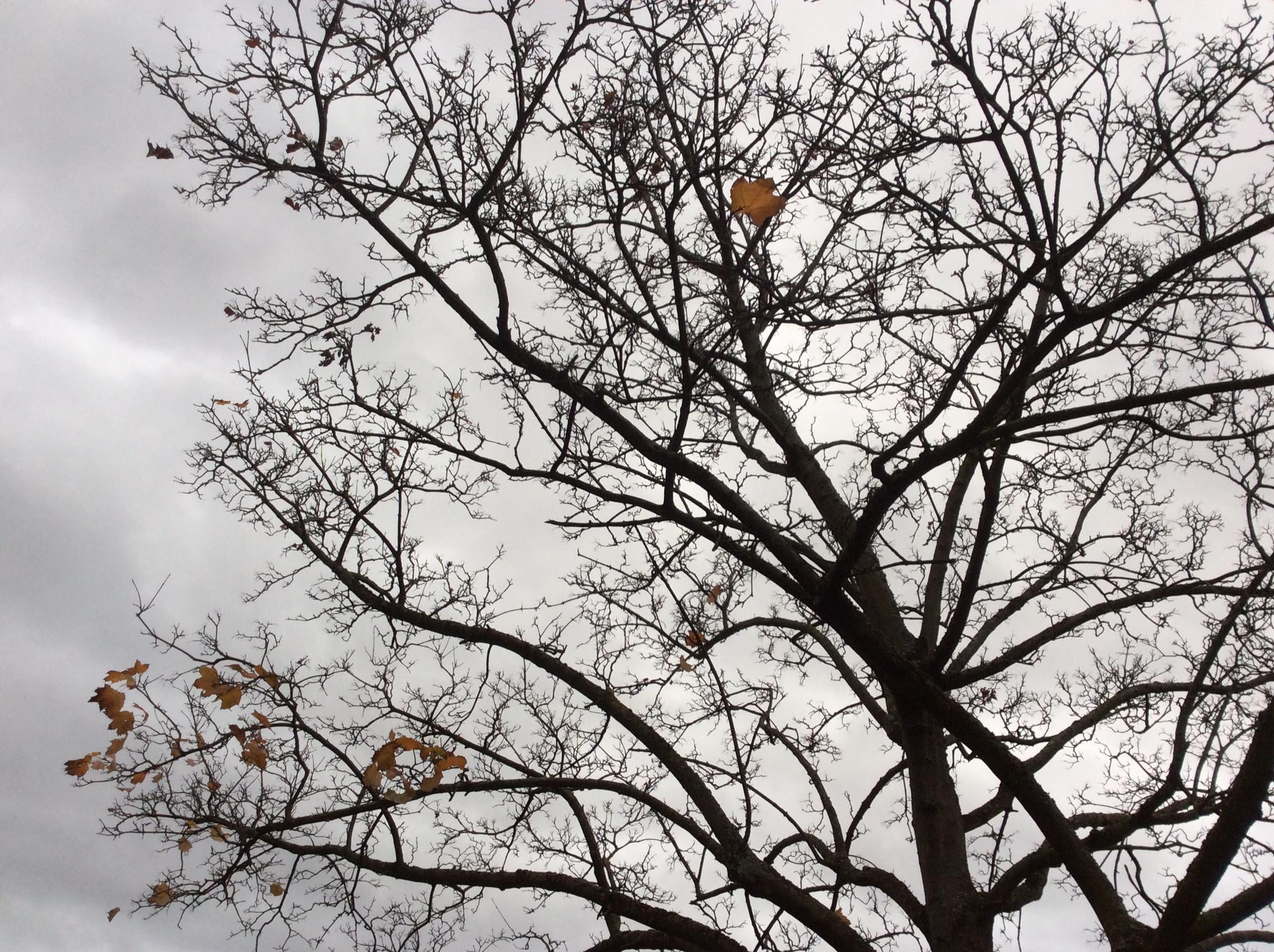
  • The last of the falling leaves, in St Stephen’s Green

    Sometimes I think about how sound travels. 

    Of course I don’t have the first notion of how sound travels, but the fact that it does is a joy to me.  Right now I can hear the Friday evening traffic, a tap dripping in the kitchen, a siren, and the quiet clicks of this laptops’ keyboard.

    I marvel at many things when I have time.

    I love to think about our waterproof skin, and how we were all once unfertilised, microscopic eggs.  I love that my body moves without my consciousness getting involved, and isn’t it magical that when we sleep, we dream.  I love to think about my stomach digesting food and turning it into energy so that I can walk, chat and wave my arms up above my head.  I love how we invented music, and that we can read and write.  I love how it was our brains that invented the concept of reality. 

    When I don’t have time, I get scared of things instead. 

    I’m not sure if you can isolate one thing over another but this evening my current fears are:  this pandemic, capitalism, the menopause, grief, and getting old. 

    One of the strangest phobias I have is of cotton wool.  Or, more specifically the sound of cotton wool when someone scrunches it.  If I’m around someone who is scrunching balls of cotton wool, I have to make my excuses and leave the room.  I hate that squeaky itchy sound it makes, and if it goes on for too long, I stop breathing.  Even typing about it now, on these very quiet laptop keys, makes me hold my breath, and I think it’s for the best if we change the subject.

    I would like to reach a balance in my life, where I can marvel at the beauty and be scared of the things that frighten us with some sort of rationality and emotional stability.  Isn’t that what we all want, a balanced perception of our subjective experiences of life?  I’m concerned that my emotional reactions are out of balance and, on occasion inappropriate.

    Exhibit One:  I’ve been very weepy this week; this was the weeping week. 

    I cried after a semi-argument with a woman in the post office queue.  She thought I was too close to her and she wanted me to step backwards.  However, I couldn’t step backwards because then I would have been too near the man behind me. I tired to explain this conundrum to her, but she wasn’t very responsive.  She became very cross and shouted at me, and quite unexpectedly, I wept.

    Then I made the cruel mistake of watching that new David Attenborough documentary and I suggest that you give it a miss. Of course David is wonderful, but there’s a very disturbing walrus scene that should best be avoided if you can.  Then as if that’s not enough, David goes on to explain how our species is coming to the end of its run here on the planet, and how destructive we’ve been to all forms of life while in charge. David gives us all a bit of hope at the end, with some suggestions how we can change the outcome, but by this time it was too late for me.

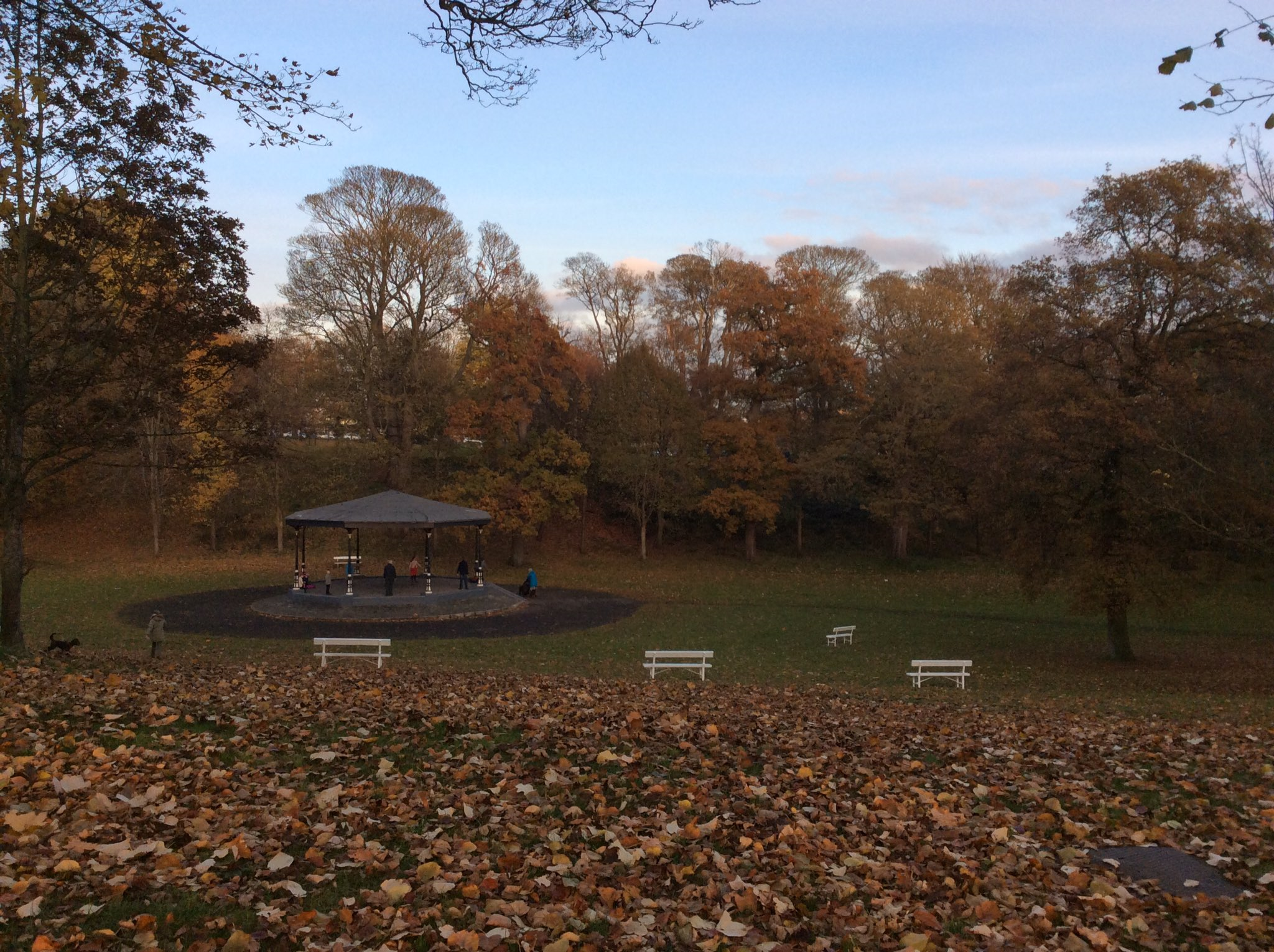
    Then I cried because of Christmas, and because I miss my family, and because of all the changes and because of the last of the falling leaves, in St. Stephen’s Green.

    All the same, you have to admit that tears are quite remarkable, aren’t they?  Imagine that we evolved with the ability to cry when we feel sad or afraid and I think that’s extraordinary.

    It’s also incredible that our brains produce endorphins to allow us to cope with pain.   Our brains don’t want us to feel too much pain, so they have mechanisms to release chemicals into our bodies so that we experience pleasure instead.  Anyone who swims in the icy cold sea knows this to be true.  In order to deal with the cold water shock, the swimmer will experience an incredible sensation of wellness and happiness and bliss.  You genuinely believe you’re having a wonderful time.

    Thank you brain, for happy endorphins.

    Wouldn’t it be lovely if we could release them on command, instead of waiting for them to come in response to a harsh event.  Then we could turn them on during Attenborough’s horror show, enjoy them while people shout at us in queues, and just let them do their jobs when you hear that Christmas music unexpectedly.

    So let’s embrace the menopause with curiosity instead of fear. Be grateful for the grief we feel, and thankful for the love that caused it. Let’s accept that politics has always been divisive, mean and unkind and let’s be gracious for the opportunity of growing old, with any wisdom that comes our way.

    The cotton wool we’ll leave for another day.

  • Matter of time

    I’m afraid I didn’t have much time for writing this week.  In fact, I’ve been neglecting all my projects including the spider plantation, my complex exercise regime, this month’s online courses, and lurking on Twitter.  I’ve been neglecting them all because of Netflix.

    Holy mother of God, why did I sign up to Netflix?

    Up to now, my home entertainment schedule relied on me downloading films and series from a selection of streaming sites, and this always worked out well.    Occasionally, I would have to watch something with subtitles in Arabic or French but that would give me something else to look at if the film itself was dull.  Things have changed now that I have Netflix.

    I signed up with Netflix so that I could watch season four of The Crown without interruption. In a sense, could we perhaps argue that my new addiction is another tragedy caused by the Palace?  I honestly thought I could watch the series and then keep the subscription for a couple of months, to see if there was something else I wanted to enjoy.    

    I thought I could handle it, I was wrong.

    At first, the variety of choice was too great for me, so I only watched films that I’d seen before.  However, I quickly started watching new content, and all the recommendations Netflix made for me.  I consume Netflix at an alarming rate.  It’s as if I’m doing it for a charity fundraiser or as a challenge for the Guinness Book of World Records and I’m probably damaging myself in some way.  I binge watch while devouring Tesco Belgian chocolate eclairs.  There are currently six cushions, two blankets and a hot water bottle on my sofa. You don’t sit on my sofa; you get into it.  Of course there’s no room on the sofa for my partner so he must sit alone, over by the window.  Sometimes he tries to communicate with me, but I just growl at him, like a bear and return to my new friends in Netflixland.  I curl up on my sofacave while watching hours of new shows, and it’s just a matter of time before I’ll need a neck brace.

    One of the things I love about Netflix is watching people nonchalantly interact with one another in a physical dimension.  I watched Wine Country the other night but missed most of the plot because I was marvelling at how six women could go off together for the weekend.  They could go wine tasting, and bicycle riding, and they could gossip together in a hot tub!

    On Netflix, no one wears masks, everyone hugs, and people go to restaurants and bars. It’s just a better place to hang out in than Dublin right now, and I plan to spend more time there in the coming months.  Dublin is just a bit quiet, and people are getting irritable, and there isn’t much craic.

    One of the many reasons I loved living in Dublin was because of the craic. 

    Dubliners love to talk.  My first memory of Dublin is a conversation. I arrived in Dublin airport one March afternoon, and I got into a taxi and the driver started chatting.  I told him I had that just moved from Copenhagen to Dublin, and that I was going to stay with my friend.  I had Julia’s address written down on a piece of paper, and I was so excited about the new adventure.  In return, he told me about his recent holiday in Copenhagen with his son, and something about the best pubs to visit in Temple Bar.  When we pulled up outside Julia’s apartment, he helped me with my luggage and told me that the trip was free:  then he said, “welcome to Dublin” and I’ve never looked back.

    What’s not to love about Dublin?

    It’s a gorgeous city altogether with great pubs, restaurants, theatres, parks, mountains, and the sea.  We love the craic agus ceol, and we love to talk.  If the average person uses five to seven thousand words per day the average Dubliner can treble that in a morning.  We talk waiting for the bus, and getting on the bus, and while moving on the bus, and when we’re just after getting off the bus.  We use equal passion and breath when we talk about the weather, one another, the politicians, or our families.  Have you ever seen two Dubliners meeting for the first time outside of the city?  Within five minutes they are the best of friends, within ten they are family, if you leave them alone for an hour, they will have adopted one another for life.    

    Thus, telling Dubliners to isolate and keep their distance seems a harsher request than perhaps asking Scandinavians to do it, for example, or the quiet and unassuming Tibetans.  Dubliners need noise and an audience for their daily performances, and this simply can’t be done online.  Without the story to tell someone, there’s little or no point in doing an activity in the first place. 

    Why do anything at all, if you can’t tell someone about it?

    Zooms are poor substitutes for Dubliners and cannot replicate the intimacy and fun of interactive conversations.  Zooms are one-way, performative, monologues where very few people come across as themselves.  One of my own problems with Zooms is staying on track.  One minute I’m updating people about a project or activity then the next thing I know I’m comparing the performances of Catherine Keener and Cameron Diaz in Being John Malkovich.  I end my sequence of talking with the words “in conclusion then, I would argue that it’s very difficult to say whose performance is the best after all,” and everyone nods, as if I made sense.

    It’s just harder for we Dubs, than most.

    So I’ve decided to embrace the fictional world and watch my characters interact instead of me.  It’s only a matter of time before I start speaking English with an American accent or offer my legal counsel to someone wrongly accused of a crime. It’s simply a matter of time before I start re-watching shows I’ve already seen and experiencing déjà vu because of it.  It’s also a matter of time before I accuse real life friends of misdemeanours fictional characters committed. 

    But I don’t care.

    I’m enjoying my never-ending supply of content to absorb, and I’m doing it with glee and guilt free.  I highly recommend that you do likewise. So snuggle under that duvet and turn on your favourite show and enjoy every single second of your time. 

    Every single second of your time.

  • Orientation for life

    Orientation for life

    When I was younger, I was very much afraid of rattlesnakes and quicksand.  Luckily, I grew up in south Wales so the chance of seeing either was low.  Nevertheless, the fear I experienced was real and was possibly due to staying up late on Saturday nights watching inappropriate films for children.  At least that explains the rattlesnakes.  The quicksand, on the other hand, must have come from watching Tarzan.

    Do you remember those 1970s American films they used to show on TV on Saturday nights? 

    The film would start off slowly, and then some guy in aviators and a rain mac would start following our protagonist around the city.  Sometimes he would slip envelopes under doors or listen to phone conversations with a tissue over the mouth-piece so that no one could hear him breathing.  Usually he would smoke, and drink whiskey and soda, but we never saw him eat, meet with friends or exercise. 

    The background music would start quietly.  It would grow more hectic as the paranoia grew, reaching a chaotic climax of clarinets, cellos and discordant piano notes towards the end.  If there was a woman involved, she would have fabulous hair and shoes, but would be dead by the final credits if she had sex or showed interest in anything other than our main hero.

    Everyone was terribly competent at opening apartment building doors with their credit cards, roll jumping out of moving cars and remembering complex clue details without writing anything down.  Dates and times were arranged and strictly kept to, lunches went half eaten and no one needed to go to work or phone in sick.  No one needed directions while driving. 

    If the government of Ireland wanted to spy on me, they wouldn’t need to hire anyone.  They could just browse my social media where I have expressed all my thoughts, whims and fancies, every day for the past 15 years.  Everything is there:  my political opinions, food preferences, work details and holidays.  Even in lockdown I keep them informed of my whereabouts and my trips to the supermarkets, my walks in the parks and my yoga. 

    The conspiracy theories of the 70s were so much better than the ones we have today.  Did Elvis kill JFK and then film the moon landing in Stanley Kubrick’s studio?  The fact there was never any evidence to support these theories was evidence itself of the cover up, which led to a delightful proliferation of Catch22s and chickens and eggs.  The best thing about the conspiracies back then, of course, was that people believed in the moon landing hoax, but also that you could send letters in paper envelopes safely and have private conversations on public telephones. 

    Bless.

    Virus related conspiracies are dull in comparison with what’s going on in public life and seem quite ordinary when put side by side.  The current President of America believes the election was a hoax; the Prime Minister of the UK has recently sacked his Head of Propaganda (but no one believes him); and the Tánaiste of Ireland (who everyone, including the Taoiseach, is still calling Taoiseach), is hand delivering confidential documents to all of his friends.  Sadly, the motives for all this are also very dull.  They are doing it for the money.  That’s all.  I don’t know how many yachts they need to make them happy, but they are only doing it for greed. 

    I can’t wait until we’re post-capitalism, post-politics and post-government as life is going to be much lovelier.  Then we will be able to concentrate on much more interesting conspiracy theories such as, do we exist, is music just in our mind and is time linear?  Are molecules real and what happens outside outer space?  How did the dinosaurs really die out and did the Palace kill Diana?  So many more vastly interesting things to contemplate rather than the wealth of the rattlesnakes of politics who are making us all suffocate in their grubby, dirty quicksand. 

    I know some of you have had a slumpy week. 

    It’s not easy, all this.

    It’s actually quite hard, which is why I wrote you another poem and I hope you enjoy it, and that it cheers you up.  Remember it’s November, so wrap up well and be kind to yourself.  Stay indoors and drink warm drinks and be gentle with your mind.  However, if you do see a man in aviators and a rain mac following you around, try and loose him at the corner of 5th and call me, and let me know!

    Orientation for Life

    Orientation for Life

    is in room 274

    Irredeemable Love is in the main hall.

    Due to high demand

    The Epicureans and Dreamers practical exam

    is happening on the roof

    Devil May Care (for beginners)

    is in the music room

    Evergreens for transitions

    Has been cancelled altogether, while

    Umbrella Maintenance

    is in French

    Finally, the how to build an igloo course,

    You’ll all be pleased to know,

    is taking place online.

  • Failing to remember

    I must tell you what I did on Monday.

    After my lunches, I decided to take a stroll around the city.  I thought it would be useful to take my boots to the cobbler to get the soles replaced before the winter. I thought it would be helpful if I dropped my partner’s watch into the jewellers, for them to replace the battery.  I also thought I would stop off for a coffee and a piece of cake on my way back, so I told my partner my plans, and my partner nodded and said, “OK”. 

    Lately, I have been forgetting parts of the English language.  Mostly I have been forgetting nouns and some of the lesser used verbs and this is down to lack of usage.  So what I literally said to my partner was that I was taking my “foot coverings” and his “wrist clock” to “make working properly”.  Luckily, he seemed to understand the gist of what I was saying, so I set off and went into the day.

    Monday was beautiful.

    It looked grey and damp from inside, but outside the weather was mild and the air was fresh and invigorating after the night’s rain.  The colours of the leaves seemed even more striking against the contrast of the silver sky, and I thoroughly enjoyed my walk around town.

    About half-way up Grafton Street it suddenly dawned on me that everything was closed. All of the shops, including the cobblers and the jewellers and the coffee shops and the cake shops, were closed.  There’s a pandemic and we’ve been living with restrictions for 35 weeks, and all the people are inside, and all the shops are closed. 

    I had forgotten. 

    I had simply forgotten. 

    I had slipped into Plato’s allegory of the cave where the shadows on the wall of my reality were open shops and business as usual. In my parallel universe people could pop into shops to speak with the crafts people therein and stop for sugary snacks on the way home. 

    What on earth was I thinking?

    When I returned home, I said to my partner, “everything is closed due to the lockdown!” and my partner nodded and said, “oh yes”.  I put my foot coverings back under the place where we sleep, and I placed my partner’s wrist clock on his furniture item, where his laptop sits.

    Seriously though, I am starting to forget the English language which is a shame because I’m not fluent in anything else.  I could hold a short conversation in Danish and perhaps buy some meat and dairy products in Mongolian, but it’s English I rely on for the most part.

    I used to tell my language students that the best thing they could do to improve their English was to practise as often as possible, with as many different people as possible.  To this end, I would advise them to try out their new vocabulary on strangers on the bus, to try out new grammatical structures with the people in the supermarket, or to even try and fall in love (ideally with someone who had better language skills than they).  All this was to prevent them losing skills they didn’t use, and usually, this strategy worked out fine.

    I used to speak a lot.  I would speak at home, at work, after work, during the weekends and even in my sleep.  Now, I speak less and less and there are whole sections of the day in silence.  Nowadays, I use a fraction of the words I used to use, which has resulted in me using words like “nowadays”.  Most of my interactions take place on video calls or the phone, which makes the live, physical conversations the anomalies. 

    I use more and more emojis in my written correspondence, I find reading entire articles exhausting, and it can take me a month to read a small paperback.  I believe that the sound of my voice has changed since March, and I’ve started leaving notes to myself which make little, or no sense at all, when I try to read them back to me.

    Wednesday’s note, for example, said “forrest ring head.  Lisa (heads off)”.

    That’s not even how you spell forest.

    Thank heavens I have this blog where I can keep practising my English.  If I didn’t have the opportunity to use my words here, I might lose them forever, so I am very grateful to you, for reading.  Thank you for returning here, week after week, and for supporting my very public writing apprenticeship, and for keeping me so well. 

    I wish you much wellness in return 😊

    This pandemic is a peculiar backdrop, but our lives still go on.  People are still getting married and announcing their pregnancies, they’re still getting divorced and announcing their splits. They are changing jobs, and going back to college, and having arguments with family members and making new friends.  People work, they relax, they gossip, and they sleep.  They celebrate birthdays with cake and wine, and they cry alone, and together when it all goes wrong.  The sun comes up and the sun goes down, the sea comes in and the sea goes away again.  The clouds cover over the blue sky, and then they drift away again. 

    Yes, those vapoury watery mass things float over the blue sky, and then they go away again.

  • Rainbows on Sundays

    I used to love Sundays.

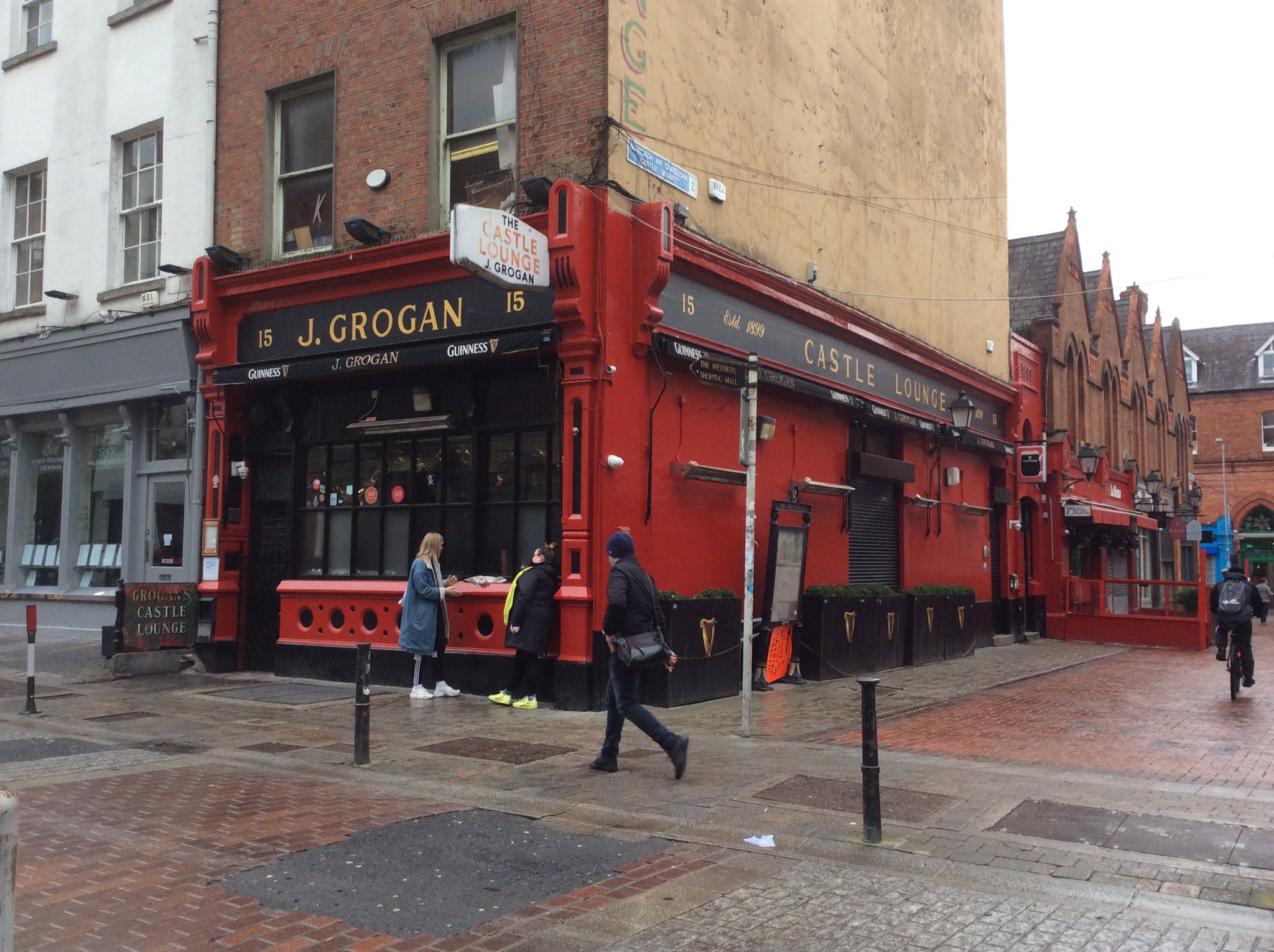
    Sundays would start with hangovers and coffees but drift into brunches and newspapers effortlessly.  Sundays would involve walks around the city to buy innocuous items such as garlic presses or plant pots.  Sundays might have pints and toasties in Grogan’s and late afternoon chats with friends.  Sometimes, Sundays would have visits to galleries or museums. Sundays could, if you wanted them to, finish up with take-away dinners and films at home, or any slow variations of the descriptions above. 

    I’m not sure I love Sundays anymore.

    Now that I spend on average 22 hours per day in my home, being in my home isn’t the treat it once was.  Sunday is now just part of the blob of time that has morphed into itself, and proof indeed of the law of diminishing returns.

    Sundays at Level Five bring challenges. 

    Although, in my opinion Lockdown Two is so much better than the original.  When they said we were moving into Level Five I raced out and bought provisions for the new situation. I bought some cosy warm curtains, eight books, a Bialetti Moka, a meditation cushion and some vanilla scented candles.  These may not sound like the items one would normally buy to prepare for a humanitarian emergency disaster, but I swear to God, that meditation cushion has been a game changer. 

    I love my home, I love working from home, and I think I’m quite good at entertaining myself when everything is closed.  Even so, even I may be running low on ideas as we move into the 8th month of Virus Hide and Seek. I still have my Spider Plantation to maintain, of course, and all the online courses I’ve signed up to.  I love reading and watching season after season of almost anything, and I’ve developed a fondness for documentaries. 

    But when is it going to end?

    A lot of people claim they love working from home, but when you ask them to explain why they do, they tell you all the things they didn’t like about going to work instead.  They didn’t like the commute or the open plan office, they found the office distractions annoying or found the building too damp or too cold.  I love working from home for its own sake.  I love the comforts of not wearing shoes and socks and the never-ending supply of tea, toast, and snacks, and I love being able to work to my own flow.  Nevertheless, another disappointing thing about the pandemic is that it has removed the joy of Sundays, now that working from home, and Sundays look and feel the same. 

    It’s impossible isn’t it?

    It’s simply impossible not to mention him.

    It’s simply not possible not to mention Donnie Trump.

    We all know that Donnie is a symptom of a much more hideous disease. 

    Perhaps when he’s not permeating our collective memory with his rants and his tweets, we might be able to find out how and why he was elected not just once, but nearly twice.  Why are some women, people of colour, and working class people voting for a man who clearly hates them?  What emptiness does he fill, what questions does he answer, what hope does he promise?  It seems to me that the only way we can ever find out is by asking them, rather than by continuously shouting at or laughing at them. Perhaps when all the balloons are depleted and the campaign decorations have been put away until next time, we should ask them what’s been going on?

    Maybe they’ll be able to tell us, this one time, before it’s too late. 

    I wouldn’t want to be Biden right now.

    I doubt that Biden wants to be Biden as he inherits the Biggest Kingdom of Crap in the history of the States.  Lord knows it’s always tough starting a new job, but where is he going to begin?  Will he start by trying to return children to their parents at the Mexican border, or will he try and ensure health care for patients with Covid instead?  Might he have a look at some of the environmental issues Donnie made a mess of, or should he look at the horrendous prison-for-profit system first?

    Good luck Biden, good luck.

    What I would suggest is that Biden makes his working from home area as comfortable as possible in the White House.  Might I suggest he invest in some cosy, warm curtains, a Bialetti Moka, a meditation cushion and some vanilla scented candles.  This will get him started and they’ll be purchases he won’t regret. 

    Alternatively (if he can) he should spend time looking at rainbows.

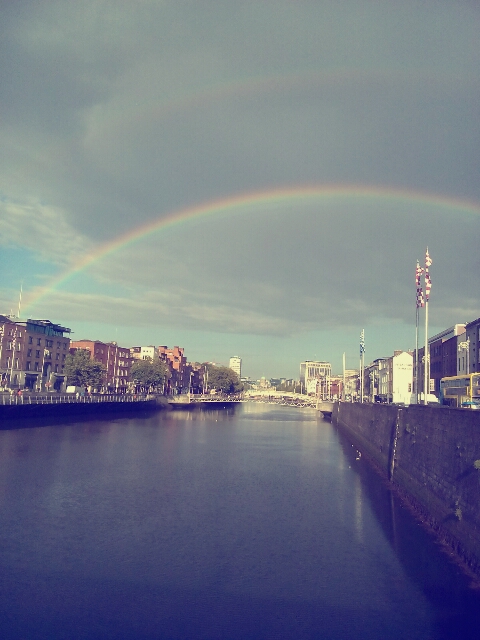
    I saw one Sunday when I was walking along the city and it changed my mood dramatically.  I was quite grumpy and irritable beforehand, but as soon as I saw the rainbow, I felt happy and calm.  Rainbows are such beautiful mysteries of refracted light and I love how they are optical illusions you can photograph!  I love that they have no purpose or evolutionary role to speak of and that even though we can just see the arcs, they are perfect, never ending circles.  They appear for a while, their vivid colours so clear to us, and then they disappear without trace.  Our ancestors believed them to be magical, and perhaps they weren’t wrong about that.  I know that whenever I see one, I feel better inside, and I love pointing one out to a friend.

    Look Biden, there’s a rainbow!

  • Essential Samhain

    I spent the morning in Mexico.

    I drifted into Mérida and glided silently into the city.  I smiled at people I passed on the street, and I didn’t mind at all that they didn’t smile back.  I couldn’t smell the frijol con puerco being prepared or enjoy an icy mojito.  I couldn’t hear the traffic or feel the mosquitos’ bite.  I could, though, enjoy the ancient Maya ruins and the pyramids of Uxmal.  Handily close to Mérida, it didn’t take me long to get there.  I didn’t have to queue in the hot sun for tickets or decide if I wanted a guide to accompany me. I had the site to myself and I marvelled at the magnificence of the Pyramid of the Magician.

    When I was tired, I closed my laptop lid, and came back home to Dublin.

    In the real Mexico, the women are making masks in preparation for Día de los Muertos.  They are decorating graves with candles, marigolds and photographs, and honouring the lives once lived, with love.  This ancient ritual sees mourning the dead as disrespectful to the natural world, which is why the festival is filled with dancing, music and parades.  Food is presented at alters for the dead to enjoy, and the bells ring out on the village squares.  People dress up as skeletons or in their Catrina costumes, and the festival goes on for two days.

    Meanwhile in Dublin, this city feels like a ghost town.

    Office buildings look like haunted houses and all the non-essential shops are closed.  The streets are mostly empty of people except for an hour or two at sunset when they queue for free food outside the GPO on O’Connell Street.  Sometimes they get soup, sandwiches, free masks and a small drink, and the queues are getting longer every week.

    Sometimes I wonder if our government really know what they’re doing?

    I wonder if the group of mostly men who govern us, would be better off trying to teach us all how to work with this word “essential” rather than expect us to comply with contradictory advice about virus management?  I agree with the public health messaging and I am privileged enough to be able to follow the guidelines.  I also understand that what was essential for me in March isn’t necessary now, and what I need for my body and mind today, I couldn’t have imagined way back at Easter.

    Our first objective must be to protect one another.

    At the same time, if Person A knows that a sea swim will increase her immunity and psychosocial durability, does it matter if the water is outside her agreed 5 km radius for outside exercise?  If the swim will make her more robust, which will ultimately protect her should she catch the virus or other diseases, isn’t that a good thing all round?  If she harms no one on her journey to, let’s say for arguments sake, the Forty Foot bathing spot on the southern tip of Dublin bay, shouldn’t she be allowed to do this? 

    Apologies for sounding very Kim Kardashian over here complaining about my lack of access to coastal views when the world is both on fire and melting at the same time.  I just think that as this virus is going to be with us for the foreseeable future, we need more than the bare necessities of life to continue; we need reasons for living.  We need to learn how to mitigate risks carefully but confidently, so that we can balance the real dangers of this disease with the types of lives we can endure.

    If we replace the word “essential” with “very important” or “really quite necessary” perhaps this helps the discourse.  My situation and set up is so vastly different to yours and both are changing with the seasons.  Of course I’m not advocating non-compliance with public health measurements, but your unique decisions are based on your circumstances and mine are based on mine.  Short term solutions don’t tend to work very well with long term problems, so I just think we should be trying to learn how to live, rather than exist, in the meantime.

    Or we could overthrow patriarchal capitalism and replace it instead with a system that values public health more than private wealth, thus supressing the virus to a manageable level.

    We’ve been living like this for seven and a half months.

    I feel like Time is the ultimate Trick or Treater and putting the clocks backwards last Sunday didn’t help my perception of where we are at all.  My concentration is so low that this morning I took my breakfast dishes into the bathroom and it was only when I got to the hand basin I thought, “well, this doesn’t feel right at all!”  Yesterday on my way to the supermarket I wondered why the world was all fuzzy and out of focus.  I realised that I was wearing my reading glasses while walking around the street, but as I was thinking about other things, I hadn’t noticed that I couldn’t see!  I’m forever forgetting the simplest of information, and my mind is like a runaway LUAS.

    Luckily, I keep a journal, so I can check my entries to see what I was doing during the days of the pandemic.  For example, on Saturday the 24th October I have written: “saw a squirrel, ate five bags of cheesy wotsits”.  This means that in the future I will be able to look back at my time here and remember that this was the day I saw a woodland mammal and ate some corn-based cheese snacks. 

    What a life! 

    This weekend, however, I have great plans.

    I have already carved out my pumpkin and prepared my Treats for my stay-at-home-solo-trick-or-treating-activity.  I am going to celebrate the ancient Celtic celebration of Samhain by eating a whole chocolate covered cheesecake and by watching season one of Pose and The Vow, which I’m sure my ancestors would approve of.  After the harvest, we are supposed to enjoy the fruits of the forest, to fatten ourselves up for the dark days of winter ahead.  So eat, be merry, sacrifice a cow or a goat if you have one, and keep terribly cosy and warm.  From here until the solstice in December are the darkest days of the year, but don’t worry about it too much, it will get light again.  Enjoy the blue, full moon on Saturday night and know that soon, it will brighten up again.

    Happy Samhain to you with all of my love.

  • As lakes freeze over

    (photograph by Sophie van den Abeele).

    I am an almost frozen lake, altering this October into solid.

    Every last one of my waves struggles to complete.  I am fresh water, purified and invisible, filtering the bad dreams away.

    In my lake the fish swim for fun and experiment with shoal shapes.  The moon watches over my still water to make promises it keeps.

    Grey moon of October, whistling down for attention!

    It’s OK autumn harvest moon, for we see you.

    As I freeze, I sigh and this movement happens slower now, as my molecules huddle closer.  If you watch me you can’t see it, for your attention isn’t gentle enough, but suddenly I am one. 

    Never moving again, until the light of the next spring, solidly taking a break.

    Sleep with me,

    rest with me,

    breathe with me.

    This late, autumn harvest moon will keep an eye on us together.

    We are safe.

  • Shelf of broken dreams

    What a day, what a week, what a pandemic!

    This week in Ireland our three-party coalition government announced the budget for 2021.  Our country has a deficit of 21.5 billion euro which is why we’ve decided to borrow money from the European Central Bank and spend, spend, spend!  Clearly “borrowing money” is the new “saving money” and I’m more than happy to watch this gamble play out in real time.  It’s like me walking into my bank saying, “I have absolutely no money at all, please give me a million euro” and my bank manager responding with the question “why don’t I give you a billion euro instead?”

    Spend, spend, spend – your money, not your time!

    No sooner had the government informed us that we should be spending as much money as possible to keep the economy alive, they told us not to spend time with family or friends in our own homes.  At least, I think that’s what they said.  It’s hard to keep on top of the instructions at this point.  I believe one of the three men in charge told us that the previous rule of having six visitors per visit, per household was now reduced to zero per household, if you are in a Level Three or Level Four area of the country. 

    Or perhaps it was the other way around.

    In fairness to the government (and that’s the first time I’ve started a sentence this way), we know what the rules are.  The rules are thus: spend as little time with as few people as possible if you want to decrease your chances of picking up the virus, or passing it along.  Those are the rules.  Those have always been the rules.  Those will always be the rules until we invest in a more equal society.

    So spend, spend, spend – your money, not your time!

    It’s tricky to spend money in a pandemic.

    What do you spend money on once you’ve paid for food and shelter?  The cinemas, indoor restaurants and pubs are all closed, it’s pointless buying new clothes or shampoo, and taxis are death traps.  You can’t go on holiday, the internet does everything else and even I can’t spend that much money on chocolates and confectionery.

    Some people have been talking about Covid Fatigue this week and the fact that they are hitting the wall.  I think those people are so optimistic.  Imagine thinking we’re half-way through this thing and imagine thinking that one day it will all be over?  I’ve resigned myself to the idea that I am going to spend the rest of my life watching the lives of others through the internet and group chats.  I am doomed to experience everything either at the wonky table in my living room, or here on the sofa.  Everything I ever see will be through the camera of your machines and I’ll never dance in public to a Prince song again!

    Humans love to name and classify things, don’t we? 

    We say to one another, “that is a white cloud” or “that is a grey squirrel”, but I don’t have a name or description for what I feel right now. It’s not depression or anxiety or existential sadness, although there are shadows of those things nearby; but I think what I’m feeling right now is…under the weather. 

    It started on Monday, when I heard from some Mongolian friends and this set the tone for the week.  I was delighted to hear from them, of course, but as we organised a time and date for a reunion Zoom, it made me kind of wistful too.  I revisited Ulaanbaatar, through Google Earth and visited the university where I used to teach, the Lion’s Bridge and the Wrestling Palace.  As I hopped up and down Peace Avenue I realised how much I missed travelling to new and old places and I craved just one day on the road.

    Then I felt angry that Europe isn’t asking Mongolia for advice on Covid management and containment seeing as they currently have zero deaths from the disease.  Mongolia of course, has been containing outbreaks of the bubonic plague since the Middle Ages, so they have a long history of experience they could share with us.  Every summer one or two people die from the plague, but it never leaves the region and they have a wonderful control and understanding of the disease. 

    Perhaps we should ask for their advice? 

    You should go to Mongolia if you ever get the chance.  I loved living there and learning the things I did.  Even when it was so cold that the water bottle in my bag would freeze or my eye lashes stick together, I loved every day in the land of the eternal blue sky.

    I’m just a little bored and mixed up and under the weather, at the moment, and tired of being told, to spend, spend, spend – my money not my time.

    I feel like the photo at the top of this week’s blog.

    It’s a photo of a corner shelf in my local Tesco and I’m fascinated by it.  Who would decide to put all these things together?  Why would you have all those things in the same place?  Some chocolates near the tooth brushes close to baby food and pot noodles?  Why are those hula hoops there and what is the 18 piece dinner service doing near the floor?  It’s the shelf of confusion, the shelf of broken dreams, the shelf of no clarity and forgetting.  Who stocks this shelf, for the love of god, and what kind of monsters are they?  This shelf has been organised by a mean hearted tyrant, and it very much symbolises the current thoughts in my mind.

    Still I’m happy to see you this week, and I hope you know that you’re doing OK.  Week after week of this, month after month of this, season after season of this, you are doing OK.  I’m giving you a little time lapsed hug right now and an appropriate kiss on the cheek. I’m nodding in your direction and telling you once more, that you and I are doing just fine.

  • Stuff and decoration

    I don’t know about you, but nowadays it takes me at least an hour to leave my home.

    First of all, I need to find my glasses, keys, purse, mask and outdoor-clothes, and then I need to do it all again.  By the time I have everything ready, I’ve forgotten what it is I’m going outside for, so I must look for the note I wrote to myself earlier, to remind me of what it is I think I’m doing.  It’s an endless and thankless task which requires a great deal of patience and strength.

    Once I’m outside I am disorientated. 

    The outside floor needs a different type of foot covering to what I’m used to, and the temperature is changeable. Sometimes there is water in the air which falls onto my head straight on or sideways in, and often there are others in the outside too.  Sometimes I try to communicate with them, but they can’t hear me through my mask, so I gesture with my hands and eyes instead.  I grunt and point wildly at the goods I want to purchase in the shops, and I have difficulties with money and numbers. 

    I’ve always had trouble with numbers and like many young girls, I found maths at school challenging.  In particular, I found the types of problems we had to solve a little distracting, especially the ones that looked like this:

    If John has 2 apples and Jane has 8 apples, how many apples do they have altogether?

    I was always too busy wondering who John and Jane were to worry about how many apples they had.  Where had they come from and why did they want so much fruit?  Were they baking a cake, or did they want the apples as weapons and why didn’t they want any bananas?  Sometimes I would want to warn Jane that by sharing her apples she would be complicit in the patriarchal oppression of all women, and that she would be better off keeping her own.  In fact, I wondered if his name really was John and if he was hiding one or two apples in a basket, boat or bathtub later on in the textbook?  How many apples they had together was the least interesting question you could ask about them, but that didn’t help me at all in the maths examinations. 

    Another person having difficulties with numbers this week was the current President of the United States, and the IRS is still waiting for him to pay up that bill.  He and his current wife claimed they had the virus, but most of the world disbelieve them.  Did they lie to get out of the Biden debates, questions about the pandemic or to stop Pence gaining in popularity?  Or did they do it to distract from the leaked tapes of Melania asking, “who gives a fuck about Christmas stuff and decoration?”

    Thank you Melania, thank you. 

    I’ve been using her words all week as an antidote against all the things I hate and worry about. It’s wonderful and you should try it and I’ll show you how it works:

    Who gives a fuck about corona stuff and decoration?

    Who gives a fuck about zoom fatigue stuff and decoration?

    Who gives a fuck about work stuff and decoration?

    Who gives a fuck about climate stuff and decoration?

    It’s hard to accept that Melania and her husband are just Homo Sapiens, like us. 

    Not long ago they were both microscopic unfertilised eggs in the bodies of other adult females, and then one tiny sperm found each of them.  If those sperms had been tired that day, the Trumps would have missed out on existence and this would be a paragraph about the migration patterns of Monarch Butterflies instead. 

    I think about eggs a lot.

    Once I was an egg in my mother’s womb, and she was an egg in her mother’s womb.

    And she was an egg in her mother’s womb.

    And she was an egg in her mother’s womb.

    All the way back until there were so few of us that you, me and the Trumps were the same egg in the same woman’s womb.  It’s not that we’re interconnected or loosely related, we’re versions of the same.  We are symmetrical Mandelbrot’s, enticing, well-formed fractals, reproducing themselves into infinity, and then we’ll start again.

    Here in Ireland we had our own trouble with numbers this week too. 

    Our government couldn’t decide which level to place the population on, so they leaked some documents to gage public opinion and finally decided on Level Three.  It’s like playing a game of poker with an untrustworthy drunk who’s been on acid all afternoon, and we’ll see the results of this strategy in 10 – 14 days.

    If school A have 100 pupils with 1 virus, and school B have 200 pupils with 2 viruses how many deaths will it take before the politicians accept that there’s a contagious disease in our society that we have absolutely no control over, because we chose not to resource the health, education, and housing sectors? 

    In addition to thinking about eggs and numbers and the innate corruption of the politicians in power, I’ve also been thinking about the Neanderthals.  They were the last species of humanoid to become extinct of course, so I’ve been wondering what the mood was in the camp on those last evenings. Were they sad and wistful and wondering what went wrong?  Were they hopeful that our species, at least, would do great things with our language abilities and tools?  Were they dreaming of the Uffizi Gallery, the moon landing and the possibilities of heart transplants?  Or did they simply think, “who gives a fuck about the future of Homo Sapiens stuff and decoration?”

    I guess we’ll never know.