Category: Uncategorized

  • Autumn Falling

    autumn

    Usually, when you invite your friends over for dinner, on an innocent Saturday evening, you don’t expect it all to end with fire engines and ambulances outside of your home.  You don’t expect to see the neon blue lights of the emergency vehicles reflect onto the faux gothic stone work of the church opposite.  You don’t expect it to happen, but it does.

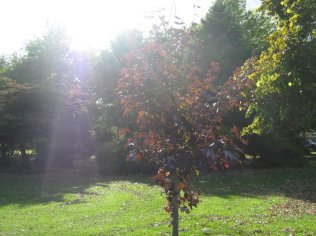
    And at other times, you don’t expect a Sunday afternoon to end with the sight of an old woman falling on the pavement right in front of you.  Her leg bursts open silently and her blood decants down the slope of her shin, like watered down cranberry juice.  She looks at you directly, because you remind her of her niece in Arizona, but her lips have turned blue and she’s afraid.  You don’t expect it to happen, but it does.

    And usually, when your friend from Eritrea, (let’s pretend she’s from Eritrea), calls you up on a Monday, and invites you out for tea, you don’t expect her to ask you to buy a small pill on the internet, which will take the fertilised egg away from her body.  You don’t expect it to happen, but it does.

    You purchase the pill and you watch it travel north from Mumbai towards the small post office in East Wall, through the tracking device on DHL. On the day you go to collect it, the woman there says “mild weather for this time of year” and you smile.  You sit on the bench nearby and hold the package in front of you, and wonder if you’re both plunging into harm’s way.

    But your friend, let’s just still pretend she’s from Eritrea, says thank you and holds your hands tightly.  She says that this autumn is falling into place now.  She tells you that September smells the same no matter what age you are, that it smells of back-to-school leather satchels, coffee and the fragrance “Beautiful” by Estēe Lauder.  She reminds you that no one was hurt in the fire, and that the woman recovered well after her fall.  She tells you that what you are doing is not sinister or toxic, and that everything will be well with this pill.

    She says everything will be well with this pill.


  • Sunset under eyelids

    sunset 2


    Sometimes it’s easier to tell the story backwards, to begin at the end and start with the finish, so that it all makes more sense in reverse when the colours are clearer.  At the end of it all, there was Liz.

    Liz was the one who found me at the edge of the paragraph, on the corner of a street, in a small town in Spain.

    “I don’t know what I’m doing here” I said to her slowly and she replied “I know baby, that happens sometimes”.

    I didn’t want to leave the deliciously icy cool air conditioning and the quiet setting of the car hire shop, because it was nice there.  But Liz gently encouraged me to go, and we left.

    Walking back to the room I forgot Liz’s name.  Or rather I knew her name well, I just didn’t know what to do with it.

    I reminded Liz of a fox she’d seen weeks before, walking down a city street in Dublin, an hour before dawn.  He was a solitary, red fox, with the triangular ears and long bushy tale of a children’s book.  He was mature and if he could have talked, he would have also said “I don’t know what I’m doing here”.

    He was disorientated and lost and he knew that this night wouldn’t bring forth a feast of field mice and chickens, but bits of old pizza slices and pies instead.  A less specialised diet, and one that required more scavenging than hunting.

    He may have been half-heartedly looking for a den as he was too far away from the fields to go home.  His slender coat of auburn fur glistened under urban street lamps rather than the shine of the moon, and he hid in doorways when the late night taxi drivers drove past.

    When we reached the room I rested.

    I tried to let all the cement clouds and the pollution skies flutter away as I watched the salmon coloured sun set under my eyelids instead.  There the fox’s fur turned into the sacred orange robes of Buddhist monks, and he regained his magical spirit.  In that world, Liz came forth as a nursery school teacher, who liked to peel oranges and smelled ever so slightly of marzipan.

    Just back to the beginning and more from the start, she was there again, and I remembered her name, but I still didn’t know what to do with it.

  • Latvia Midsummer

    unspecified.jpg

    Latvia is more of a casual acquaintance than a very close friend.  You meet Latvia, on a Saturday afternoon, and you suggest going for coffee, but Latvia says “why don’t we take some beers instead?” So you do and you have a great time.  But you don’t need to call Latvia the next morning to say thank you, because Latvia knows you had a fun night out, in a bar with a toad in an aquarium.

    Latvia is easy-going like that.

    Some people say there is magic in the woods and between the trees, sssshhhh, can you hear it?

    Latvia doesn’t feel jealousy, that most grim and lurid of all emotions.  Latvia doesn’t mind that you’ve been to other countries and that you’ve loved some other towns. Latvia is serene and composed like that.  Latvia is copacetic

    There may be magic in the meadows, between the woods, ssshhhh can you feel it?

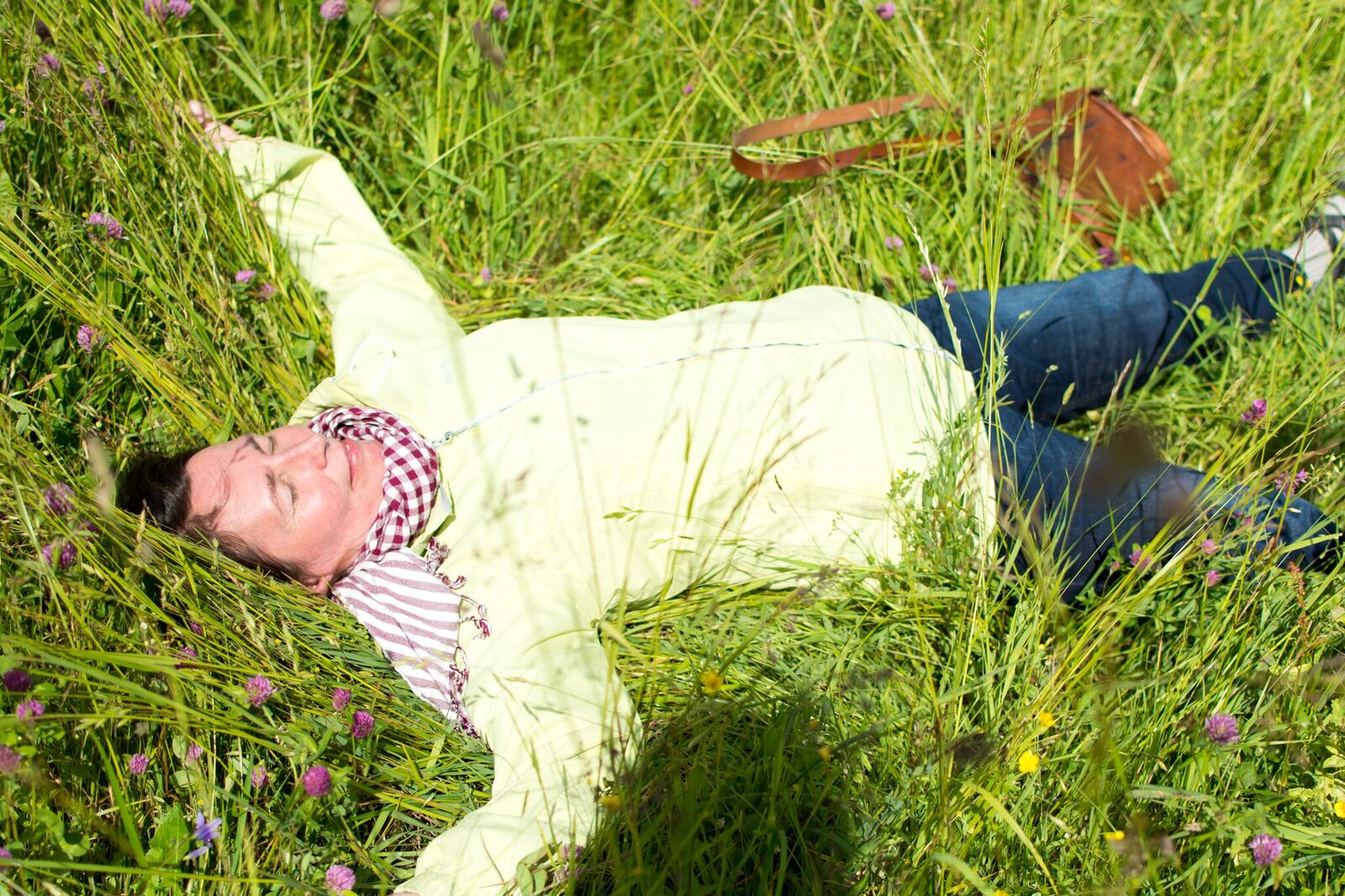
    Let us lie down in the meadows. Let’s put garlands in our hair and let’s smell the soil which surrounds us.  Some people say you’ll feel better, that there’s magic in the woods, sssssshhhhh can you see it?

    ruthlatvia.jpg

  • Lungfish

    bahar dar

    At least at the Gresham everything stays the same, thought Lydia as she ordered a pot of coffee for one.  The black velvet cushions, with the golden embroidered letter G’s on them, would always remain the same.  Here one could rely on the peacefulness of softly spoken voices, as an oasis of calm away from O’Connell Street.  Here one could relax.

    The first time Lydia came to the hotel was shortly after her arrival in Ireland, almost three decades before.  She came in for Sister Ann, who said “if you do nothing else in Dublin, promise me you’ll have tea in the Gresham”.  And so she did.  A young naïve Ethiopian girl, ordering tea she didn’t like, for a promise to a missionary in a far-away land.

    It was a long time and distance away from Ethiopia that Lydia was now.  And did it seem to be moving further along the horizon?

    Sister Ann was Lydia’s English teacher back home in Bahar Dar.  She taught English songs, letters and even grammar to the children who lived down near the lake.  But the Sister had a special affection for Lydia and would brush her hair and give her extra pieces of injera at meal times.  Sister Ann was always reading aloud from the most obscure of text books, big smelly books with crusty jackets and strange curricular inside.  But Lydia loved to listen to the poems and the stories about animals most of all.  One of her favourite stories was about the lungfish of Ethiopia.

    Tell me about the lungfish, tell me about the lungfish.

     “Lungfish can estivate, which means that they can spend the long hot dry season in a state of suspended animation, neither breathing nor eating, but simply hibernating under the mud, waiting for the rains to come, waiting for the time when they can go back to the water”.

    Lydia’s pot of coffee arrived and the waiter asked “is there anything else Mrs O’Sullivan?” but she shook her head slightly and he glided away from the table.  She inspected her newly French manicured nails, as she placed a cube of sugar into her cup and poured coffee from the pot.  She liked the new nails, they were subtle and they elongated her fingers. She also glanced once more at her new Mary-Jane shoes, and admired them also.

    Lydia stayed in contact with Sister Ann after she moved to Ireland.  She was homesick for the first half decade so she wrote the missionary long letters about every detail of her new life.  She wrote about the smells and tastes of Dublin, the food, the accents and the weather.  The letters would take months to travel to Bahar Dar, and more months again before the return letter would come back to Dublin.  Ann would write about news from the Lake, how the other children were, what the fishermen were catching, how the rainy season was effecting the maise crops.  She wrote about injera, chicken wats and music.

    Lydia would tell gossip from the Church and the congregation, Ann would write about the mountains and the new hotels being built.  Lydia would describe the shops on Parnell Street, which were starting to sell yams and plantains.  Ann would explain how tourists from Europe were beginning to come to Bahar Dar for their holidays, that they were staying in the new hotels with views over Lake Tana.

    For some reason Ann always seemed sadder around Easter time, so Lydia would always make a special letter for this time, full of promises and flowers, drawings and sometimes poems.

    After a decade, Lydia started writing about a man in the Church who was starting to smile at her knowingly.  He was a little older, but he was a kind and decent man and his name was William.  The letters slowed down for a while after that, while Lydia concentrated on marriage and children, and correspondence was kept to greeting cards.  But when the children left for college, and William left her for someone else in the congregation, she found that she had more time for writing and reading letters again.

    It was then she started visiting the Gresham more frequently.  Her ritual involved coffee, correspondence and sometimes cake.  Strangely, it was at the Gresham that she felt most at home at.  Even after almost three decades Ireland didn’t feel like home, but only a place where she lived.  It wasn’t a bad life, no indeed not, and she as very grateful for her blessings and thanked God regularly.  It just wasn’t what was promised, that was all.

    When technology suggested that the women could replace paper and pens with emails or Skype, the two women kindly ignored it.  They kept to their old ways and wrote pages of news to one another, in almost identical handwriting on good quality smooth paper, with matching envelopes.  Theirs were not the words of emails.

    Lydia wrote about the changes in Dublin, how one saw more homeless people now than before and how the young people seemed to be so different.  Ann wrote about the rude tourists in Bahar Dar and how they were quite hostile to local people at times, and how they sometimes drove like maniacs.  Then one day Lydia noticed, almost by accident, that she had started addressing the old missionary and friend as simply “Ann”.

    The final letter Lydia received from Ann came in February.  She wrote about the new road from Addis to Bahar Dar and how it made the journey so much easier.  She also wrote about her plans for Easter and how she hoped to finish her ministry by that time, and have more time for her own projects.  But the part of the letter Lydia loved to read and re-read came at the very end.

    “But my dearest Lydia the strangest of all things occurred two nights ago, and I wonder if you’ll even believe me.  I was taking my evening walk, at the shore of Lake Tana, while the sun was setting and the fishermen were bringing their boats in.  When what should I see but a lungfish!  He was covered so safely in the mud and I suspect he was hibernating through this long dry spell.  I suspect he was waiting for the rains to come, and I hope he will make it back to the water”.

    Lydia put the letter on her lap, smiled at the waiter and thought of her friend back home in Bahar Dar.

  • A third of a year

    “I’m going to build a bridge” announced the Engineer, as he adjusted his hard-hat and bright orange vest.  “I’m going to build a beautiful big bridge that everyone will have a fondness for”.

    “That’s wonderful” said the Architect “let me help you make it the most marvellous and adorable bridge in all the land”.

    The Banker smiled and said “I think the bridge will make it much easier for the people Over There to travel to Over Here, and vice-versa for the people Over Here to travel Over There”.

    The Banker became more animated “if it only takes a third of a year to build and costs 9, we will all be very happy!”  And he smiled and cheered.  They all ate raspberry sponge cake together, and spent the rest of the afternoon playing with balloons.

    At first, Water too was delighted.

    “Blessed be the gentle people” she said “because my serum lacks odour and colour, they are building an arch to protect me!  How kind they are, how thoughtful”.

    But Tree was less impressed.

    “My dear sweet girl” he said with his wizened old voice.  “I fear they may not be protecting you at all”.

    “But why on earth not?” asked Water “I bathe them and I cleanse them.  I fertilise their crops.  I feed their young while they guzzle me.  Why would they not safeguard me?”

    Tree said “I don’t know”.

    “But you are in danger, my young friend, in great danger indeed.  I worry about the dust and the debris, the paint and cement.  Steel, iron, and stone are not good for you.  Even a floating bridge would bring you dangers.  Even timber itself”.

    Water understood his concern and wanted to cry.  But she suddenly found that she couldn’t.

    She scowled and said “I will ruin this bridge before the sun-sets on its first day!  It will take a third of a year to make, but only a second or two to break.  I will flood that bridge with my anger, freeze it with my lack of love, and rust it with rain.  I will make the land slide to cover it and we will never see it again”.

    So Water set about the destruction of the bridge and the people were not happy.


  • 72 January


    Photograph:  Mohiuddin Kamal

    For Luke Regan, there was nothing in the whole wide world as wonderful as the sound of the introduction to a Universal Studios film.  Nothing on this planet, could replicate the feeling of delight as the first few chords and the rise of the sun on the logo.  Slowly the world would come into focus as the giant letters in white overshadowed the green lands beneath. It was the tangible promise of good things.

    Earlier that evening a few of the lads from the warehouse had asked Luke if he wanted to join them for pints but he said, “I think I’ll have an early one tonight, I’ll go straight home” and he clocked-out alone.  They made a show of sounding disappointed, but they weren’t Oscar winning performances; the boys were going out.  Out on the lash, out on the tear.  But he was going home and it was fine because Luke had a night of Universal Studio films ahead of him.

    As soon as he returned home he was delighted to discover his landlords, Cynthia and Tom, were out for the evening and that he had the place to himself.  He read the note on the table quickly:

    Dear Lucky Luke – lasagne in the fridge and some beers too – help yourself and we’ll see you in the morning – we won’t be back til late – Cyn 

    Cyn and Tom were lovely people, but all three had somehow started a role-play in which they were the parents and he was their son.  Luke wasn’t quite sure how he had accidentally become adopted at 44, but there it was.  He took a beer from the fridge and went up to his room without taking his coat off.

    As it was a Saturday, he would choose a film from the top five.  Usually he kept the top five for special occasions, but he’d worked hard all week, stacking and un-stacking shelves and so he felt that a reward could be given.  He looked at the five DVDs again:  Jurassic World, ET, Jaws, King Kong or Back to the Future.  He weighed-up the pros and cons of each one, and finally decided on ET.

    The Universal Studios introduction began and he wrapped himself into his blankets and slowly drifted away.  Away from Dublin and away from it all.

    Barsha Choudhuri was also enjoying a rare night alone in the apartment in Dhaka, near the Buriganga River.  Her cousins and their children were eating out for the evening, so she finally had some privacy and quiet, which she had planned to use to finish her assignment.  Her thesis was on cyclone shelters, flood protection and disaster risk reduction, but despite the importance of her topic, her mind was drifting elsewhere and she was distracted.  She was thinking of the river, of some new clothes for the summer, about ice-cream.  More than anything she was thinking about her husband and her children and how much she wanted to travel home down south towards to the Bay of Bengal and spend time with them all.  But instead she would have to stay in dusty old polluted Dhaka until spring, and until her assignment was complete.

    She opened her laptop and read the last sentence she had written.

    “Planting sunflowers is highly recommended as they thrive in saline waters and can be used to protect the shore line from the floods”.

    What her heart knew as facts, her head couldn’t support with evidence and she had less and less references and more and more words.  She was slowly losing interest and patience, and she felt as if the laptop itself was conspiring against her.

    In frustration she closed the document and mooched around her library looking for re-creations.  And there it was.  A Universal Studios film she adored and hadn’t watched in months.  She pressed play and breathed in and out slowly, waiting in delightful anticipation for the moment soon to come.  To Barsha Choudhuri, there was nothing as wonderful, in the whole wide world, as the sound of the introduction to a Universal Studios film.

  • The other teacher

    morogoro

    Isabelle liked to observe.

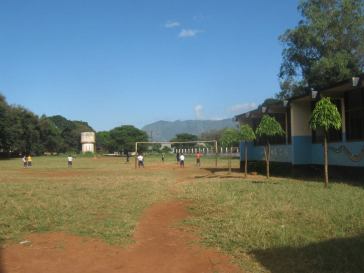
    She liked to watch the women selling mangoes and the men playing chess and drinking coffee on the corner of old Dar-es-Salam road.  She liked to watch the Massai coming into town to buy credit for their mobile phones at the weekend.  She liked to watch the cars driving past Morogoro, or the trains on their way to Malawi.  She would buy a juice after class, at Rick’s Café, and correct her students’ papers while watching the world at the same time, the people and the things.

    Thomas Ray O’Hara felt uncomfortable when Isabelle stared into nothingness, but she liked the detail and he himself had taught her the phrase, “the devil is in the detail” so he shouldn’t have minded at all.  He wasn’t a qualified teacher, but what he lost in facts or knowledge, he made-up with in good intentions.  “The road to hell is paved with good intentions” was another of the proverbs he taught her, this time driving out of Morogoro and into the countryside towards Mikumi.

    She liked accompanying him on their drives into the countryside and it was there she could observe him the most.  They left for weekends, staying at the safari lodges for tourists for the first few times, but afterwards they had to stay in motels for truck drivers.  It seemed, that all teachers, even the foreign ones, had to economise at times.  She enjoyed sex with him more than she thought she would, it was different than with other men, more natural and less filmic.

    Only good things come in detail, not the devil.

    Thomas Ray O’Hara, an American with Irish ancestry, was the new guy in Morogoro.  He told the other teachers that he was from Tampa, Florida and that was one eighth Irish.  Americans always liked to tell you exactly where they came from and where their great grandparents before them came from too.  She was from Morogoro, as were her family before her and for as long as time could be.  Apart from three years at Teaching College in Arusha, this is where she would always be.

    She liked to look at his hands.

    He moved his hands around his face and hair dramatically when he spoke, or taught his classes and while at first she found this to be slightly unhygienic, in a short while it became hypnotic.  She liked the shape of his finger nails, especially his thumb nails which were so neat, and rounded and clean.  She liked the sound of his voice and his confident vocabulary and the way he made everyone listen to him; his students and the other teachers.  Even when he didn’t have anything particularly interesting to say, he commanded a crowd.  And she liked watching him play the guitar, sometimes he sang at parties even though his voice was neither strong nor melodious.  She couldn’t imagine any of her Tanzanian male friends enjoying walking and climbing and cycling or acting as child-like as he.

    Most of the volunteer teachers from America were young, but Thomas Ray O’Hara was a man in his forties, although his hair was still black and the lines on his face simply made him look kind.  When she first met him she felt a tenderness towards him, and she noticed almost immediately that she didn’t like it when he gave the other, younger teachers his attentions.  She liked him to talk to her in the school, and to give only her the benefit of his teaching observations.

    Once he’d seen her teach he approached her after her class and said “you’re a good teacher Isabelle”.  From this compliment she spent even longer preparing her classes, going over her lesson plans, making sure all corners were covered and ideas explored.  He liked her classes more and more, and even suggested that some of the younger teachers watch her teaching, instead of him.  She became his regular assistant.

    The only thing she didn’t like about him was his lack of apology.

    One Sunday evening, after a weekend in a motel near Mikumi, he was packing his things into his small rucksack so that they could drive back to Morogoro.  As he did so he dropped his t.shirt onto the ground and down fell Isabelle’s reading glasses.  The lenses were fine and not scratched at all, but the frames were weakened and bent and they needed to be fixed.  Thomas Ray O’Hara simply picked them up and put them back on the bed without saying a word.  He finished his packing, took the car keys from the coffee table and said, “you ready to leave?”

    She said that she was and they did.

    All the way home she watched the trucks and the mini-vans heading towards Dar-es-Salam and realised that at the end of the semester, Thomas Ray O’Hara would return to Tampa, Florida and she would stay where she was.  She put her head out of the car and felt the rush of cool air on her face.  The dust from the road rested on her hair and eye-brows and she smelt the fully grown maize plants from the fields.   They would need harvesting soon, it was almost time.


  • When winter leaves


    Yesterday I felt old.

    As old as the calligrapher, who lives in the castle, on top of the hill, in Ljubljana.  As old as the terracotta tiled houses that the castle looks down on, or the shadows of the alps that surround them.  Yesterday I was as old as winter when it leaves; replaced by sunset dances of spring hares.

    Yesterday I felt disillusioned.

    Not mature and venerable, versed and seasoned, but grizzled and grey haired and tired.  As tired as the wood chopper taking branches from his oaks.  Incapable of empathy, prostrate with bleakness, and weakened by my own dullness.

    Yesterday I felt old.

    As old as the calligrapher’s font, on the squishy pulp, that once breathed in high forests, in Ljubljana.  Not trusting my veracity or the perfection of my memory but rootless and wavering and clouded.  There was nothing in my basket that could liberate me; not even sunset dances of spring hares.


  • Ocean Baby Tapestry

    Elizabeth of Denmark wears clogs in her garden where she tends to her flowers. The soil slips into her apartment, where it meets the smell of freshly poured coffee, buttery toast and Cuban cigars.  She listens to Maria Callas on the radio, and when visitors come, she turns the volume up.

    Sometimes after autumn, she floats away from her garden towards the North Sea.  She follows the seagulls and the otters and she splashes her feet in the icy water.  When her shoulders dip right under, she shudders with delight and she waves at the tourists close by.  She drinks a warm whiskey, enjoys the stunning wild blue sky and she smiles.

    “The seasons help us remember” she tells you one Sunday afternoon, and it’s a phrase that you’ve never forgotten.

    Bethany of Cambodia sits in the market place weaving textiles.  She is shaded from the sun by the iron rooftop of the restaurant.  She wears a single silver ring on the toe of her right foot, while her left foot keeps the loom working, moving in motion to the rhythm of the day.  Decades of this hand-work make it unnecessary for her to watch her creation, which is why she and her bare-feet have time to look away.

    Sometimes after autumn, she walks away from the market place towards the forests of the north and the cool damp grass beneath her.  She runs like a young girl, slowly and unsure of her limbs, but gaining in speed.

    Gaining in magic.

    She skips through the jungle, jumps through the trees, splashes through the water-fall and when the morning dew cleans her face, she says to you, “the seasons help us to remember”.

    And it’s a phrase that you find, that you cannot forget.

    “I’m sorry” says Elizabeth, “we didn’t take great care of it, and for that I apologise.  We knew it was broken but we turned away our blind eyes, danced and ignored it.  We left the lights on for far too long, and we kept the windows open”.

    “It’s alright”, replies Bethany, “while there were sins there was decency also.  You worried about your loved ones.  You listened for opportunities and protected your young. You held the hands of the weaker ones, and you valued the moon. 

    Your compassion isn’t finite and your kindnesses are not full.  We live together in this tiny ocean, this baby tapestry, wound-up in the same string, and our paths cross constantly.  You can feel sore and sorrow, and those seasons will, one day, help us to remember”.


  • Killyon

    Remember Killyon, last July?  Remember how the day peeped through and the water droplets, outside the house, kept us inside and warm?  Remember there were others in the kitchen, drinking the last of the whiskey, and we could hear laughter in the hall?

    You asked me if I loved you and when I said that I did, you asked me why.

    And I said “I love you for your comical brilliance, your effortless sparkle and for all of your kindnesses.  I love you as a diversion from realism, as an interlude from concreteness and as a lantern at daybreak.  You are the bolts of my substance, my solidarity with vivacity and the base of my fabric.  You are the tangible verisimilitude of a sunrise at Killyon, and I love you”.