Category: Reviews

  • Book Review:  Leaflight Moon by Monica Corish

    I first met Monica Corish in the old Irish Aid Centre at the top of O’Connell Street, Dublin, back in the summer of 2012.  She was facilitating a creative writing workshop for returned volunteer development workers, and I loved the Amherst teaching method she used, and the lovely tone and style she applied to it.  I left the workshop thinking, “that went very well”, and we started it then.

    I attended many of her workshops after that.  I went to more sessions at the Irish Aid Centre, then at the Comhlámh offices on Parliament Street and later again, online.  I met her creative partner and partner in life, the writer, Tom Sigafoos and I enjoyed learning from her.

    I always loved her poetry.

    Her beautiful, “Slow Mysteries”, (2012, Doghouse), is a sublime collection of poems about Monica’s home, “and where are you from, and who are your people?”  and Monica’s travels, both in and outside of Ireland.

    In, “And yes, the waves were sparkling”, she takes us to Donegal Bay where the sea was “the happiest bluest turquoise/ I had ever seen” to Ntarama, Rwanda to witness “our own unbearable grief/ for the loss of unbearable joy”.

    It’s testament to her skill as a writer, and creative coach that she can lead the reader safely through difficult terrain.  And it’s those guide-like ways that have come into their own in her debut novel, “Leaflight Moon” (2025, Púca Books).

    “Leaflight Moon” is a story of Sligo, Ireland in 4000 BC, when our ancient hunter gather-ancestors, met the first farmers, who cut down trees and kept their animals in cages.  It’s an extraordinary tale and it’s a wonderful story.

    At first, this period of time, might be disorientation for readers without knowledge of prehistoric landscape.  But what Monica does, and where some of her magic lies, is she treats her characters from six thousand years ago, with the same respect and dignity as she might new friends from the coffee shop, from across the street.  She assumes they have desires and fears, and she gives them voice, through her poetic prose.

    Monica describes the landscape of the time beautifully.

    “The waning-crescent Moon moved slowly through a cloudless sky.  The sea was perfectly calm, the horizon straight as a reed.  They paddled past mountains – WolfHowl – Eyrie – Blade – Boar – all leafing green and speckled white with sloe thorn”.

    Monica’s characters, who change names as they grow and learn more about the land, and their place in it, are fully capable of making mistakes, doing terrible things and learning from their tragic errors.  Monica takes the reader by the hand and whispers, “I know this is a bit unusual, but I am a storyteller and a poet, and you can trust me.  If you stay with me, I’ll show you a story as ancient as the moon”.

    Some of her characters have issues with the newcomers, and their modern ways of doing things.  Some of her characters fall in love, and experience pain, grief, sorrow and loss.

    One of the interesting aspects of the pages, is how characters can sound so reflectively modern, without us suspending our disbelief.  The assumption that they couldn’t possibly be as thoughtful as we are now, is removed, as it is their relationship with the land, the seasons, the animals and of course the moon, which leaves us lacking.

    Whoever, “us” is.

    Change is inevitable in this book and the desire for our species to adapt is essential if they, and we, are to survive.

    “Leaflight Moon” needs concentration, in a world where our concentration is sold to the highest bidder. The reader has to orientate themselves in an unfamiliar setting and Monica is there to help us.  Characters change names just as we are getting to know them, and we need to adapt if we are to keep up.  Why shouldn’t our ancient ancestors get the attention they deserve as we sit around our virtual fires and listen to the stories under night fall?

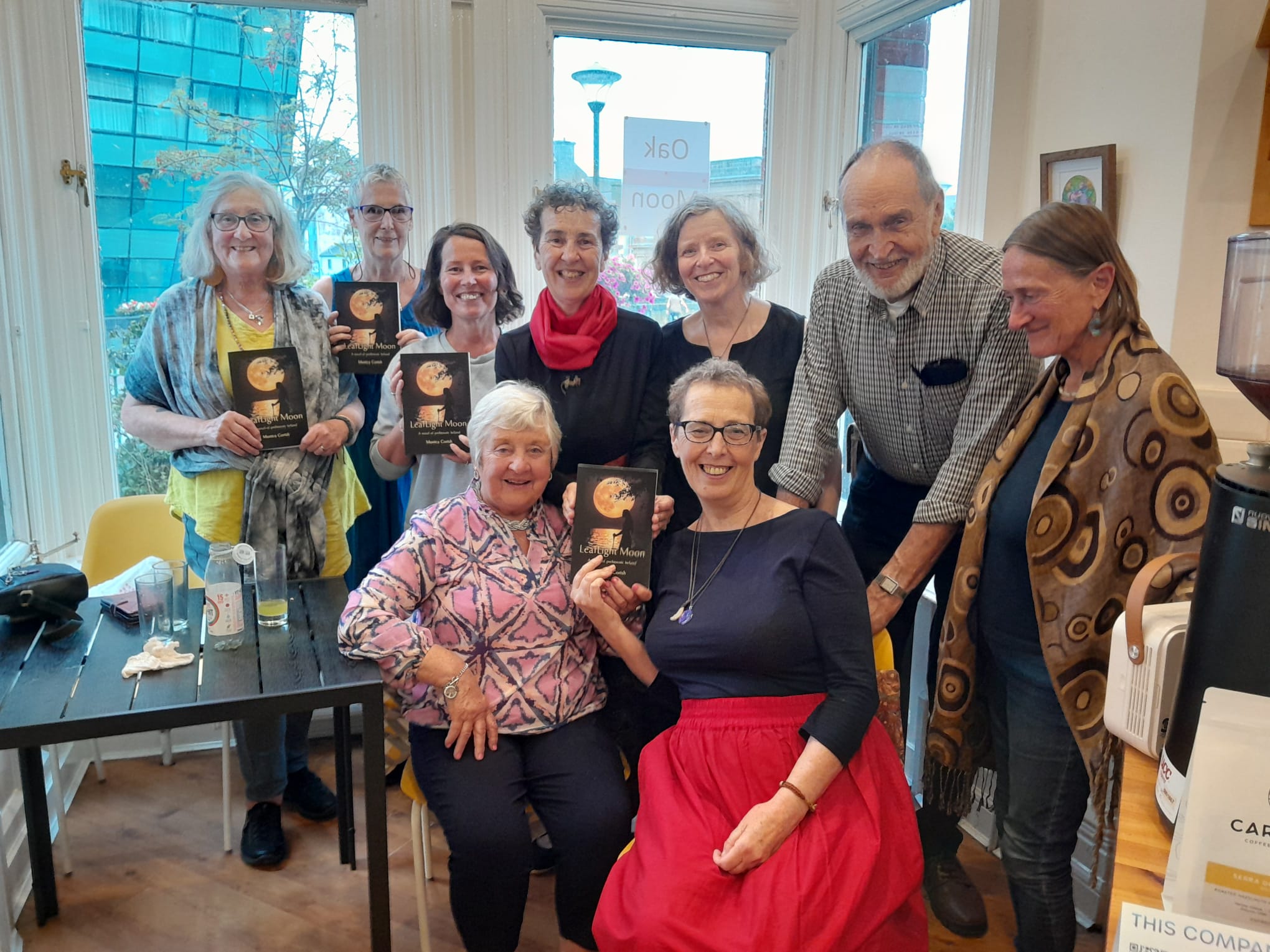
    I was lucky enough to go to the Sligo launch of “Leaflight Moon” and was delighted to meet so many alumni from Kimmage Development Studies Centre, where so many volunteer development workers studied either before, during or after their overseas work.  And of course, the Yeats Centre, where the book was launched, was full of Monica’s supporters, friends, family and other story tellers.

    I was then later delighted to hear that “Leaflight Moon” won, the Carousel Aware Prize (CAP), award for fiction and the Golden CAP for best independently published books, at the award ceremony in Chapters Bookstore, on 10 October, 2025.

    Monica is a poet, creative coach, teacher and friend and now she is a successful novelist.   She has done so much, over the years, to support other writers through her writing circles, workshops and mentoring.  Her warmth and wisdom deserve the success she is having with this book, and I hope she is enjoying every moment.

    Much love Monica,

    From Ruth, Dublin.

    You can buy copies of Leaflight Moon in Chapters Bookstore, and Books Upstairs (Dublin).
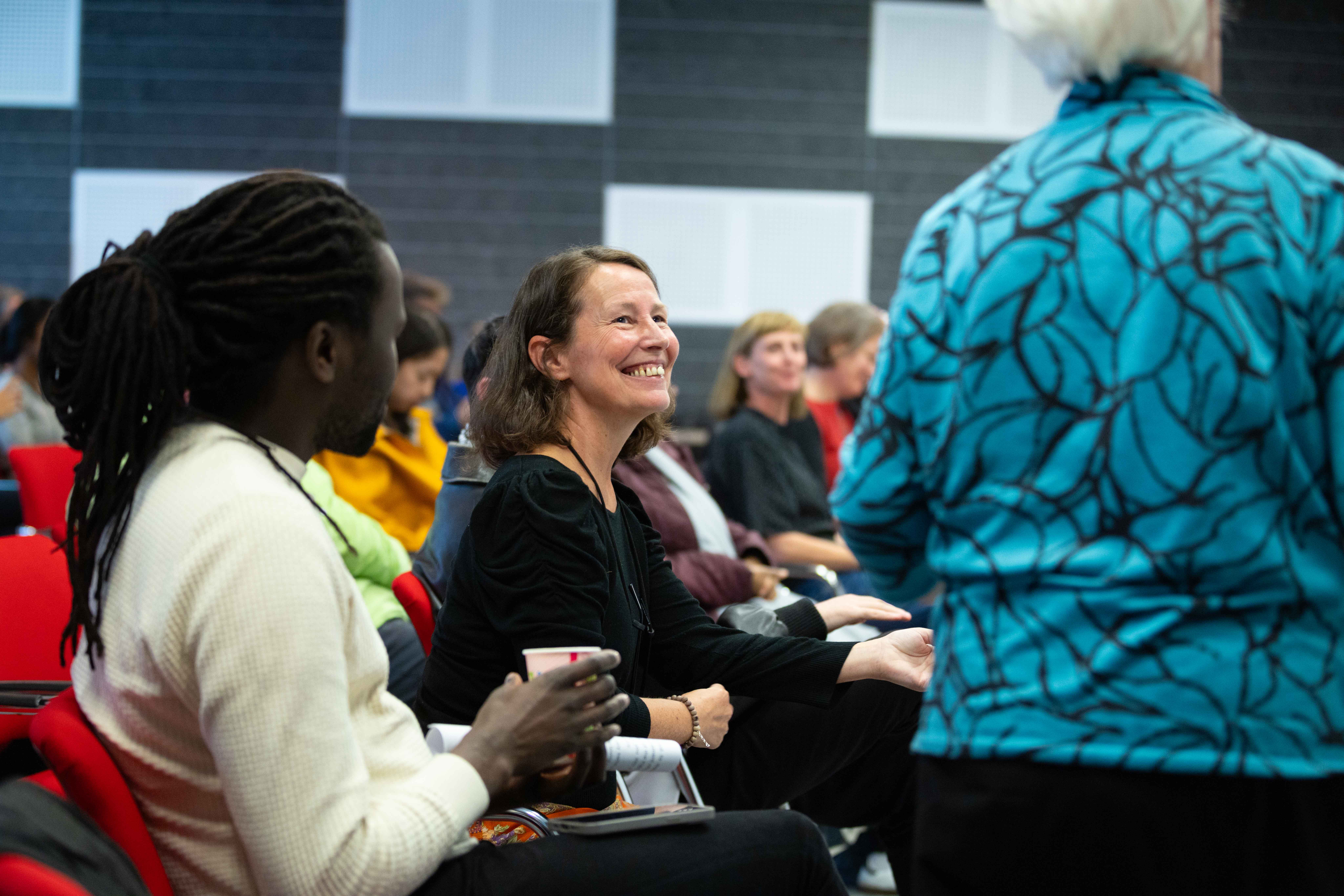
  • Storytelling for UCDVO – “Under blue skies”

    A few weeks ago, my friend Zoe Liston invited me to a storytelling event, at University College Dublin Volunteers Overseas (UCDVO), where she works as the programme and education officer. 

    Together, with five other story tellers, and musician Seamus Hyland, we told tales about volunteering at home, and further away and I was delighted to be involved in such a beautiful event.  The other storytellers were Safia Hassan, Bulelani Mfaco, Kelvyn Fields, Jo Kennedy and Oein DeBhairduin, and I was so happy to be involved in such a caring afternoon.  The stories were recorded alongside some of the music Seamus played, and you can listen to all six here.

    Or you can read my story, “Under blue skies”, below.

    ———————————————————————————-

    Under blue skies

    People don’t always remember how beautiful Mongolia is. 

    There are snow-capped mountains that dip down into wide valleys with freshwater lakes.  Camels roam and wolves hunt under midnight moons, and the air changes shape when the seasons move.

    In those days, the city was growing as many people moved away from the countryside, towards the opportunities in the capital, Ulaanbaatar.  Young students rushed over the half-built pavements, chatting as they walked from their dormitories on the east of the city, to the universities on Sukhbaatar Square.  They studied subjects that would bring them work in the future like translation, business and computer studies.  Dreams of travelling come with price tags.

    Other people came to the city to find work.

    One couple, an older herder couple from the Gobi, couldn’t afford to stay in the countryside anymore as it was too harsh, too unpredictable.  A cousin told them they could earn money as a taxi, so they packed up everything and moved.  They drove students over Lion’s Bridge to the dormitories near the Wrestling Palace, and they drove tourists from the hotels to the train station, that would take them to Beijing or Moscow. 

    The older couple, this herder couple from the Gobi, carried all their possessions with them.  They kept bags of clothes and wooden stools and framed photographs in the boot, and on the back seat of the car, and they waited to find a new home.  He was too old to herd animals on his own.  Their children, big now and living in America, couldn’t help keep the fire burning, and so the nomads moved.

    Except he wasn’t a very good driver, and she liked to sing songs.

    His herder boots were too heavy for the silver-grey pedals of the car.  She sang songs about roaming camels and the wolves that hunted under the midnight moonlight.  She sang songs about riding horses at dawn and of making food for her children, who were now, too far away to eat it.  She sang songs about the everlasting blue skies over the steppe in Mongolia, and she sang songs about remembering.  He liked the songs about archery best of all.

    The sky was blue.

    The sky was almost always blue, when an international Volunteer waved down the car and asked the older couple to drive her to the dormitories on the east of the city, where she was renting a room.  She too, had come to the city for her work, and she directed them over the Lion’s Bridge, near the Wrestling Palace and right at the dormitories.  Volunteer hardly ever took a taxi, on her allowance of 200 dollars a month, but the river under the bridge was frozen, and conditions were treacherous.

    The woman offered Volunteer tea, from the flask, but Volunteer shook her head.  The woman ignored this and poured some lukewarm tea into a plastic cup and placed it on Volunteer’s lap.  This made Volunteer even more annoyed than she was before she got into the car, so she looked out of the window, to avoid more conversation.

    There was ice inside the windows and the car smelled of petrol.  The man’s skills at herding yaks and horses did not transfer to driving.  The man couldn’t see out of his window and had trouble changing gears.  The car lurched forward and skidded slowly into the oncoming traffic, on the opposite side of the road.

    Volunteer screamed out loud.

    She reached for a safety belt, that wasn’t there, and as she did so the plastic cup of tea spilt over her lap and legs.  She shouted at the couple.

    The car stopped in the middle of the road, while other cars carefully drove around it.  The man corrected the car’s position and got it facing the right way again.  The tea wasn’t very hot and hadn’t made its way through Volunteer’s heavy winter coat.   All three of them were safe again, and there was no need to worry.

    The older couple, this married couple from the Gobi, were embarrassed and when they pulled up outside the dormitories, they refused to take payment for the ride.  They gave Volunteer a packet of biscuits from the supermarket and thanked her for coming to Mongolia.  They said they were sorry for scaring her so much on Lion’s Bridge, and it was true, they were very sorry.

    They were sorry they no longer lived near the freshwater lake, where the camels roamed and the wolves hunted under the midnight moonlight.  They were sorry their children had to move so far away to other lands, and they were sorry that the songs about remembering, always made them sad.

  • Review of the International Dublin Writers’ Festival

    My friend, Katie Moynagh, was the one who told me all about the International Dublin Writers’ Festival, and so it was she who called me to the adventure.  Katie writes beautiful poems and short stories, and I enjoy listening to her read them aloud, and I trust her opinions on all things literary.  All the same, I declined at first, as I had other plans for that weekend, but as things moved around and I adjusted my diary, I found myself in attendance at the festival, at the Academy Hotel, just off O’Connell Street, in Dublin city.

    As soon as I arrived, I felt the fear.  What on earth was I doing attending a writers’ festival in Dublin?  I wasn’t established, successful, well read or reviewed.  I like to write, of course, I do, but what did I think I was doing? 

    I met Katie in the foyer.  She smiled, and said she was happy to see me, and suddenly I felt better.  It turned out, no one minded at all, about my status or lack of it.  In fact, everyone was far too busy having a great time, to worry about my worries, and soon I didn’t worry either.

     There were over 20 presentations over the next three days divided loosely into the creative inspiration of writing, and the business of writing.  There were presentations by writers, publishers, agents and companies offering help to writers.  The Irish Writers’ Union of Ireland were there, talking about their “Grand Theft Author” campaign, which tries stop Artificial Intelligence (AI) from stealing writers’ work.  There were Hollywood screen writers, and a member of the Ottoman Imperial Family.

    There was even an improvisation session.

    Some writers read their pieces aloud in an open mic session, and I enjoyed hearing Katie read again.  Some writers got to pitch their ideas for books and plays to our new friends from Hollywood, and after the scariest 90 seconds, received constructive feedback.

    If there was a dark cave, during the weekend, it might be my reluctance to monetise my hobby of writing.  I love writing.  I’ve always loved writing.  I love my daily practice of trying to put into word form, the experiences of being in this world.  I try to connect, with my honest, messy and incongruous inner world and try, if I can, to make sense of it.  The idea of selling this seems ugly.

    And yet, of course, I would. 

    In a heartbeat, and a nano second and without asking any questions.  Which is why I joined the Irish Writers’ Union of Ireland, so that if I ever did get a book deal, someone would read my contract for me and tell me if it was safe to sign.

    As well as joining the Union, I bought some books.  I made some new friends, and I absolutely adored being surrounded by writers, and people who love the business of writing, for the whole weekend.

    I really thank the lovely organiser, Laurence O’Bryan and his team at Books Go Social, and I look forward to seeing everyone next year.

  • Review of the School of Myth Summer School Programme July 2025

    For four days and nights in July this year, I was lucky enough to be one of the sixty participants on the School of Myth summer school programme, at a manor house, on the edge of Dartmoor.  We listened to Dr Martin Shaw, tell us ancient Celtic myths, Arthurian stories, and folk tales from Siberia, for hour after hour, and day into eve.

    Sometimes, the stories were accompanied by the smell of an open burning fire, and sage.  Sometimes, the sound of drums walked the stories in.

    When was the last time someone told you a story?

    When was the last time you gave your full, undivided attention to a storyteller?

    Martin would start each story in the same way, by asking us, “shall we go?”  We would answer him, “let’s go!”

    For a second time he asked us, “shall we go?”

    And again, we shouted back, “let’s go!”

    Finally, when he asked us a third time, “shall we go?” glee and laughter filled the room, as we cried back loudly, “LET’S GO!”

    Martin then took us gently back to kingdoms far away and long ago, and into deep, dark forests and sacred rivers, and to a lake that three large cows walked out of.

    It was magnificent.

    I arrived at the manor, with my pre-conceived modern ideas that this workshop or retreat would have an agenda, and name tags and a welcome folder with all the necessary handouts.  In preparation for the week, I had re-read The Hound of the Baskervilles, because it was set on Dartmoor, and I thought it would get me into the mood.

    Oh blessed, sweet, gentle child.  I was in the wrong century.  I did not need those things.  I would need to go further back.

    What I needed to do, was listen carefully.

    What I needed to do, was hear the stories with an open heart and kindness.

    What I needed to do, was be still and leave distractions at the train station at Newton Abbott.  What I needed to do, was walk down to the ancient stone bridge, turn right at the fairy forest, walk past the Alpacas and take a long relaxing swim in the lake, under the silver-grey clouds, in the grounds of the manor.

    The other participants were storytellers:  writers, actors, dancers, teachers, yogis, grief counsellors, psychotherapists, NGO workers, preachers, a hypnotist and a shaman.  We were all on the edge of Dartmoor, looking for magic.

    On the last night, we watched a performance of a few scenes from A Midsummer Night’s Dream outdoors, and then we huddled around the bonfire.  Some people wore flowers in their hair, and there was music. The staff of The School of Myth were kind, and thoughtful, and prepared our feasts, and took care of us.

    I’m not sure why I went, but I’m happy I did, because it changed my life.

    I’m not sure how, or even if the changes will be visible from the outside, but something has shifted my heart.  A tiny piece of me has altered indefinitely, and I will never be the same.

    Since my return from the moors, I’ve been swimming in Martin’s back catalogue of work:  his Jawbone YouTube channel, and his books.

    I thoroughly enjoyed “Smoke Hole:  Looking to the Wild in the Time of the Spyglass” and “Red Bead Woman:  Consequence and Longing in the Myth World”.  I’ll need to re-read both books many times if I want to ponder them carefully and reflect wisely.  I’ll need to read his other work, and see him when he comes to Dublin in October, and hopefully go back to summer school, next year. I’ll stay in touch with some of my new friends, and I’ll learn more.

    Once in a while, this life offers up beauty, joy and safety in ways we couldn’t have planned for, or imagined.  When it does, it’s our duty to note the extraordinariness, bow our heads, and gratefully say, “let’s go”.

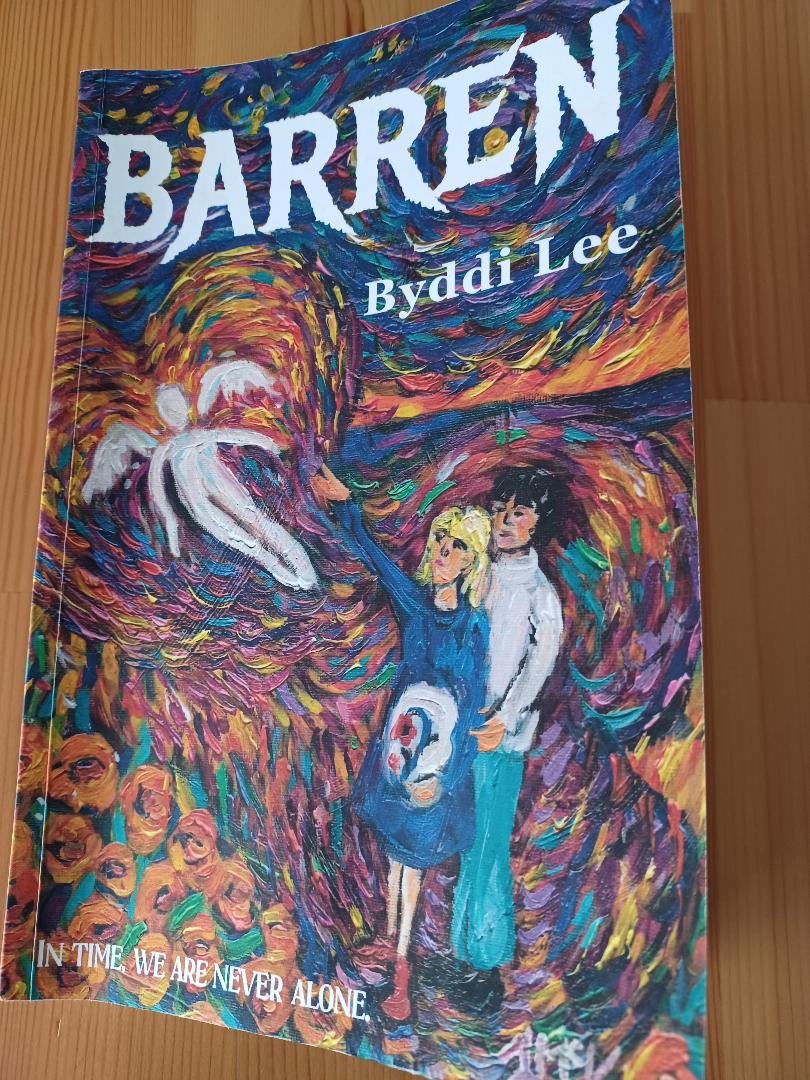
  • Book Review:  “Barren”, by Byddi Lee

    Byddi Lee’s “Barren” is a book about loss, sorrow, love, and hope. 

    “Barren” is an original story about two women separated in history by 4000 years, and connected by spirits, colours and auras.  It’s beautifully written, very funny in parts, and structurally very satisfying as both women return to an axe, and to the foundations of their stories.

    Aisling lives in modern day California, and together with her husband Ben, is Trying to Conceive (TTC).  Childlessness for both, but particularly for her, is a barren landscape which is becoming more expensive and challenging to their relationship.  The external pressures the couple face are the effects of climate change and a profound homesickness, which eventually takes them back across the Atlantic to visit Ireland.

    Zosime, meanwhile, lives in Ireland in 2354 BC, and faces the loss of her village.  A comet has passed too closely to the earth, and the sun has disappeared.  Zosime’s communal loss, her need to “follow the sun” and journey towards the sea, and beyond, is a challenge that she and her partner, Nereus, learn to manage because of their intrinsic hope.

    The two parallel stories are connected through plot, colours, prose and humour (one section ends with a ritualistic ceremony involving dead pigs, while another section opens with the couple in California cooking a fry!).   And as the two women slowly realise that they are stronger and more capable than they might have imagined, they also start to realise that their own stories can change, and the stories they witness carry their own energies and auras. 

    “telling our story, and bearing witness to others’ stories…”

    The juxtaposition of a very modern, realistic story of two Irish people living in California could be jarring against a neolithic story of hunter gatherers forced from their village, and yet, Byddi Lee manages to take the reader through the landscapes safely.  There are moments of magic realism, simplicity and dreamscapes, set against a backdrop of climate chaos, forced migration, deep sorrow and healing.

    Byddi Lee has a history of taking care of stories and the stories she witnesses.  She is the founder of, and she manages Flash Fiction Armagh, where she promotes new writers, sometimes in the Armagh County Museum, which makes a visit in the last few chapters of “Barren”.

    Already described as, “engrossing, immersive and wonderfully constructed” by Donal Ryan, “Barren” is beautifully written, enjoyable and poignant, with great hope and love on every page.

    “We don’t come from nowhere, nor do we vanish into nothing.  I always knew three facts.  I was wanted – in bright shades of flashing yellow – desperately wanted. I was loved – in vibrant shades of swirling pinks and reds – unconditionally loved.  And I’d never be forgotten – in shimmering waves of silver – always remembered”. (p.12)